Unique Experiences in Egypt Away from the Crowds

Unique Experiences in Egypt Away from the Crowds: Explore the Country’s Hidden Magic

Egypt, a country often associated with the Pyramids of Giza, the Great Sphinx, and the River Nile, offers far more than its world-famous landmarks. Beneath the surface of its bustling tourist hubs lies a wealth of authentic, tranquil, and lesser-known destinations that invite travelers to experience Egypt’s timeless spirit away from the crowds. From the serenity of untouched oases to the mystical silence of sand dunes and ancient temples not overrun by visitors, these hidden gems capture the country’s diverse soul. Travelers looking for Egypt Private Tours often discover that secluded spots offer a deeper, more intimate connection with history, landscapes, and culture. Imagine sipping mint tea with Bedouins under star-filled skies, traversing alabaster dunes in the Western Desert, or diving pristine coral reefs untouched by mass tourism — Egypt has it all.

Modern travelers crave authenticity — the kind of experiences where silence speaks louder than crowds, where local interaction replaces souvenir stalls, and where every footprint tells a story of discovery. Egypt’s offbeat destinations present an alluring blend of adventure, heritage, and calm. If you’re seeking the unknown, this guide will take you on a journey to the most fascinating and peaceful corners of Egypt, far from typical tourist trails.

Discover Tranquility at Siwa Oasis: The Desert’s Hidden Paradise

Siwa Oasis, located near the Libyan border, remains one of Egypt’s most untouched treasures. Surrounded by the golden dunes of the Great Sand Sea, Siwa enchants visitors with its emerald salt lakes, ancient ruins, and warm, hospitable Berber culture. Here, travelers can bathe in the legendary Cleopatra Spring, explore the ruins of the Temple of the Oracle of Amun, or wander the mudbrick labyrinth of Shali Castle.

Unlike the overly photographed sites of Cairo or Luxor, Siwa welcomes you into a world that thrives in simplicity and authenticity. Palm groves sway in the desert heat, and natural salt lakes sparkle under the sun. The Siwa Salt Lakes are among the most striking natural wonders in Egypt, where floating effortlessly is not merely an experience but a journey into tranquility. Visitors can also venture up Dakrour Mountain to witness sunsets that leave the dunes glowing red and gold.

Uncover the Mysteries of the Western Desert

For those drawn to surreal landscapes, the White Desert is nature’s canvas, adorned with chalk-white formations sculpted by wind and time. Every shape tells its own tale — from massive mushrooms to ghostly towers rising from the sand. A trip through the Bahariya Oasis and Black Desert reveals the surreal evolution of Egypt’s natural artistry.

Spending a night beneath the stars here is an unforgettable experience. The silence of the desert, broken only by the crackling of a campfire and the whisper of the wind, creates a kind of peace rarely found in modern life. Those seeking unique desert adventures can join an itinerary such as the 7 Days Cairo, Luxor, Abu Simbel & Sahara Trip to blend cultural immersion with pristine wilderness.

Fayoum Oasis: Egypt’s Hidden Natural Wonderland

Just a few hours from Cairo, the Fayoum Oasis offers tranquility far removed from city noise. The turquoise waters of Lake Qarun contrast beautifully with the golden desert backdrop. Nearby, the Valley of the Whales (Wadi Al Hitan), a UNESCO World Heritage site, reveals fossilized remains of ancient marine mammals, offering insight into Earth’s mysterious past. For a more rural charm, exploration of Tunis Village introduces visitors to traditional pottery-making and warm local hospitality.

Ancient Wonders Off the Beaten Path

Beyond the pyramids, Egypt hides awe-inspiring monuments that stand quietly in the shadows of fame. Among these is the Bent Pyramid of Dahshour, one of the world’s most extraordinary architectural experiments. Visitors can walk through silence where only the whisper of history lingers — a striking contrast to the bustling crowds at Giza. The Meidum Pyramid adds another layer of intrigue, standing alone amid vast desert plains, its eroded blocks telling tales of early pyramid construction techniques.

In Upper Egypt, the temples of Abydos and Dendera invite exploration into spiritual art and architectural wonderment without the tourist swarm. The Temple of Hathor at Dendera still exhibits celestial ceilings painted with zodiac signs — an unforgettable vision of ancient astronomy and devotion.

Luxor Beyond the Mainstream

Luxor may be famed for its grand temples, yet plenty of unique corners remain undisturbed. Wander into the lesser-visited Medinet Habu Temple or gaze in awe at the serene Valley of the Queens, home to the exquisite Tomb of Nefertari. These sites offer travelers the chance to study incredible carvings and colors in peace, where one can almost hear the whispers of ancient artisans.

Hidden Aswan and the Nubian Spirit

Heading south, Aswan presents a slower rhythm, a place where time seems to pause by the gentle Nile. Enjoy a felucca ride around Elephantine Island or visit colorful Nubian villages, each boasting stories woven with centuries of resilience and warmth. Travelers can enrich their experience by embarking on scenic voyages such as the Nour El Nil Dahabeya or the serene Luxury Dahabiya Nile Cruise, both offering more intimate perspectives of the river’s timeless charm.

Adventures Beneath the Waves in the Red Sea

The Red Sea, famed for its diving, conceals vibrant coral gardens and tranquil reefs. For an experience beyond Sharm El Sheikh’s bustle, head to Blue Lagoon Dahab or Wadi El Gemal National Park near Marsa Alam. Here, marine life thrives undisturbed — turtles glide gracefully, dolphins play in the surf, and colorful fish dart through coral cathedrals.

Adventure seekers can find solace under the waves or along the tranquil beaches of El Quseir and Sahl Hasheesh, where luxury merges with nature. These locations are ideal for couples or families looking for an eco-friendly retreat, often included in Luxury Egypt Tours.

Nubian Culture and Local Hospitality

One cannot speak of unique Egyptian experiences without embracing the Nubian heart. Visiting a local home or attending a small village festival reveals a culture bursting with color, rhythm, and kindness. The murals adorning Nubian houses reflect stories of migration, faith, and joy. Sharing a traditional meal of lentils, fish, and spicy sauces while listening to laughter around the fire leaves a deeper memory than any monument.

Top FAQs About Unique Experiences in Egypt Away from the Crowds

1. What are the best hidden destinations in Egypt?

Egypt’s hidden gems include Siwa Oasis, Fayoum Oasis, the White Desert, Dendera Temple, and Abydos Temple. These spots provide tranquility, natural beauty, and cultural authenticity without crowds.

2. When is the best time to explore Egypt’s less-visited areas?

The ideal time to explore Egypt’s remote areas is between October and April when temperatures are milder. Desert nights are crisp, and the weather allows for comfortable exploration.

3. Are offbeat destinations in Egypt safe?

Yes, Egypt’s remote locations like Siwa, Aswan, and Fayoum are generally safe and supported by hospitable locals. Responsible travel agencies such as Cindrella Egypt Travel ensure personalized and secure arrangements.

4. How can I combine famous landmarks with unique experiences?

Opt for curated itineraries that connect iconic sites with hidden gems, such as the 10-Day Egypt Luxury Trip with Dahabiya Nile Cruise. This allows travelers to enjoy both well-known wonders and secluded corners under expert guidance.

5. What makes traveling off the beaten path in Egypt so rewarding?

Exploring Egypt away from crowds brings intimacy and authenticity. You connect more deeply with local culture, enjoy serene landscapes, and witness history come alive without distractions. It transforms your visit into a soulful journey rather than a checklist of sites.

Women’s Rights In Egypt

Unveiling the Evolution of Women’s Rights in Egypt: A Journey Toward Equality and Empowerment

Women’s rights in Egypt have carved a winding journey through centuries of political, cultural, and social transformation. From the days of ancient queens who ruled beside mighty pharaohs to the passionate activism of modern Egyptian women, the struggle for gender equality has been both inspiring and fierce. Egypt’s story is not just a chronicle of oppression or victory—it’s an evolving narrative of resilience, reform, and revolutionary change.

In ancient times, Egyptian women enjoyed remarkable privileges compared to other ancient civilizations. They could own property, conduct business, and hold positions of power—like the legendary Famous Egyptian Queens such as Hatshepsut and Cleopatra, who stood as symbols of authority and wisdom. Yet, in the modern era, women’s rights in Egypt have witnessed ebb and flow, shaped by colonial influences, religious interpretations, and the shifting tides of societal progress. The twentieth century sparked major movements calling for education, suffrage, and empowerment, culminating in constitutional reforms and national debates that are still alive today.

The fight for women’s rights in Egypt continues to weave its influence through political legislation, workplace equality, education reforms, and domestic laws. With an increasingly vocal civil society and a growing understanding of gender equity’s role in national progress, Egyptian women today are rewriting the narrative—asserting their presence across every sector from business to government. Just like a sunrise over the Nile, this movement promises light, hope, and unstoppable momentum.

The Historical Foundations of Women’s Rights in Egypt

To truly understand women’s rights in Egypt, one must first dive into its fascinating history. In ancient Egypt, women enjoyed a degree of social and economic freedom unprecedented in many early societies. They could inherit wealth, sign contracts, and even serve as pharaohs. Temples such as those dedicated to the female deity Hathor—like the one at Temple of Hathor (Dendera complex)—honored femininity, motherhood, and creative power. The respect afforded to women during this time wasn’t merely symbolic; it was encoded in the law and practiced across classes.

However, as foreign empires influenced Egypt—from the Greeks to the Ottomans—restrictions tightened. The colonial era introduced Victorian patriarchal patterns, shrinking women’s educational and political participation. Nevertheless, Egypt’s national awakening during the early 20th century reignited feminist consciousness. Women like Huda Sha’arawi became icons, boldly removing their veils in protest and advocating for education and political involvement. This pivotal moment became the cornerstone of Egypt’s feminist awakening.

Legal Transformations and Legislative Landmarks

Modern Egypt’s legal framework regarding women’s rights has evolved through constitutional changes and activism. The 1923 constitution saw women marginalized politically, but subsequent revisions and public pressure have expanded their scope of rights. The 1956 constitution under President Nasser granted women the right to vote and run for public office—an extraordinary step toward inclusivity. Recent constitutional amendments emphasize gender equality, protection from discrimination, and female representation in parliament.

Moreover, the criminal code has been reformed to address gender-based violence and harassment. Advocacy from civil organizations and the National Council for Women has pressed for implementation, recognizing that social justice isn’t just a constitutional promise—it’s a practical necessity. Today, Egyptian courts have begun taking stronger stances on workplace discrimination, child marriage, and domestic abuse, aligning with global human rights agreements.

Women’s Economic Empowerment and Employment Rights

The Egyptian economy has long relied on women’s participation, whether in agriculture, education, or healthcare. Yet, societal expectations often limit their professional potential. Over recent years, government initiatives and international partnerships have boosted programs that support female entrepreneurs and vocational training. These projects strengthen financial independence and promote inclusion in Egypt’s growing industries such as tourism, technology, and education.

In cosmopolitan cities like Cairo City and Alexandria, women are increasingly visible in leadership roles, investing in startups, and managing companies. The Egyptian government’s Vision 2030 plan aims to close the gender employment gap and elevate women’s participation in executive decision-making—an ambitious move that redefines Egypt’s economic future.

Education: The Backbone of Egyptian Women’s Liberation

Education stands as the cornerstone of any successful movement for equality. In Egypt, the path toward accessible female education has been layered with triumphs and trials. Early reformists in the 19th century recognized that empowering women through education would uplift entire generations. Girls’ schools were established, universities opened doors to women, and literacy programs began spreading across rural areas. The impact of these reforms has been profound—educated women now serve as doctors, professors, judges, and engineers.

However, rural regions often lag behind due to social norms and economic challenges. Despite this, efforts to close the literacy gap persist, supported by non-governmental organizations and international bodies. Programs like the ‘Egyptian Girls’ Education Initiative’ work diligently to ensure every girl receives equal access to quality education. Cities like Luxor City and Aswan showcase new models for inclusive education, where young girls’ participation rates are steadily increasing.

The Role of Cultural Identity and Religion in Women’s Rights

Egypt’s cultural identity, deeply woven with Islam and tradition, plays a significant role in shaping gender discussions. Many Egyptian women advocate not for Westernized feminism but for a culturally authentic version that respects faith while promoting equality. Religious scholars increasingly reinterpret historical texts to support female leadership, education, and economic participation. Institutions like Al Azhar Mosque have initiated programs emphasizing women’s voices in religious discourse, further bridging the gap between faith and progress.

Social Movements and the Feminist Renaissance

Over the past two decades, social media and digital platforms have amplified the feminist dialogue in Egypt. Women-led initiatives and online movements expose challenges like harassment and workplace inequality while celebrating success stories of female professionals, artists, and scientists. These narratives not only empower individuals but reshape Egypt’s global image as a nation committed to human rights and sustainable development.

Grassroots organizations harness the energy of youth, encouraging both men and women to challenge stereotypes. With more women entering politics, leading local councils, and founding NGOs, representation no longer feels out of reach—it’s becoming a daily reality across Egypt, from Cairo to Aswan City.

The Tourism and Heritage Perspective on Women’s Roles

Egypt’s tourism sector vividly mirrors the country’s attitude toward gender progress. Female tour guides, archaeologists, and entrepreneurs are increasingly visible in hotspots like Abu Simbel Temples, Lake Nasser In Africa, and Luxor Temple. Women are no longer just observers of history—they’re its guardians, interpreters, and storytellers. Their presence in heritage preservation drives sustainable tourism and promotes cultural inclusivity, aligning perfectly with the ideals of contemporary Egypt.

Legal and Social Challenges Facing Women in Egypt Today

Despite great progress, Egyptian women still face formidable barriers. Social conservatism, economic inequality, and enduring patriarchal attitudes limit the full realization of their rights. Issues such as early marriage, domestic violence, and underrepresentation in senior government roles remain key challenges. Enforcement inconsistencies also hinder the impact of progressive laws, as real change requires both political commitment and cultural transformation.

Nevertheless, Egyptian women persistently push forward, inspiring regional advocacy across the Middle East. Activists emphasize that expanding women’s rights in Egypt is not merely a moral obligation—it’s crucial for economic growth, national stability, and international reputation. Empowered women contribute to better governance, healthier families, and a vibrant economy capable of meeting the goals of Egypt Vision 2030.

Future Pathways and Policy Recommendations

For women’s rights in Egypt to continue evolving, comprehensive policy integration is indispensable. Gender-sensitive budgeting, stricter anti-harassment laws, and mentorship programs for young female leaders can bridge existing inequalities. Encouraging private sector collaboration, promoting female entrepreneurship, and enhancing public awareness campaigns will also cement a stronger foundation for social harmony and prosperity. Egypt’s historical legacy as a cradle of civilization gives it both the responsibility and potential to lead in gender equality.

FAQs About Women’s Rights in Egypt

1. What are the main legal rights Egyptian women hold today?

Egyptian women possess constitutional rights guaranteeing equality in education, employment, and political participation. They can vote, run for office, and own property independently. Recent amendments uphold gender equality while criminalizing harassment and discrimination, strengthening protection mechanisms for women across the country.

2. How have women influenced Egypt’s modern political movement?

Women have been integral to Egypt’s modern political transformation. From activists like Huda Sha’arawi to modern parliamentarians, they’ve significantly shaped policies on education, healthcare, and social welfare. Their participation in protests and state-building initiatives underscores their central role in fostering democracy and reform.

3. What challenges continue to affect women’s rights in rural Egypt?

Rural women often face limited access to education, healthcare, and employment due to traditional norms and economic disparities. Initiatives by community organizations and public policy reforms continue to tackle these obstacles, ensuring equal opportunities for rural Egyptian women to thrive.

4. How is education shaping the future of women’s empowerment?

Education transforms lives, offering Egyptian women tools for independence, employment, and self-realization. Government and NGO-led literacy and leadership initiatives empower the younger generation, ensuring national development becomes truly inclusive and gender-balanced.

5. How do tourism and culture contribute to women’s representation in Egypt?

Tourism and cultural heritage sectors allow women to step into visible professional roles as guides, historians, and entrepreneurs. In destinations such as Temple Of Philae and The Nubian Village, women’s participation highlights Egypt’s strides toward equality, reinforcing a progressive image to the world.

Women’s Rights In Egypt

Unveiling the Evolution of Women’s Rights in Egypt: A Journey Toward Equality and Empowerment

Women’s rights in Egypt have carved a winding journey through centuries of political, cultural, and social transformation. From the days of ancient queens who ruled beside mighty pharaohs to the passionate activism of modern Egyptian women, the struggle for gender equality has been both inspiring and fierce. Egypt’s story is not just a chronicle of oppression or victory—it’s an evolving narrative of resilience, reform, and revolutionary change.

In ancient times, Egyptian women enjoyed remarkable privileges compared to other ancient civilizations. They could own property, conduct business, and hold positions of power—like the legendary Famous Egyptian Queens such as Hatshepsut and Cleopatra, who stood as symbols of authority and wisdom. Yet, in the modern era, women’s rights in Egypt have witnessed ebb and flow, shaped by colonial influences, religious interpretations, and the shifting tides of societal progress. The twentieth century sparked major movements calling for education, suffrage, and empowerment, culminating in constitutional reforms and national debates that are still alive today.

The fight for women’s rights in Egypt continues to weave its influence through political legislation, workplace equality, education reforms, and domestic laws. With an increasingly vocal civil society and a growing understanding of gender equity’s role in national progress, Egyptian women today are rewriting the narrative—asserting their presence across every sector from business to government. Just like a sunrise over the Nile, this movement promises light, hope, and unstoppable momentum.

The Historical Foundations of Women’s Rights in Egypt

To truly understand women’s rights in Egypt, one must first dive into its fascinating history. In ancient Egypt, women enjoyed a degree of social and economic freedom unprecedented in many early societies. They could inherit wealth, sign contracts, and even serve as pharaohs. Temples such as those dedicated to the female deity Hathor—like the one at Temple of Hathor (Dendera complex)—honored femininity, motherhood, and creative power. The respect afforded to women during this time wasn’t merely symbolic; it was encoded in the law and practiced across classes.

However, as foreign empires influenced Egypt—from the Greeks to the Ottomans—restrictions tightened. The colonial era introduced Victorian patriarchal patterns, shrinking women’s educational and political participation. Nevertheless, Egypt’s national awakening during the early 20th century reignited feminist consciousness. Women like Huda Sha’arawi became icons, boldly removing their veils in protest and advocating for education and political involvement. This pivotal moment became the cornerstone of Egypt’s feminist awakening.

Legal Transformations and Legislative Landmarks

Modern Egypt’s legal framework regarding women’s rights has evolved through constitutional changes and activism. The 1923 constitution saw women marginalized politically, but subsequent revisions and public pressure have expanded their scope of rights. The 1956 constitution under President Nasser granted women the right to vote and run for public office—an extraordinary step toward inclusivity. Recent constitutional amendments emphasize gender equality, protection from discrimination, and female representation in parliament.

Moreover, the criminal code has been reformed to address gender-based violence and harassment. Advocacy from civil organizations and the National Council for Women has pressed for implementation, recognizing that social justice isn’t just a constitutional promise—it’s a practical necessity. Today, Egyptian courts have begun taking stronger stances on workplace discrimination, child marriage, and domestic abuse, aligning with global human rights agreements.

Women’s Economic Empowerment and Employment Rights

The Egyptian economy has long relied on women’s participation, whether in agriculture, education, or healthcare. Yet, societal expectations often limit their professional potential. Over recent years, government initiatives and international partnerships have boosted programs that support female entrepreneurs and vocational training. These projects strengthen financial independence and promote inclusion in Egypt’s growing industries such as tourism, technology, and education.

In cosmopolitan cities like Cairo City and Alexandria, women are increasingly visible in leadership roles, investing in startups, and managing companies. The Egyptian government’s Vision 2030 plan aims to close the gender employment gap and elevate women’s participation in executive decision-making—an ambitious move that redefines Egypt’s economic future.

Education: The Backbone of Egyptian Women’s Liberation

Education stands as the cornerstone of any successful movement for equality. In Egypt, the path toward accessible female education has been layered with triumphs and trials. Early reformists in the 19th century recognized that empowering women through education would uplift entire generations. Girls’ schools were established, universities opened doors to women, and literacy programs began spreading across rural areas. The impact of these reforms has been profound—educated women now serve as doctors, professors, judges, and engineers.

However, rural regions often lag behind due to social norms and economic challenges. Despite this, efforts to close the literacy gap persist, supported by non-governmental organizations and international bodies. Programs like the ‘Egyptian Girls’ Education Initiative’ work diligently to ensure every girl receives equal access to quality education. Cities like Luxor City and Aswan showcase new models for inclusive education, where young girls’ participation rates are steadily increasing.

The Role of Cultural Identity and Religion in Women’s Rights

Egypt’s cultural identity, deeply woven with Islam and tradition, plays a significant role in shaping gender discussions. Many Egyptian women advocate not for Westernized feminism but for a culturally authentic version that respects faith while promoting equality. Religious scholars increasingly reinterpret historical texts to support female leadership, education, and economic participation. Institutions like Al Azhar Mosque have initiated programs emphasizing women’s voices in religious discourse, further bridging the gap between faith and progress.

Social Movements and the Feminist Renaissance

Over the past two decades, social media and digital platforms have amplified the feminist dialogue in Egypt. Women-led initiatives and online movements expose challenges like harassment and workplace inequality while celebrating success stories of female professionals, artists, and scientists. These narratives not only empower individuals but reshape Egypt’s global image as a nation committed to human rights and sustainable development.

Grassroots organizations harness the energy of youth, encouraging both men and women to challenge stereotypes. With more women entering politics, leading local councils, and founding NGOs, representation no longer feels out of reach—it’s becoming a daily reality across Egypt, from Cairo to Aswan City.

The Tourism and Heritage Perspective on Women’s Roles

Egypt’s tourism sector vividly mirrors the country’s attitude toward gender progress. Female tour guides, archaeologists, and entrepreneurs are increasingly visible in hotspots like Abu Simbel Temples, Lake Nasser In Africa, and Luxor Temple. Women are no longer just observers of history—they’re its guardians, interpreters, and storytellers. Their presence in heritage preservation drives sustainable tourism and promotes cultural inclusivity, aligning perfectly with the ideals of contemporary Egypt.

Legal and Social Challenges Facing Women in Egypt Today

Despite great progress, Egyptian women still face formidable barriers. Social conservatism, economic inequality, and enduring patriarchal attitudes limit the full realization of their rights. Issues such as early marriage, domestic violence, and underrepresentation in senior government roles remain key challenges. Enforcement inconsistencies also hinder the impact of progressive laws, as real change requires both political commitment and cultural transformation.

Nevertheless, Egyptian women persistently push forward, inspiring regional advocacy across the Middle East. Activists emphasize that expanding women’s rights in Egypt is not merely a moral obligation—it’s crucial for economic growth, national stability, and international reputation. Empowered women contribute to better governance, healthier families, and a vibrant economy capable of meeting the goals of Egypt Vision 2030.

Future Pathways and Policy Recommendations

For women’s rights in Egypt to continue evolving, comprehensive policy integration is indispensable. Gender-sensitive budgeting, stricter anti-harassment laws, and mentorship programs for young female leaders can bridge existing inequalities. Encouraging private sector collaboration, promoting female entrepreneurship, and enhancing public awareness campaigns will also cement a stronger foundation for social harmony and prosperity. Egypt’s historical legacy as a cradle of civilization gives it both the responsibility and potential to lead in gender equality.

FAQs About Women’s Rights in Egypt

1. What are the main legal rights Egyptian women hold today?

Egyptian women possess constitutional rights guaranteeing equality in education, employment, and political participation. They can vote, run for office, and own property independently. Recent amendments uphold gender equality while criminalizing harassment and discrimination, strengthening protection mechanisms for women across the country.

2. How have women influenced Egypt’s modern political movement?

Women have been integral to Egypt’s modern political transformation. From activists like Huda Sha’arawi to modern parliamentarians, they’ve significantly shaped policies on education, healthcare, and social welfare. Their participation in protests and state-building initiatives underscores their central role in fostering democracy and reform.

3. What challenges continue to affect women’s rights in rural Egypt?

Rural women often face limited access to education, healthcare, and employment due to traditional norms and economic disparities. Initiatives by community organizations and public policy reforms continue to tackle these obstacles, ensuring equal opportunities for rural Egyptian women to thrive.

4. How is education shaping the future of women’s empowerment?

Education transforms lives, offering Egyptian women tools for independence, employment, and self-realization. Government and NGO-led literacy and leadership initiatives empower the younger generation, ensuring national development becomes truly inclusive and gender-balanced.

5. How do tourism and culture contribute to women’s representation in Egypt?

Tourism and cultural heritage sectors allow women to step into visible professional roles as guides, historians, and entrepreneurs. In destinations such as Temple Of Philae and The Nubian Village, women’s participation highlights Egypt’s strides toward equality, reinforcing a progressive image to the world.

Women’s Rights In Egypt

Unveiling the Evolution of Women’s Rights in Egypt: A Journey Toward Equality and Empowerment

Women’s rights in Egypt have carved a winding journey through centuries of political, cultural, and social transformation. From the days of ancient queens who ruled beside mighty pharaohs to the passionate activism of modern Egyptian women, the struggle for gender equality has been both inspiring and fierce. Egypt’s story is not just a chronicle of oppression or victory—it’s an evolving narrative of resilience, reform, and revolutionary change.

In ancient times, Egyptian women enjoyed remarkable privileges compared to other ancient civilizations. They could own property, conduct business, and hold positions of power—like the legendary Famous Egyptian Queens such as Hatshepsut and Cleopatra, who stood as symbols of authority and wisdom. Yet, in the modern era, women’s rights in Egypt have witnessed ebb and flow, shaped by colonial influences, religious interpretations, and the shifting tides of societal progress. The twentieth century sparked major movements calling for education, suffrage, and empowerment, culminating in constitutional reforms and national debates that are still alive today.

The fight for women’s rights in Egypt continues to weave its influence through political legislation, workplace equality, education reforms, and domestic laws. With an increasingly vocal civil society and a growing understanding of gender equity’s role in national progress, Egyptian women today are rewriting the narrative—asserting their presence across every sector from business to government. Just like a sunrise over the Nile, this movement promises light, hope, and unstoppable momentum.

The Historical Foundations of Women’s Rights in Egypt

To truly understand women’s rights in Egypt, one must first dive into its fascinating history. In ancient Egypt, women enjoyed a degree of social and economic freedom unprecedented in many early societies. They could inherit wealth, sign contracts, and even serve as pharaohs. Temples such as those dedicated to the female deity Hathor—like the one at Temple of Hathor (Dendera complex)—honored femininity, motherhood, and creative power. The respect afforded to women during this time wasn’t merely symbolic; it was encoded in the law and practiced across classes.

However, as foreign empires influenced Egypt—from the Greeks to the Ottomans—restrictions tightened. The colonial era introduced Victorian patriarchal patterns, shrinking women’s educational and political participation. Nevertheless, Egypt’s national awakening during the early 20th century reignited feminist consciousness. Women like Huda Sha’arawi became icons, boldly removing their veils in protest and advocating for education and political involvement. This pivotal moment became the cornerstone of Egypt’s feminist awakening.

Legal Transformations and Legislative Landmarks

Modern Egypt’s legal framework regarding women’s rights has evolved through constitutional changes and activism. The 1923 constitution saw women marginalized politically, but subsequent revisions and public pressure have expanded their scope of rights. The 1956 constitution under President Nasser granted women the right to vote and run for public office—an extraordinary step toward inclusivity. Recent constitutional amendments emphasize gender equality, protection from discrimination, and female representation in parliament.

Moreover, the criminal code has been reformed to address gender-based violence and harassment. Advocacy from civil organizations and the National Council for Women has pressed for implementation, recognizing that social justice isn’t just a constitutional promise—it’s a practical necessity. Today, Egyptian courts have begun taking stronger stances on workplace discrimination, child marriage, and domestic abuse, aligning with global human rights agreements.

Women’s Economic Empowerment and Employment Rights

The Egyptian economy has long relied on women’s participation, whether in agriculture, education, or healthcare. Yet, societal expectations often limit their professional potential. Over recent years, government initiatives and international partnerships have boosted programs that support female entrepreneurs and vocational training. These projects strengthen financial independence and promote inclusion in Egypt’s growing industries such as tourism, technology, and education.

In cosmopolitan cities like Cairo City and Alexandria, women are increasingly visible in leadership roles, investing in startups, and managing companies. The Egyptian government’s Vision 2030 plan aims to close the gender employment gap and elevate women’s participation in executive decision-making—an ambitious move that redefines Egypt’s economic future.

Education: The Backbone of Egyptian Women’s Liberation

Education stands as the cornerstone of any successful movement for equality. In Egypt, the path toward accessible female education has been layered with triumphs and trials. Early reformists in the 19th century recognized that empowering women through education would uplift entire generations. Girls’ schools were established, universities opened doors to women, and literacy programs began spreading across rural areas. The impact of these reforms has been profound—educated women now serve as doctors, professors, judges, and engineers.

However, rural regions often lag behind due to social norms and economic challenges. Despite this, efforts to close the literacy gap persist, supported by non-governmental organizations and international bodies. Programs like the ‘Egyptian Girls’ Education Initiative’ work diligently to ensure every girl receives equal access to quality education. Cities like Luxor City and Aswan showcase new models for inclusive education, where young girls’ participation rates are steadily increasing.

The Role of Cultural Identity and Religion in Women’s Rights

Egypt’s cultural identity, deeply woven with Islam and tradition, plays a significant role in shaping gender discussions. Many Egyptian women advocate not for Westernized feminism but for a culturally authentic version that respects faith while promoting equality. Religious scholars increasingly reinterpret historical texts to support female leadership, education, and economic participation. Institutions like Al Azhar Mosque have initiated programs emphasizing women’s voices in religious discourse, further bridging the gap between faith and progress.

Social Movements and the Feminist Renaissance

Over the past two decades, social media and digital platforms have amplified the feminist dialogue in Egypt. Women-led initiatives and online movements expose challenges like harassment and workplace inequality while celebrating success stories of female professionals, artists, and scientists. These narratives not only empower individuals but reshape Egypt’s global image as a nation committed to human rights and sustainable development.

Grassroots organizations harness the energy of youth, encouraging both men and women to challenge stereotypes. With more women entering politics, leading local councils, and founding NGOs, representation no longer feels out of reach—it’s becoming a daily reality across Egypt, from Cairo to Aswan City.

The Tourism and Heritage Perspective on Women’s Roles

Egypt’s tourism sector vividly mirrors the country’s attitude toward gender progress. Female tour guides, archaeologists, and entrepreneurs are increasingly visible in hotspots like Abu Simbel Temples, Lake Nasser In Africa, and Luxor Temple. Women are no longer just observers of history—they’re its guardians, interpreters, and storytellers. Their presence in heritage preservation drives sustainable tourism and promotes cultural inclusivity, aligning perfectly with the ideals of contemporary Egypt.

Legal and Social Challenges Facing Women in Egypt Today

Despite great progress, Egyptian women still face formidable barriers. Social conservatism, economic inequality, and enduring patriarchal attitudes limit the full realization of their rights. Issues such as early marriage, domestic violence, and underrepresentation in senior government roles remain key challenges. Enforcement inconsistencies also hinder the impact of progressive laws, as real change requires both political commitment and cultural transformation.

Nevertheless, Egyptian women persistently push forward, inspiring regional advocacy across the Middle East. Activists emphasize that expanding women’s rights in Egypt is not merely a moral obligation—it’s crucial for economic growth, national stability, and international reputation. Empowered women contribute to better governance, healthier families, and a vibrant economy capable of meeting the goals of Egypt Vision 2030.

Future Pathways and Policy Recommendations

For women’s rights in Egypt to continue evolving, comprehensive policy integration is indispensable. Gender-sensitive budgeting, stricter anti-harassment laws, and mentorship programs for young female leaders can bridge existing inequalities. Encouraging private sector collaboration, promoting female entrepreneurship, and enhancing public awareness campaigns will also cement a stronger foundation for social harmony and prosperity. Egypt’s historical legacy as a cradle of civilization gives it both the responsibility and potential to lead in gender equality.

FAQs About Women’s Rights in Egypt

1. What are the main legal rights Egyptian women hold today?

Egyptian women possess constitutional rights guaranteeing equality in education, employment, and political participation. They can vote, run for office, and own property independently. Recent amendments uphold gender equality while criminalizing harassment and discrimination, strengthening protection mechanisms for women across the country.

2. How have women influenced Egypt’s modern political movement?

Women have been integral to Egypt’s modern political transformation. From activists like Huda Sha’arawi to modern parliamentarians, they’ve significantly shaped policies on education, healthcare, and social welfare. Their participation in protests and state-building initiatives underscores their central role in fostering democracy and reform.

3. What challenges continue to affect women’s rights in rural Egypt?

Rural women often face limited access to education, healthcare, and employment due to traditional norms and economic disparities. Initiatives by community organizations and public policy reforms continue to tackle these obstacles, ensuring equal opportunities for rural Egyptian women to thrive.

4. How is education shaping the future of women’s empowerment?

Education transforms lives, offering Egyptian women tools for independence, employment, and self-realization. Government and NGO-led literacy and leadership initiatives empower the younger generation, ensuring national development becomes truly inclusive and gender-balanced.

5. How do tourism and culture contribute to women’s representation in Egypt?

Tourism and cultural heritage sectors allow women to step into visible professional roles as guides, historians, and entrepreneurs. In destinations such as Temple Of Philae and The Nubian Village, women’s participation highlights Egypt’s strides toward equality, reinforcing a progressive image to the world.

The Sabu Disk

The Sabu Disk: Unraveling Egypt’s Mysterious Ancient Artifact

Few ancient discoveries ignite as much fascination and debate as the Sabu Disk, a 5,000-year-old relic unearthed from Egypt’s sands. This enigmatic artifact, recovered from the Tomb of Prince Sabu in the Saqqara necropolis, continues to challenge archeologists, engineers, and historians with its unique design and unclear purpose. Despite being fashioned during Egypt’s early dynastic period, between 3100 and 3000 BCE, its sophisticated features look surprisingly advanced, even by today’s standards. The disk’s aerodynamic shape, precision symmetry, and wheel-like structure have led some to call it one of the earliest examples of advanced ancient technology.

In the ever-growing list of mysterious Egyptian artifacts, the Sabu Disk holds a position of high intrigue. Is it a ritual object, a lamp, or possibly part of an ingenious mechanical device lost to time? The answer is buried beneath layers of myth, science, and speculation — but by exploring its discovery, structure, and theories, we can gain insight into the minds of early Egyptians and their ingenious craftsmanship. In this article, we’ll explore where the Sabu Disk was found, how it was made, and why it continues to puzzle the modern world. For travelers intrigued by ancient mysteries, adding a visit to the Saqqara Pyramids or the Sakkara Necropolis—where the disk was discovered—should be high on your Egyptian itinerary.

Unearthing the Sabu Disk: A Discovery in the Tomb of Prince Sabu

The Sabu Disk was discovered in 1936 by the eminent Egyptologist Walter Bryan Emery during excavations of Mastaba S3111 at Saqqara, a site dating back to Egypt’s First Dynasty. The tomb belonged to Prince Sabu, the son of Pharaoh Anedjib. When the funerary chamber was opened, archaeologists found stone bowls, copper tools, and other everyday objects — but one peculiar object stood out among the relics: a small, grayish disk carved from a fragile metamorphic rock known as schist.

Unlike anything else from the early dynastic period, the disk measured about 61 centimeters in diameter and featured a deep concave design with three evenly spaced lobes protruding from its outer edge. This complex form baffled Emery and his colleagues, as it couldn’t be replicated using the Stone Age tools believed available at the time. Today, visitors exploring Memphis Egypt, The Old Egyptian Capital and its nearby necropolises can imagine the kind of discoveries early archaeologists made when unearthing such advanced relics.

The Material and Craftsmanship of the Sabu Disk

The disk’s construction from schist—a brittle and layered rock known to fracture easily—makes its creation even more puzzling. To craft such a precise and symmetrical object from fragile material would require exceptional skill, delicate tools, and a deep understanding of stone properties. Many researchers have argued that creating the object with the hand tools available in 3000 BCE should have been nearly impossible.

This raises the question: did the ancient Egyptians possess more advanced workmanship than previously assumed? Some experts point out that even the bowls and vessels discovered in early dynastic tombs demonstrate remarkable craftsmanship, hinting at a level of expertise later mirrored in Egypt’s monumental building projects. As visitors touring ancient sites like the Luxor Temple soon realize, artistic refinement and engineering prowess were deeply ingrained in Egyptian culture from its very beginning.

The Shape and Design of the Sabu Disk

Unlike typical Egyptian stone vessels, the Sabu Disk isn’t simply decorative; its design suggests mechanical intent. The central hole, surrounded by lobed indentations, leads some to believe it was mounted on an axle or used in rotational movement. Others theorize that the holes held cords, or that the shape represented a specific symbolic meaning perhaps tied to solar or funerary rituals. Its aerodynamic configuration even inspired wild theories connecting it to ancient flight or alien technology—a claim unsupported by evidence, but revealing humanity’s fascination with Egypt’s mysteries.

Theories About the Purpose of the Sabu Disk

1. The Ritual Object Theory

Some archaeologists suggest that the Sabu Disk served as a ceremonial object used during funerary rites. Given its discovery in a royal tomb, this theory holds weight. Its shape could symbolize the cyclical passage between life, death, and rebirth—concepts central to Egyptian spirituality. It may have once adorned sacred altars, held offerings, or served decorative purposes reflecting solar and cosmic beliefs. Such interpretations echo the symbolic alignments visible at sites like the Temple of Hathor and Abydos Temple.

2. The Functional Mechanism Theory

Others view the Sabu Disk through an engineering lens. Its balanced radial symmetry, central hole, and curved interior edges suggest it could have rotated around an axis or served in liquid movement—perhaps as part of a primitive pump, pulley, or ventilation device. Some even liken it to an impeller used in modern fluid dynamics. While the evidence remains circumstantial, this interpretation aligns with the disk’s aerodynamic structure and smooth contours that appear intentionally designed for motion.

3. The Symbolic or Ornamental Theory

A more conservative explanation is that the artifact was symbolic—a representation of a wheel, a floral motif, or even an emblem of the god Ra’s solar disk. Its three-lobed design might correspond to triadic deities or the sacred number three, often linked to Egyptian cosmology. Ancient artisans frequently blurred the line between art and function, making the disk both visually striking and spiritually charged.

Connections to Other Ancient Artifacts and Advanced Technologies

The Sabu Disk isn’t an isolated case of advanced craftsmanship in early Egypt. Intricate artifacts such as precision-drilled granite vases, machined limestone blocks, and high-polish diorite sculptures have been found in other early dynastic and pre-dynastic contexts. These relics suggest that Egypt’s earliest civilizations mastered mechanical concepts long before Greece or Rome. Tourists exploring the Grand Egyptian Museum can see comparable examples that boggle the modern mind. Similar engineering mysteries surround architectural feats at the Valley Temple near the Great Sphinx and other monuments around Giza City.

Comparisons with Modern Industrial Components

When viewed objectively, the Sabu Disk bears resemblance to parts used in turbines or pumps due to its radial curvature. This parallel, while likely coincidental, underscores the aesthetic logic behind efficient, balanced design—a principle both ancient and modern engineers share. Studies using modern imaging techniques reveal its deliberate geometric proportionality. For ancient craftsmen, achieving that precision without steel tools or mechanical lathes represents a stunning testament to human creativity.

Influence on Modern Speculation and Popular Culture

The disk’s mystique has inspired countless documentaries, exhibitions, and conspiracy theories. It has been labeled a “prehistoric propeller” by fringe theorists and cited in pseudo-archaeological arguments suggesting lost technologies or extraterrestrial involvement. While mainstream scholars dismiss these ideas, they spotlight how deeply the Sabu Disk captivates collective imagination, embodying the intersection of myth and science just as monuments like the Abu Simbel Temples do for Egyptian artistry and astronomy.

The Legacy and Significance of the Sabu Disk

Beyond mystery, the disk symbolizes the Egyptians’ relentless pursuit of perfection and symbolic beauty. It reflects a civilization that married art, religion, and science seamlessly, weaving complexity from simplicity. For Egyptologists, it serves as a reminder that innovation transcends time. The Sabu Disk’s baffling precision, whether ritualistic or mechanical, tells of a world in which artisans and priests alike looked to the heavens for inspiration.

Visitors with a passion for archaeology often include Saqqara and Memphis on their itineraries through Egypt Day Tours or longer Egypt Vacation Packages. For those intrigued by Egypt’s ancient engineering wonders, journeying through temples, tombs, and museums provides tangible connections to Egypt’s mysterious technological past.

Preservation and Display of the Sabu Disk

Today, the Sabu Disk resides in the Grand Egyptian Museum, drawing crowds eager to glimpse its enigmatic contours firsthand. Under protective casing, the disk gleams softly, reflecting both ancient skill and modern curiosity. Preservation efforts ensure future generations can explore this historical enigma while supporting Egypt’s goal of showcasing early innovation to the world. For immersive experiences, travelers can combine visits to Saqqara and the Grand Egyptian Museum with scenic journeys along the Nile aboard luxury vessels like the Luxury Egypt Tour Package for a complete cultural discovery.

Frequently Asked Questions About the Sabu Disk

What is the Sabu Disk made of?

The Sabu Disk is carved from schist, a fine-grained metamorphic rock that fractures easily. Crafting such a complex object from this delicate material suggests remarkable ancient skill and advanced knowledge of stone properties.

Where was the Sabu Disk discovered?

It was discovered in 1936 in the tomb of Prince Sabu at Saqqara, part of the ancient necropolis near Memphis. This site, rich with early dynastic tombs, remains one of Egypt’s most important archaeological zones.

What is the purpose of the Sabu Disk?

The purpose of the Sabu Disk remains unknown. Scholars propose it could have served as a ritual object, a symbolic artifact, or even a functional component in ancient mechanisms. No definitive explanation has yet been proven.

Is the Sabu Disk evidence of advanced technology?

While the Sabu Disk appears technologically sophisticated for its era, mainstream archaeology interprets it as an example of exceptional craftsmanship rather than futuristic technology. Its balanced design and symmetry do, however, align with principles later recognized in mechanics and aerodynamics.

Where can one see the Sabu Disk today?

The original Sabu Disk is displayed at Egypt’s Grand Egyptian Museum near Giza, allowing visitors to observe its peculiar shape and craftsmanship up close, alongside other marvels of the early dynastic period.

Christmas In Egypt

Magical Christmas in Egypt: Where Ancient Traditions Meet Holiday Cheer

When most people picture Christmas, their minds drift toward snowy landscapes, pine trees, and glowing fireplaces. But Christmas in Egypt paints a different, equally enchanting picture. Here, ancient temples shimmer under winter sunshine, desert sands replace snowdrifts, and churches built over two millennia ago host midnight liturgies steeped in centuries-old rituals. With the Egypt Christmas Tours season, travelers discover a rare fusion of Christian devotion, cultural festivity, and year-round warmth that turns Egypt into a unique yuletide sanctuary.

Egypt’s celebration of Christmas stands out across the Middle East. The majority of Egyptian Christians belong to the Coptic Orthodox Church, which follows the old Julian calendar. Their Christmas falls on January 7th, not December 25th, resulting in a distinct and charming holiday rhythm. During this period, Cairo bursts with color: streets twinkle with fairy lights, and the scent of traditional dishes like Om Ali drifts through bakeries and homes. For visitors seeking something different from typical Western celebrations, Christmas in Egypt offers warmth, faith, and a profound connection to history. The spirited crowds, mesmerizing heritage sites, and warm Egyptian hospitality create a celebration unlike any other in the world. It’s where devotion meets discovery, and faith intertwines with adventure.

The Coptic Calendar and Christmas Traditions in Egypt

In Egypt, Christmas follows the ancient Coptic calendar, placing the holy day on January 7th. This calendar tradition originates from early Christian times, tying the modern celebration directly to Egypt’s deep-rooted faith. The 43-day fast before Christmas, known as the ‘Holy Nativity Fast,’ requires abstaining from dairy, meat, and fish. Devout Copts focus on spiritual renewal, reflection, and charity. By Christmas Eve, the faithful gather in historic churches, such as the one in Coptic Cairo, to attend midnight Mass and celebrate the birth of Christ.

The liturgy is ancient, conducted in both Arabic and Coptic languages, adding to the mystical ambiance. Candles blaze against the stone walls of sacred chambers, evoking awe and reverence. After the service, families share a feast of hearty dishes, marking the end of fasting. Mulukhiyah, rice dishes, and fatah symbolize abundance and renewal. Christmas in Egypt doesn’t merely replicate Western custom—it reincarnates faith in a deeply local sense. The mix of prayer, culture, and joy reveals how Egyptians celebrate both spirituality and tradition with heartfelt devotion.

Christmas Eve Celebrations in Coptic Churches

Coptic Christmas Eve is among the most moving religious events in Egypt. In churches from Cairo to Aswan, worshippers come dressed in their best, participating in colorful candlelit processions. The Hanging Church in Old Cairo attracts thousands who unite in spiritual harmony during the midnight liturgy. The church bells echo through ancient alleyways, embodying the enduring presence of Christianity in a Muslim-majority nation that treasures coexistence.

After mass, joy fills the streets. Vendors offer roasted nuts, dates, and warm drinks. Some Egyptians exchange gifts or invite their friends—Christian and Muslim alike—for festive dinners. The feeling is communal rather than commercial, emphasizing unity and compassion. Christmas Eve thus transforms Egypt’s cities and countryside into scenes of glowing faith and jubilation, proving that spiritual joy can thrive anywhere, even amid golden deserts and timeless ruins.

Modern Festivities and Holiday Attractions Across Egypt

While religion remains the heart of the holiday, modern Egypt embraces Christmas with enthusiasm. December and early January invite locals and tourists alike to admire decorated hotels, Christmas markets, and musical performances. Major hubs like Cairo, Luxor, and Aswan sparkle with LED lights and towering Christmas trees. Although not a national holiday for all citizens, the shared excitement reflects Egypt’s inclusive character and open-hearted culture.

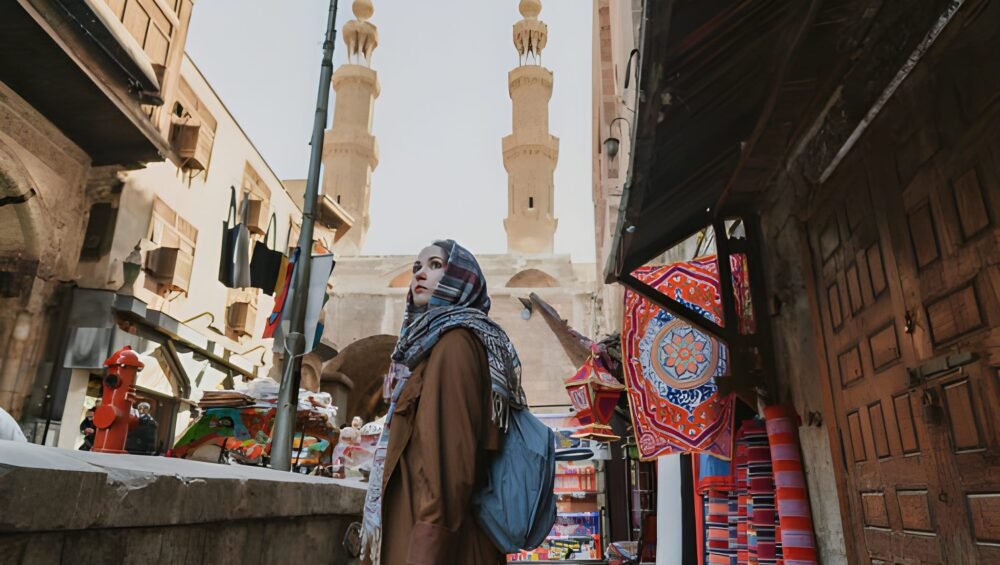
Visitors can explore Egypt Family Tours during the holiday season to blend sightseeing with seasonal celebration. Popular landmarks such as the Nile River become even more magical, with cruises offering Christmas dinners on deck. In Cairo, the Cairo Tower glows against the skyline, while in Luxor, temples such as the Luxor Temple shine brightly for evening visitors. Whether you’re wandering the El Moez Street bazaar or enjoying Christmas carols in hotel lobbies, the holiday fills Egypt’s heart with warmth and cross-cultural kinship.

Festive Culinary Traditions During Christmas in Egypt

Food plays a central role in Christmas celebrations in Egypt. The moment fasting ends, kitchens come alive with cherished family recipes. The Coptic feast includes symbolic dishes that emphasize renewal and gratitude. Fatah, a fusion of rice, bread, meat, and garlic sauce, often steals the spotlight as the centerpiece meal. Sweet delights like Kahk (Egyptian cookies) and Basbousa grace every table, offering a taste of joy and community spirit.

Perhaps the most beloved dessert is Om Ali, a warm, flaky pastry pudding drenched in milk, nuts, and sugar. It’s as traditional as it is lavish, representing abundance and generosity. Many families in Cairo, Alexandria, and rural villages gather late into the night savoring these dishes. Tourists on all-inclusive Egypt vacations often get to experience these authentic meals prepared with love. Egyptian Christmas cuisine doesn’t strive for extravagance; it reflects heritage, blending simplicity with heartfelt connection to faith.

Christmas Markets, Shopping, and Gifts in Egypt

During Christmas time, markets across the country burst into color with ornaments, handcrafted gifts, and local art. The bustling Khan El Khalili market in Cairo brims with souvenirs, glass lanterns, and papyrus scrolls. It’s a paradise for travelers in search of authentic Egyptian keepsakes. In Alexandria, festive bazaars line old European-style streets, offering artisan crafts and handmade jewelry. Visiting these markets in December not only delights your senses but also connects you to Egypt’s creative pulse.

Travelers exploring these markets during 8 Days Egypt Christmas Holiday packages often enjoy customized itineraries, combining cultural immersion with seasonal revelry. Whether it’s buying a silver cross from a Coptic silversmith or a spice box from a local merchant, the gifts you’ll take home carry the warmth of Egyptian artisanship and holiday spirit.

Christmas Travel Experiences and Sacred Destinations

Egypt holds great significance in Christian history, being one of the earliest centers of the faith. The country’s Christian heritage sites become particularly symbolic during the Christmas season. Pilgrims visit the Abu Serga Church in Old Cairo, believed to have sheltered the Holy Family. Others journey to the St. Catherine’s Monastery at Mount Sinai, one of Christianity’s oldest functioning monasteries. These sacred sites evoke deep reverence, especially under the winter sky where devotion and history beautifully converge.

Many travelers also include a Nile cruise, such as the Luxury Dahabiya Nile Cruise, as part of their Christmas tour. Gliding along the Nile offers moments of serenity—temples adorned by sunlight, villages preparing feast nights, and locals exchanging greetings of peace. For those seeking both relaxation and reflection, Christmas in Egypt presents an incredible opportunity to blend cultural insight with a luxurious holiday escape.

Christmas in Cairo: The City of Lights and Faith

Cairo comes alive at Christmas, its bustling streets echoing with joy. Downtown hotels display ornate Christmas trees, while cafes serve gingerbread and hot drinks. Coptic Cairo becomes an extraordinary attraction, especially the ancient Coptic Museum and Babylon Fortress Cairo, where centuries of Christian art and relics recount the story of faith that shaped Egypt. Tourists enjoy a perfect blend of religious resonance and contemporary festivity, proving that Cairo truly knows how to blend the sacred with the modern.

Luxor and Aswan: Experiencing a Timeless Christmas

Further south, Luxor and Aswan cradle some of Egypt’s most remarkable Christmas experiences. Under balmy winter weather, travelers admire the illuminated Temple of Philae and temples of Kom Ombo and Edfu. The serene waters and breathtaking sunsets over the Nile make these destinations idyllic for celebration. Visitors on 7 Days Luxury Egypt Trip packages find that Aswan’s timeless charm, combined with festive cheer, creates unmatched Christmas memories. Local Nubian villages also join the spirit, offering music, color, and a glimpse into Egypt’s diverse traditions.

Alexandria’s Mediterranean Christmas Vibe

In Alexandria, sea breezes replace desert winds, offering Christmas travelers a coastal charm. Festive lights twinkle along the Corniche, and cafés brim with chatter about new beginnings. Christian families attend Mass in ornate cathedrals echoing with hymns, merging ancient Greek, Coptic, and Roman influences. For those seeking serenity, Alexandria’s Christmas feels like a tranquil retreat filled with Mediterranean warmth and grace. Visitors often combine this with coastal explorations through Montazah Palace and the historic Citadel Of Qaitbay, discovering both spiritual and seaside splendor.

Why Spend Christmas in Egypt?

Christmas in Egypt satisfies curiosity, faith, and adventure in equal measure. The blend of sacred rites, ancient heritage, mild weather, and generous hospitality makes it an irresistible holiday destination. Visitors experience something deeper than sightseeing—an emotional connection between Christianity’s roots and modern global celebration. From candle-lit churches to cheerful cruise festivities, Christmas here transcends conventional imagery and reminds travelers that the essence of the season—love, gratitude, and togetherness—knows no boundaries.

Frequently Asked Questions About Christmas in Egypt

When is Christmas celebrated in Egypt?

Egypt’s primary Christmas celebration takes place on January 7th, following the Coptic Orthodox calendar. A smaller population, including Catholics and Protestants, mark the holiday on December 25th. Consequently, Christmas celebrations in Egypt often extend over several weeks, providing tourists with plenty of opportunities to witness sacred services and cultural events.

Is Egypt a good place to visit during Christmas?

Absolutely. With warm weather, fewer crowds, and unique cultural experiences, Egypt is a perfect winter getaway. Many visitors combine historical exploration with seasonal festivities through specialized tours like 8 Days Egypt New Year Tour. The mix of heritage, relaxation, and faith makes Christmas in Egypt deeply fulfilling.

What are popular Christmas traditions in Egypt?

Coptic Christians fast before Christmas, attend midnight Mass on Christmas Eve, and enjoy traditional dishes like fatah and Om Ali. Many families decorate trees, exchange small gifts, and spend time with loved ones. The emphasis lies more on spirituality and family unity than on commercial extravagance.

Where are the best places to experience Christmas in Egypt?

Coptic Cairo is the spiritual epicenter during Christmas, home to ancient churches such as the Abdeen Palace district’s historic churches and the famous Hanging Church. Luxor, Aswan, and Alexandria also offer wonderful atmospheres. Cruises along the Nile, like the Grand Egyptian Museum, the intricate craftsmanship and spiritual devotion behind these ancient rituals continue to captivate imaginations.

Whether you’re wandering through the Sakkara Necropolis or exploring the tombs in Valley of the Queens, understanding the seven steps of mummification offers a window into Egyptian culture, religion, and their deep-seated belief in the eternal cycle of life, death, and rebirth. Let’s delve step-by-step into this remarkable process that bridged humanity and divinity for over three millennia.

Step 1: Purification and Cleansing of the Body

The journey of mummification began with the cleansing of the deceased—a ritual of immense symbolic and hygienic significance. The body, representing both mortal decay and divine potential, was washed with palm wine and purified water from the sacred Nile. Embalmers chanted prayers to invoke Anubis’s blessing, marking the transition of the spirit into the realm of Osiris, god of resurrection. This step was crucial, as Egyptians believed cleanliness equated to holiness and was the foundation for eternal preservation.

In this stage, every part of the body was carefully prepared on a stone table in an embalming tent known as the ‘ibu’. The Nile’s water symbolized life itself, a spiritual rebirth, connecting the deceased with the eternal cycle of creation. Modern travelers who visit ancient riverside temples or take a serene cruise along the Nile River can almost sense the sacredness once ascribed to its waters by Egypt’s priests and embalmers.

Symbolic Importance of the Nile’s Purification

The Nile was not only Egypt’s lifeline but the mythical pathway between the land of the living and the afterlife. This first purification mirrored the soul’s preparation for its next cosmic voyage, echoing a larger belief in life’s cyclical nature—a belief still palpable in Egypt’s ancient temples and written texts.

Step 2: Removing Internal Organs

Once the body was cleansed, embalmers began the most delicate task—removing internal organs to prevent decay. They made a small incision, typically on the left side of the abdomen, through which the stomach, liver, lungs, and intestines were removed. Each organ was treated separately, dehydrated using natron, and stored in special containers known as canopic jars, guarded by the Four Sons of Horus. The heart, however, remained in the chest, considered the seat of wisdom and emotion, vital for the Weighing of the Heart ceremony in the afterlife.

Historians have marveled at the meticulous care ancient Egyptians devoted to this stage. The brain, thought to have no spiritual function, was often extracted through the nasal cavity using hooked instruments—an extraordinary display of early anatomical knowledge. Visitors inspired by such surgical precision can explore exhibits at the National Museum of Egyptian Civilization, where preserved specimens and instruments reveal the mummifiers’ scientific prowess.

Protection through Canopic Jars

Each canopic jar bore a divine protector: Imsety for the liver, Hapi for the lungs, Duamutef for the stomach, and Qebehsenuef for the intestines. These jars, often carved from alabaster or limestone, were placed beside the sarcophagus, ensuring eternal guardianship in the afterlife. The artistry of these jars stands as one of the finest examples of Egyptian funerary craftsmanship.

Step 3: Drying with Natron

With organs removed, embalmers commenced the vital drying process using natron—a natural salt harvested from the Egyptian desert. The body was entirely filled and covered with natron for forty days, allowing the mineral to absorb all moisture and halt decomposition. This step was fundamental; without it, preservation would fail. The result—a lifeless figure transformed into a sacred relic of eternity—was astonishingly effective, even thousands of years later.

The use of natron highlighted Egyptian mastery of natural resources. Its chemical composition, rich in sodium carbonate, served both as desiccant and disinfectant, a detail that still fascinates today’s archaeologists excavating drying beds near the Dakhla Oasis. Through natron’s purifying effect, the physical body symbolically shed its mortal nature, leaving behind a pure form ready to host the soul once more.

Step 4: Anointing and Restoration

Following desiccation, embalmers gently cleaned off the natron, then massaged the body with fragrant oils, resins, and gums. These substances not only softened the skin but protected it from future damage, creating a lifelike appearance. Myrrh, cedar oil, and frankincense—luxuries from distant lands—were lavishly applied. Symbolically, the oils restored the skin of the deceased, representing rebirth, an echo of Osiris’s revival myth.

Egyptians believed that sensory recognition in the afterlife was possible; thus, maintaining a pleasing visage and aroma was essential. The combination of sacred oils and incantations transformed the body into an instrument of divine endurance. This process paralleled rituals found at sacred temples like the Temple of Hatshepsut, where offerings to gods also involved aromatic anointing to attract blessings.

Step 5: Wrapping the Body in Fine Linen

Arguably the most recognized stage of mummification, wrapping was both artistic and deeply spiritual. Embalmers began by covering each finger and toe, continuing with layers upon layers of linen strips—typically hundreds of meters long. Each layer was anointed with resin, bonding the wrappings to form a resilient cocoon. During this phase, priests recited prayers and placed protective amulets, such as the Eye of Horus, between the layers, ensuring protection against evil forces in the afterlife.

Every fold symbolized divine rebirth. The wrapping process could take up to two weeks, as embalmers performed meticulous rituals for different body parts. The head and heart were wrapped separately, secured with symbolic knots thought to seal spiritual energy. Decorative masks, sometimes gold-covered, replaced natural features, representing transformation into the divine form of Osiris. The most iconic mask belongs to King Tutankhamun, a breathtaking piece that remains one of humanity’s most enduring artifacts.

Step 6: Placing in the Coffin and Sarcophagus

Once fully wrapped, the mummy was placed within one or more nested coffins, each lavishly decorated with hieroglyphs, spells, and images of deities. The inner coffin hugged the mummy’s form, crafted often from wood gilded with gold, while the outer sarcophagus symbolized the earth’s protective embrace. These layers of defense safeguarded the physical and spiritual forms from intrusion, ensuring an eternal resting place for the ka and ba—the soul’s dual aspects.

Such elaborate craftsmanship can still be admired at sites like the Luxor Museum, where historians have identified patterns in coffin iconography revealing personal stories of the deceased. Each depiction carried specific magical purpose, underlining Egypt’s intertwined belief in art and spirituality. The mummy’s placement inside the sarcophagus marked completion of spiritual preparation, ready for the grand procession to its tomb.

Step 7: Burial Ceremony and Afterlife Rituals

The final stage—the burial—was a moment of grandeur. The mummy, enclosed in its coffin, was escorted by priests, relatives, and mourners to the tomb. This journey mirrored the sun’s nightly descent into the underworld. Priests performed the ‘Opening of the Mouth’ ceremony, symbolically restoring the deceased’s ability to breathe and eat in the next life. Offerings of food, drink, jewels, and scriptures filled the burial chamber, transforming it into a sacred microcosm of paradise.

As hieroglyphs on tomb walls recorded the deceased’s virtues and prayers, ancestral spirits gathered to welcome the new soul into eternity. Today, when travelers visit the Temple of Seti or explore ancient burial sites across Luxor City, they can almost sense the echoes of ancient chants that once accompanied these sacred rituals. Every burial was both an ending and a beginning—a momentous farewell and a triumphant rebirth into the everlasting fields of reeds described in Egyptian mythology.

FAQs About The 7 Steps of Mummification

1. Why did the ancient Egyptians mummify their dead?

Ancient Egyptians practiced mummification to preserve the body for the afterlife. They believed the physical form had to remain intact for the soul to recognize and reunite with it. Mummification served both spiritual and practical purposes, ensuring immortality and maintaining the deceased’s identity throughout eternity.

2. How long did the mummification process take?

The complete process typically took about seventy days. Forty days were designated for drying with natron, while the remaining thirty days involved anointing, wrapping, and performing final rituals. Each stage was executed with meticulous precision guided by religious tradition and astrological timing.

3. What materials were used during mummification?

Mummification required materials like natron salt, linen strips, resin, frankincense, myrrh, palm wine, and sacred oils. These elements were believed to purify and sanctify the body. Some oils also held medicinal properties, contributing to the remarkable preservation seen in mummies thousands of years later.

4. Who performed the mummification rituals?

Specialized priests known as embalmers or mortuary priests conducted the rituals. They often wore masks shaped like Anubis, the jackal-headed god of embalming, symbolizing protection and divine authority. Each step they performed was accompanied by hymns and incantations to ward off evil spirits.

5. Where can one see mummies today?

Travelers can view authentic mummies at the Grand Egyptian Museum, the National Museum of Egyptian Civilization, and various tombs across Luxor and Aswan. Some luxury Nile cruises also offer guided tours to rediscover these awe-inspiring relics of ancient Egyptian civilization.

Anubis Symbol

The Anubis Symbol: Guardian of the Afterlife and Eternal Protector of Souls

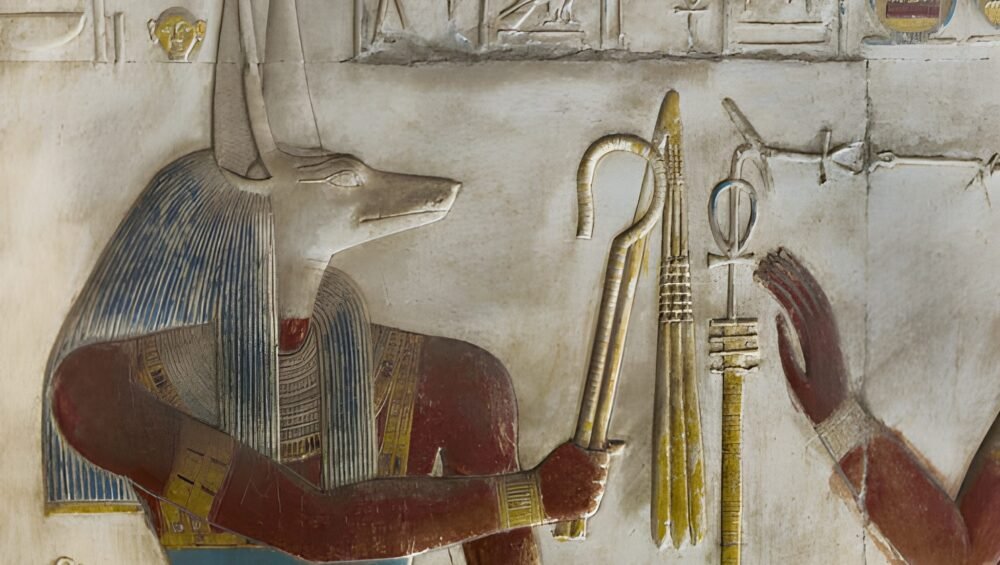
The Anubis symbol stands as one of the most influential and enduring icons in Ancient Egyptian mythology. Representing the god of mummification, embalming, and the afterlife, Anubis is depicted with a striking black jackal’s head that has become synonymous with protection, guidance, and judgment of souls. Long before the rise of Osiris as a central deity of the dead, Anubis was revered as the chief guardian of the necropolis, the divine protector who oversaw the sacred transition between earthly existence and eternal rest. His emblem, often found inscribed on tombs, papyrus scrolls, and amulets, captured the Egyptians’ fascination with immortality and the meticulous balance between life and death. The Anubis symbol wasn’t just an emblem of fear or reverence—it represented hope. Ancient Egyptians believed that this god, through his divine power, could weigh the heart of the deceased with fairness, ensuring their safe journey into the afterlife. His jet-black hue symbolized the fertile soil of the Nile and rebirth, while his canine form reflected keen senses—a perfect protector in both physical and spiritual worlds. The legacy of the Anubis symbol persists today, inspiring art, jewelry, tattoos, and pop culture, serving as a mystical link between modernity and ancient beliefs surrounding death and resurrection.

Origins and Evolution of the Anubis Symbol in Ancient Egypt

The origins of the Anubis symbol trace back to the Predynastic Period, even before the unification of Upper and Lower Egypt. Initially known as ‘Inpu’ or ‘Anpu,’ his role was to preside over funerary rites, ensuring that bodies were preserved for the afterlife. As religious practices evolved, Anubis transitioned from being the sole god of the dead to the patron of mummification and tomb protection, sharing divine duties with Osiris. His emblem—a jackal or dog figure—was not coincidental. Wild jackals were often seen prowling cemeteries, and the Egyptians associated them with the guardians of the sacred burial grounds. Thus, the image of Anubis transformed into one of respect and sanctity, guarding the spirits from desecration and chaos. During the Old Kingdom, priests who performed embalming rituals often donned masks shaped like Anubis, invoking his protection over the deceased.

To witness remnants of this divine transformation, travelers exploring the Luxor Temple and the tombs in the Valley of the Kings can find carvings and murals where Anubis is depicted gently attending to Pharaohs during their ceremonial passage. These depictions reinforce his timeless role as the watcher of eternity.

The Symbolism Behind the Black Jackal

The color black in the Anubis symbol represents rebirth, fertility, and the regenerative power of the Nile’s silt. Contrary to modern associations of black with evil, Egyptians linked it with life, renewal, and resurrection. The jackal, embodying vigilance and sharp intuition, signified a creature capable of detecting spiritual danger. Anubis’s hybrid form—half human, half jackal—embodied the balance between mortality and divinity. This visualization perfectly captured the Egyptian ideal of dual existence: the living spirit and the eternal soul coexisting beyond physical death. The fine artistry of his symbol, often found on funerary treasures, offered assurance that Anubis was ever-present to guide souls safely through the hall of judgment.

Modern visitors exploring the Abu Simbel Temples or Temple of Philae will uncover inscriptions honoring him, underscoring his importance throughout hundreds of dynasties.

The Role of the Anubis Symbol in Funerary Rituals

The Anubis symbol was deeply intertwined with every stage of Ancient Egyptian burial rites. His presence was invoked during the ritual of ‘Opening of the Mouth,’ a ceremony granting the deceased spiritual senses in the afterlife. Embalmers prayed to Anubis before they purified the body, believing he would protect them from mistakes. His image adorned coffins, sarcophagi, and burial chamber walls, serving as a visual prayer for safe passage. The notion of judgment was central—Anubis was the divine facilitator during the ‘Weighing of the Heart’ ceremony, where the heart was balanced against the feather of Ma’at, symbolizing truth. Those who passed the test could enter eternity, while others faced annihilation. The Anubis symbol was thus more than aesthetic; it was a literal key to eternity.

Artifacts discovered in ancient necropolises—from Saqqara Necropolis to Valley of the Queens—reveal amulets inscribed with his likeness, crafted to ward off evil and preserve soul purity. These grave goods illustrate just how sacred his symbol became over millennia.

Anubis and the Weighing of the Heart Ceremony

In the Hall of Truth, Anubis watched vigilantly as the souls of the dead faced judgment before Osiris. His scale determined salvation or destruction. This vivid imagery, immortalized on papyrus such as the ‘Book of the Dead,’ symbolized fairness and the inevitability of cosmic justice. Even in modern psychology and philosophy, the Anubis symbol evokes introspection—inviting reflection on moral balance and the weight of one’s actions. For Egyptians, his symbol embodied peace, guiding hearts burdened by earthly deeds toward redemption.

The Use of the Anubis Symbol in Amulets and Statues

Throughout history, Egyptians wore amulets bearing the Anubis symbol to invoke spiritual protection. Crafted in gold, obsidian, or faience, these charms were placed inside wrappings of the deceased for eternal guardianship. Temples dedicated to Anubis depicted grand statues with meticulous craftsmanship, revealing devotion to his divine power. Even now, visitors seeking deeper connections to Egyptian heritage can explore representations of Anubis in ancient art while cruising on the Nile aboard the Steigenberger Minerva Nile Cruise or visiting the Grand Egyptian Museum where his sacred effigies continue to captivate audiences worldwide.

The Spiritual Meaning of the Anubis Symbol in Modern Times

In contemporary culture, the Anubis symbol transcends its origins to embody transformation, wisdom, and strength against adversity. Spiritual enthusiasts and historians alike interpret Anubis as a guardian guiding humans through personal metamorphosis—through loss, rebirth, and moral awakening. His presence in jewelry, tattoos, and art still honors the ancient belief that death is not an ending but a transition. Those who meditate on this symbol often associate it with shadow work, evoking the courage to confront inner darkness and emerge renewed. The symmetry and poise embedded within the Anubis symbol make it a timeless compass for seekers of balance, much as it once guided departed souls across the veil of eternity.

Many travelers visiting Egypt immerse themselves in this symbolism by touring sacred sites such as Temple of Seti in Abydos or embarking on serene voyages like the Luxury Dahabiya Nile Cruise, where storytellers recount the mysteries of Anubis under starlit skies.

Representation of the Anubis Symbol Across Cultures

The influence of the Anubis symbol extended beyond Egypt’s borders. In ancient Greek writings, Anubis was equated with Hermes, merging into the deity ‘Hermanubis,’ symbolizing the syncretism between death and communication. Coptic traditions and later mystic practices preserved traces of his archetypal role as a psychopomp. In popular culture, Anubis has continued to inspire films, literature, and gaming—portrayed as a symbol of mystery and justice. This cross-cultural endurance highlights how universal his symbolism remains, encompassing both fear of mortality and awe toward eternal order.

Architectural Depictions and Hieroglyphic Significance

Ancient temples such as those in Kom Ombo Temple and Edfu Temple were adorned with hieroglyphs incorporating the Anubis symbol in prayers for the pharaoh’s longevity. The hieroglyphic representation—often featuring a seated jackal atop a shrine—embodied vigilance, guarding every soul resting beneath the earth. Each carved stroke narrated Egypt’s devotion to the eternal cycle, mirroring the desert’s rhythm of dusk and dawn. Studying these inscriptions provides profound insight into the intersection between language, art, and faith in ancient times.

The Enduring Legacy and Influence of the Anubis Symbol

Modern Egyptologists regard the Anubis symbol as one of humanity’s earliest metaphors for spiritual guidance. He continues to bridge philosophical discourse, artistic expression, and religious study. From the walls of Temple of Hatshepsut to the exhibitions of the Nubian Museum in Aswan, Anubis’s black silhouette remains awe-inspiring. He serves as a reminder that ancient wisdom endures through symbols, communicating truths that transcend millennia. The Anubis symbol is not merely historical—it continues to shape how humanity comprehends mortality, morality, and the sacred cycle of life and rebirth.

Those seeking a firsthand encounter with the remnants of his cult may explore sites through curated Egypt Private Tours or picturesque Luxury Nile Cruises, where knowledgeable Egyptologists reveal ancient inscriptions depicting his majesty. As the Nile whispers stories of kings and gods, the spirit of Anubis lingers, watching over eternity with steadfast gaze.

Symbolic Connection Between Anubis and the Spiritual Traveler

In modern spirituality, the Anubis symbol resonates deeply with those embarking on inner journeys. Whether one travels physically through Luxor City or metaphysically through meditation, this ancient emblem acts as a guide toward enlightenment. It assures travelers that transitions—whether between worlds or life phases—carry purpose and divine order. The jackal-headed guardian remains an unwavering ally for those who respect both the seen and unseen realms.

FAQs about the Anubis Symbol

What does the Anubis symbol represent?

The Anubis symbol represents protection, mummification, and guidance to the afterlife. It embodies fairness, resurrection, and divine judgment, ensuring the soul’s safe transition from earthly life into eternity.

Why is Anubis depicted with a black jackal head?

The black jackal symbolizes rebirth and fertility. The color black, associated with the rich soil of the Nile, conveys regeneration, while the jackal’s nature as a nocturnal guardian mirrors Anubis’s role as protector of tombs.

Where can I see the Anubis symbol in Egypt today?

Travelers can witness the Anubis symbol in temples such as Dendera Temple Complex, the tombs in Luxor, and the exhibits at the National Museum of Egyptian Civilization. Many guided tours, including Egypt Day Tours, showcase his depictions in context.

What materials were used to create Anubis amulets in ancient times?

Amulets featuring the Anubis symbol were commonly made from gold, lapis lazuli, obsidian, or faience. These materials carried spiritual connotations of immortality and divine protection throughout the afterlife.

What modern meanings does the Anubis symbol hold today?

Today, the Anubis symbol signifies guidance, transformation, and spiritual awakening. It appeals to those exploring rebirth, moral introspection, and the courage to walk through life’s unknowns with unwavering strength.

Tipping In Egypt

Tipping in Egypt: A Complete Guide to Baksheesh and Gratuity Etiquette

Tipping in Egypt, commonly called ‘baksheesh,’ weaves itself into the social and economic fabric of daily life. From bustling Cairo streets to serene Nile River cruises, tipping is more than just a polite gesture—it’s a cultural expectation that reflects appreciation and generosity. For visitors exploring the enchanting land of pharaohs, understanding Egypt’s tipping etiquette can make every encounter smoother and every smile warmer. Whether you’re riding a camel by the pyramids, sipping tea on a felucca ride, or strolling through the El Moez Street, knowing how and when to tip can greatly enhance your experience.

Unlike in some Western countries, where tips are optional extras, tipping in Egypt is often a genuine part of workers’ income. Due to the country’s modest wage structures in the service sector, many locals rely on gratuities as a financial supplement. Hence, travelers should approach baksheesh not as an annoyance but as a way to engage respectfully with the community. After all, that bellboy hoisting your bag, or the driver navigating Luxor’s vibrant streets, likely earns a modest base pay and counts on your tip to make his day more rewarding.

In this comprehensive guide, we’ll break down the ins and outs of tipping in Egypt—how much to give, when it’s expected, how to offer it gracefully, and what cultural nuances to keep in mind. From hotel porters and taxi drivers to waiters and tour guides, this article covers the fine details of Egypt’s unwritten etiquette. By the time you finish reading, you’ll navigate Egypt’s tipping culture like a pro, ensuring gratitude flows both ways along your journey through the land of the Nile.

Understanding the Culture of Baksheesh in Egypt

To understand tipping in Egypt, you must first grasp the concept of baksheesh. The word, derived from Persian origins, roughly translates to ‘gratuity’ or ‘gift.’ However, in Egyptian daily life, it carries deeper social and moral significance. Baksheesh reflects generosity, hospitality, and acknowledgment of service—values deeply embedded in Egyptian culture. In many ways, it’s a conversation of respect, bridging economic gaps while sustaining the smiles of those who make your travels more comfortable.

Egyptians don’t always expect extravagant tips, but they do appreciate the gesture. The practice finds expression across all walks of life, from the doorman opening your car door to the guide leading your Cairo Day Tours. It’s common to see locals tipping small amounts for everyday services—showing how ingrained baksheesh truly is. While foreigners may view frequent tipping as confusing or even overwhelming at first, once you adapt, it becomes second nature and adds a touch of authenticity to your journey.

Why Tipping Matters in Egypt’s Socioeconomic Context

Wages within tourism and service industries in Egypt are often supplemented by tips. Workers at hotels, restaurants, and tourist attractions frequently earn minimal base salaries, making gratuities essential. In places like Luxor Day Tours or Aswan Day Tours, your tipping habits can directly influence the livelihoods of many families. What might seem modest to you—10 to 20 Egyptian pounds—can make a meaningful impact locally. By tipping fairly, travelers participate in a long-standing tradition that fosters goodwill and mutual respect.

General Tipping Guidelines for Travelers in Egypt

Understanding how much to tip in Egypt depends on the service context. Egyptians appreciate small but consistent expressions of gratitude. It’s practical to carry coins and small denomination banknotes since denominations under 50 EGP are most useful for tipping. Keep in mind, though, that excessive tipping isn’t necessary. What matters most is the gesture itself—done with respect and sincerity.

Tipping in Restaurants and Cafés

In Egyptian restaurants, a service charge of around 12–14% may already be included in your bill, yet staff rarely receive this portion directly. For this reason, leaving an additional 5–10% in cash is customary. In local cafés or small eateries, a 5–10 EGP tip for good service suffices. Always tip the waiter personally to ensure they receive it—placing it in their hand or discreetly on the table while smiling goes a long way in Egyptian hospitality circles.

Tipping Hotel Staff and Porters

Hotel staff play a pivotal role in ensuring visitors enjoy their stay. It’s polite to tip bellboys 20–30 EGP per bag and housekeeping staff 20–50 EGP per day, ideally left on the nightstand. At luxury properties, such as those included in Luxury Egypt Tours, a 10% gratuity for exceptional service is warmly welcomed. Remember—tips reflect appreciation for invisible efforts that make your trip truly comfortable.

Tipping Tour Guides and Drivers

If you’re traveling with professional tour guides—perhaps on a 7 Days Cairo and Nile Cruise Package or an 8 Day Egypt Luxury Tour—tipping becomes especially significant. Guides are trained experts whose insights enrich your understanding of ancient wonders like the Luxor Temple or the Temple of Philae. A fair tip ranges from 100–200 EGP per person per day for guides and half that for drivers. For multi-day tours, offering a lump sum at the end of the journey is both convenient and respectful.

Transportation Tipping Etiquette

Taxi and Private Transfers

Taxis are common across Egypt’s cities. Unlike metered systems in some countries, many Egyptian taxis rely on negotiated fares. Round up the fare or add about 10 EGP as a gesture of appreciation. For long-distance transfers, such as Hurghada Transfers or Luxor Transfers, tipping 50–100 EGP is suitable, especially if your driver assists with luggage or waits patiently during stops.

Boat Captains and Nile Cruise Staff

A highlight of Egyptian travel is sailing down the Nile aboard a cruise such as the Steigenberger Royale Nile Cruise. Cruise tips differ slightly—passengers often contribute to a pooled fund, distributed among the crew at the voyage’s end. A general guideline is around 100–150 EGP per day per traveler. For smaller sailboats like dahabiyas, such as the elegant Nour El Nil Dahabeya, providing the captain and staff with a collective gratuity in cash is both customary and appreciated.

Specific Situations: From Temples to Street Services

Baksheesh at Historical Sites

Egypt’s archaeological marvels—from Abu Simbel Temples to Kom Ombo Temple—often have staff who may go the extra mile to take photos, open restricted areas, or explain unique details. A tip of 10–20 EGP shows your gratitude but should be optional. Avoid over-tipping to prevent inflation of expectations for future travelers. A smile and whispered ‘shukran’ (thank you) often carry their own weight in courtesy.

Tipping Street Vendors and Restroom Attendants

In public restrooms or local markets, a small tip of 5–10 EGP remains standard. Elders selling handmade goods or young helpers cleaning spaces earn modest wages, and your small contribution helps them support their families. When exploring villages near The Nubian Village or during Felucca Ride on the Nile in Aswan, carrying change ensures smooth interactions.

Practical Tips for Handling Tipping in Egypt

When and How to Offer Tips Politely

Timeliness matters when tipping in Egypt. Hand over gratuities privately and discreetly, ideally accompanied by warm eye contact and polite words. Egyptians value dignified exchanges; flashy tipping might seem disrespectful. Use your right hand when offering cash, as it’s culturally proper. In group tours, handing tips collectively through your guide helps ensure fairness.

Currency Considerations and Denominations

Always use Egyptian pounds rather than foreign currency. Smaller notes (5, 10, 20 EGP) are ideal. Exchange sufficient change before embarking on day excursions such as the Day Tour to Luxor from Hurghada or the Day Trip to Abu Simbel from Aswan. Avoid giving coins from your home country; locals can’t easily convert them. Egyptian banks occasionally run short on small denominations, so planning ahead saves awkward moments.

Common Tipping Mistakes Tourists Should Avoid

Overtipping and Setting Unrealistic Expectations

Generosity is welcome, but excessive tipping can upset local balance. Tourists who overpay amplify expectations, which may pressure other travelers to do the same. Maintain moderation by gauging standard rates and asking guides for advice. Politeness outweighs value; even a small amount handed with genuine warmth earns greater appreciation.

Forgetting to Tip Behind-the-Scenes Staff

While front-line employees like waiters and drivers often receive tips, many behind-the-scenes workers—cooks, cleaners, deckhands—quietly contribute to your comfort. When gratuities are pooled, these individuals benefit equally. Supporting these unseen heroes reinforces the true purpose of tipping in Egypt: shared appreciation and collective respect.

Frequently Asked Questions about Tipping in Egypt

How much should I tip at restaurants in Egypt?

Leaving an extra 5–10% in cash is customary, even if a service charge appears on the bill. In smaller establishments, 10–20 EGP is appropriate. Directly hand your tip to the waiter to ensure they receive it.

Do I have to tip taxi drivers in Egypt?

Tipping taxi drivers isn’t mandatory, but rounding up the fare or adding 10 EGP is courteous. For pre-booked private transfers, 50–100 EGP is a fair gesture.

How much should I tip a guide on a private tour?

For full-day private tours, 100–200 EGP per person per day is recommended for guides, and half for drivers. On multi-day packages, provide one collective tip at the journey’s end.

Is tipping expected in luxury hotels and cruises?

Yes. At five-star hotels and Nile cruises like the MS Crown Jewel Nile Cruise, a pooled gratuity system is common. Guests usually contribute 100–150 EGP daily, evenly distributed among all crew members.

Can I give US dollars as tips in Egypt?

While US dollars are widely recognized, it’s better to tip in Egyptian pounds for convenience. If offering USD, stick to crisp, small bills and ensure they’re in perfect condition—locals may struggle to exchange worn notes.

Final Thoughts on Tipping in Egypt

Mastering the art of tipping in Egypt transforms your travel experience into a respectful cultural exchange. Beyond mere monetary value, it embodies gratitude and human connection—qualities Egyptians hold dear. By tipping mindfully, you contribute to sustainable tourism and forge genuine bonds with the people who make Egypt so magical. Whether you’re wandering through the ancient corridors of the Sakkara Necropolis

Journey Of The Holy Family In Egypt

The Miraculous Journey of the Holy Family in Egypt: A Spiritual Odyssey Through Sacred Lands

The Journey of the Holy Family in Egypt stands as one of the most revered stories in Christian history—a remarkable saga of faith, endurance, and divine intervention. Fleeing from the cruelty of King Herod, the Virgin Mary, St. Joseph, and the infant Jesus found refuge in the land of the Nile, transforming Egypt into a sanctuary of miracles and eternal blessings. This historic journey covered more than 3,000 kilometers across deserts, ancient towns, and fertile valleys, leaving behind a path sanctified by their presence. Every church, monastery, and well associated with their route continues to draw pilgrims and travelers who seek a deeper connection with the spiritual heartbeat of Egypt.

Egypt’s unique position as both the cradle of early Christianity and a land steeped in ancient heritage makes the Journey of the Holy Family profoundly meaningful. From Coptic Cairo (Old Cairo) to Upper Egypt’s rugged landscapes, each stop unveils a piece of history interwoven with divine protection and local devotion. For modern-day explorers and pilgrims, this sacred trail isn’t merely a voyage through geography—it’s an inward journey through faith, culture, and time. Traveling along the Holy Family’s path today offers an unforgettable intersection of spirituality and heritage unique to Egypt, where ancient civilization and celestial stories intertwine seamlessly.

Historical Context of the Holy Family’s Flight to Egypt

The Holy Family’s flight began after an angel’s warning to Joseph in a dream, directing him to escape with Mary and baby Jesus to Egypt. According to Christian tradition, this perilous journey symbolized divine refuge and protection. The decision to head south wasn’t arbitrary—Egypt was known as a safe haven, beyond the grasp of Herod’s tyranny, and already home to flourishing Jewish communities. This migration echoed an ancient biblical pattern; just as Joseph, the son of Jacob, sought refuge in Egypt during famine, the Holy Family found salvation in the same land centuries later.

The flight wasn’t fleeting. Many sources, particularly Coptic Christian traditions, recount a stay spanning over three years. During this period, the family moved through several regions: the Nile Delta, Middle Egypt, and deep into the valley near Aswan City. Legends affirm numerous miracles—wells springing from desert sand, idols crumbling before the power of Christ, and entire communities turning toward faith. These accounts have been preserved through oral tradition and inscribed within Egypt’s most sacred monasteries and churches.

The Spiritual Geography of the Holy Family Route

Mapping the Journey of the Holy Family in Egypt reveals a trail rich with both spiritual and historical landmarks. Each destination tells a story of endurance and grace. The journey began near Rafah, entering North Sinai, where the family passed through El-Farama, then journeyed south toward Basatin, Matareya, and Memphis. Today, travelers exploring sites such as ancient Memphis and the area surrounding Babylon Fortress Cairo can trace the footsteps of Jesus and Mary through monuments of profound antiquity.

In Old Cairo, the Holy Family found refuge in a cave beneath what is now the Abu Serga Church. This site, one of the oldest Christian sanctuaries in the world, preserves an extraordinary legacy. Nearby, the Coptic Museum houses precious icons, manuscripts, and relics documenting this divine journey. Every depiction celebrates Egypt’s role as the shelter of the Messiah, making these areas pivotal for pilgrimage and faith tourism alike.

Miraculous Stops Along the Holy Family’s Path

The family’s divine odyssey wasn’t without peril, but each trial bore wondrous signs. In Matareya, tradition says the Virgin Mary bathed young Jesus beneath a sycamore tree that miraculously shaded them from the desert sun. A healing spring burst forth at that very spot, giving birth to what’s now known as “Mary’s Tree” and “St. Mary’s Spring.” These sacred waters remain a testament to the family’s passage and continue to attract devotees from across the globe.

Further south near Assiut, the Monastery of the Virgin Mary—also known as Dronka Monastery—marks the family’s final resting place before returning to Palestine. The mountains surrounding this site create a natural sanctuary, protecting one of Christianity’s most spiritually charged locations. Pilgrims visiting today often participate in religious festivals celebrating the Holy Family’s stay, enveloped by hymns, incense, and heartfelt prayers that echo through time. Many travelers fuse this spiritual discovery with historic explorations offered by Egypt Day Tours, connecting sacred sites with broader cultural adventures.

Old Cairo: The Beating Heart of the Holy Family’s Journey

Old Cairo remains the focal point of the Holy Family’s journey. Hidden between narrow, stone-lined alleys lies a mosaic of holy shrines preserved by centuries of Christian devotion. The Hanging Church, built on top of the ancient Babylon Fortress, symbolizes the triumph of faith over darkness. Just steps away, Ben Ezra Synagogue and the Mosque of Ibn Tulun embody Cairo’s interwoven religious landscape, a testament to coexistence and divine purpose.

Modern pilgrims and historians exploring Coptic architecture marvel at the city’s fusion of faith and art. Detailed frescoes, carved wooden screens, and marble altars commemorate Egypt’s role in Christ’s early life. This spiritual junction between the old and new continues to attract visitors seeking divine inspiration. Many pilgrims complement their visit with a tranquil escape on a Luxury Nile Cruise, embracing the serene flow of the same river that once guided the Holy Family’s path.

Upper Egypt’s Hidden Sanctuaries: Holy Essence in the Valleys

Venturing south beyond Cairo, the Holy Family reached areas now known for their breathtaking natural beauty and devout communities. In El Minya and Assiut lie ancient caves, monasteries, and churches filled with inscriptions recounting the family’s presence. Sites such as the Gabal El Teir monastery, perched on limestone cliffs, provide panoramic views of the Nile—landscapes virtually unchanged since the family’s flight. Each year, thousands of worshippers make pilgrimages to these cliffs, carrying candles and prayers, honoring a centuries-old tradition deeply etched into Egypt’s soul.

Nearby, visitors can explore El Minya’s historical treasures or continue south toward Luxor and Aswan—the timeless heart of Pharaonic and Christian devotion. Combining spiritual exploration with the grandeur of Egypt’s temple complexes offers an experience unlike any other. Many heritage tours, such as the 4 Day Cairo and Luxor Tour Package, integrate visits to Coptic shrines with world-famous archaeological wonders.

Coptic Heritage: The Enduring Legacy of the Holy Family

The Holy Family’s journey shaped the spiritual identity of Egypt’s Coptic Christians, making the country the cradle of African Christianity. Every town touched by the family’s footsteps built upon its memory, erecting churches and monasteries adorned with icons celebrating the infant Christ in Egypt. Coptic hymns, chants, and liturgies still recount the same journey, narrating stories of divine protection through poetic verses. These living traditions solidify the cultural continuity between ancient faith and modern life.

Tales of the Holy Family’s miracles also strengthened the sense of unity among Egyptians, transcending religious boundaries. Muslims, too, revere Mary (Maryam) and Jesus (Isa), reflected in local folklore and shared heritage. Travelers can experience this harmonious blend of spirituality and history through specialized Egypt Family Tours, blending pilgrimage routes with educational and cultural discovery for all ages.

Journeying Through Faith Today: Pilgrimage and Spiritual Tourism

In recent years, Egypt’s Ministry of Tourism and the Coptic Church have renewed efforts to map, preserve, and promote the Holy Family route as a major spiritual trail. Pilgrims and tourists can now embark on guided journeys retracing the same route, experiencing not just the faith but also local hospitality that reflects centuries of devotion. Sites like the cave church in Maadi, the Holy Virgin Mary Church in Zeitoun, and monasteries in Upper Egypt form key highlights of these immersive experiences.

Many visitors extend their pilgrimage with serene Nile tours such as the Nile Premium Cruise or bespoke cultural programs like the 11 Days Luxury Egypt Tour Package, combining sacred exploration with Egypt’s signature hospitality. Through these spiritual and luxury routes, one can rediscover the very essence of Egypt—the land of exodus, revelation, and divine grace.

FAQs About the Journey of the Holy Family in Egypt

1. What is the historical timeline of the Holy Family’s journey in Egypt?

Tradition holds that the Holy Family entered Egypt around 4 BC, seeking refuge from King Herod’s decree in Judea. They are believed to have remained for more than three years, traveling from northern Sinai through the Nile Delta to Upper Egypt before returning to Israel once the threat subsided.

2. Which major sites in Cairo are associated with the Holy Family?

Key landmarks include the Abu Serga Church, the Hanging Church, the Coptic Museum, and Mary’s Tree in Matareya. Each site preserves sacred relics and artifacts that commemorate their stay and continues to welcome thousands of pilgrims annually.

3. How can travelers visit the Holy Family route today?

Several tour operators and pilgrimage organizations offer curated itineraries tracing the Holy route, including Coptic Cairo, Wadi El Natrun, El Minya, and Assiut. For convenient planning, visitors can explore customized Egypt Vacation Packages that include guided visits, transportation, and local insights.

4. What makes Egypt a vital destination for Christian pilgrimage?

Egypt stands as the only country besides Israel to physically host the Holy Family. Sacred locations along their trajectory are living witnesses to miraculous events and ancient hospitality, making Egypt’s spiritual tourism one of unparalleled depth and authenticity.

5. Are there annual festivals celebrating the Holy Family’s presence in Egypt?

Yes, several festivals—most notably at Dronka Monastery in Assiut—celebrate the Holy Family’s journey each summer. These gatherings feature prayers, processions, and communal celebrations attended by thousands of believers, blending faith and culture like nowhere else in the world.