King Tutankhamun Tomb

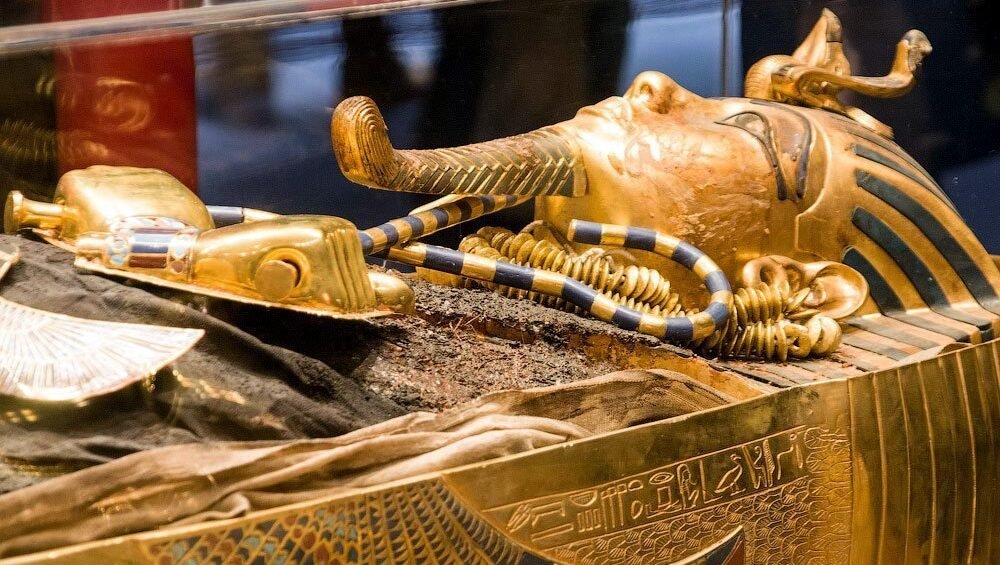
King Tutankhamun’s tomb, discovered in the Valley of the Kings in 1922 by Howard Carter, stands out as the only relatively untouched royal tomb in the area, making it one of the most significant archaeological finds in history. The global fascination was fueled by the wealth of golden artifacts and other luxurious items found within, symbolizing Egypt’s rich heritage.

Tomb number 62, belonging to Tutankhamun, is notably modest in size and decoration compared to other royal tombs. This likely reflects Tutankhamun’s short reign of about nine years, having ascended the throne at a young age. The tomb’s relative simplicity sparks curiosity about the potential contents of larger tombs, including that of Ramesses II.

The tomb’s main decorative elements are its wall paintings. Unlike other tombs which are lavishly adorned with texts like the Amduat and the Book of Gates to aid the deceased king’s journey to the afterlife, Tutankhamun’s tomb features only one scene from the Amduat. The rest of the decorations depict Tutankhamun in the company of various gods.

The small size of Tomb KV62 has led to much speculation. Tutankhamun’s successor, the high official Ai (buried in Tomb KV23), and Ai’s successor, Haremheb (Tomb KV57), might have originally intended the tomb for themselves. It’s possible that Tomb KV62 was already in existence, perhaps as a private burial or a storeroom, before being repurposed and expanded for the king.

The tomb’s limited space was packed with approximately 5,000 objects, reflecting Tutankhamun’s royal life. These items, including clothing, jewelry, cosmetics, furniture, toys, vessels, chariots, and weapons, were part of his daily life.

In an ironic twist of history, Tutankhamun, a relatively minor king who was overshadowed due to his association with the unpopular King Akhenaten, has eclipsed many of Egypt’s more renowned pharaohs in fame.
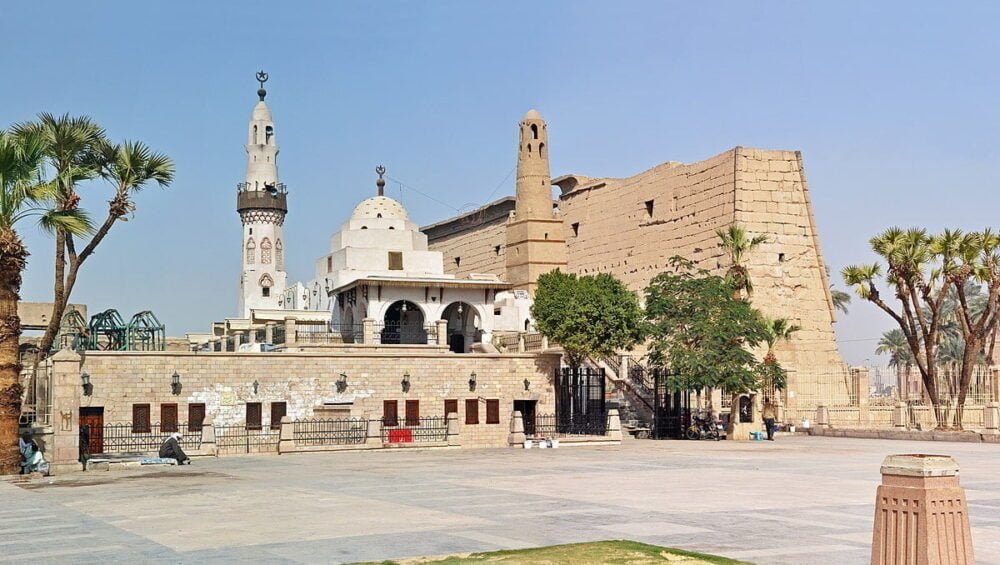
Abu Haggag Mosque in Luxor

Most Egypt travel packages feature a visit to the Abu Haggag Mosque, an essential part of the Luxor Temple complex on the east bank of Luxor. Although the ruins of Luxor Temple are not extensive, they are significant enough to make it one of Luxor’s top attractions. Visitors to the Luxor Temple invariably encounter the Mosque, which is open to non-Muslim guests, allowing them to explore freely.

The presence of the 13th-century Abu Haggag Mosque, still an active place of worship, enriches the experience of visiting Luxor Temple.

Surrounded by the ancient temple’s remnants, this medieval mosque is a sight to behold. If you admire it in daylight, consider returning at night to witness it illuminated during the temple’s spectacular sound and light show.

History of the Abu Haggag Mosque

Luxor Temple, originally a worship center, was partly ruined before the construction of the Abu Haggag Mosque. Before the mosque, several churches were built around the temple, with one still present today. The site’s history as a multi-religious worship center for over 3,500 years is one of its most remarkable aspects.

Local legends attribute the mosque’s construction to Youssef Abu Haggag, a figure who played a pivotal role in spreading Islam in the region and caring for pilgrims, earning him the nickname ‘Father of Pilgrims’ (Abu Haggag). Despite popular belief, it’s unlikely that Youssef himself built the temple.

The Legend of Abu Haggag

Yousef believed to be born in Damascus in 1150, moved to Mecca in his forties and eventually settled in Luxor, Egypt, where he lived until 1245.

According to local folklore, Yousef Abu Haggag built his mosque within Luxor Temple’s first courtyard and resisted officials’ attempts to demolish it. Despite his efforts, officials planned to tear it down. Miraculously, one official became paralyzed on the morning of the planned demolition, leading to a belief that his condition was a divine response to the dispute over the mosque’s demolition.

The officials then reversed their decision, allowing the mosque to remain. Since then, Abu Haggag and his mosque have held a special place in the hearts of Luxor’s residents.

Moorid and Abu Haggag in Egypt

Moorids in Egypt celebrate saints’ birthdays, both Muslim and Christian. While not all are widely observed, they remain popular traditions. Some, like Moulid El Nabi commemorating the Prophet’s birth, are nationwide celebrations. Others, such as Abu Haggag’s Moorid in Luxor, are local, occurring annually in early November.

The colorful and lively Moulid of Abu Haggag is an event that joyfully merges religion and entertainment. It’s eagerly anticipated each year, with many locals saving up just to participate in the festivities and the procession. The best time to visit the Abu Haggag Mosque is during these celebrations, offering a unique opportunity to experience authentic Egyptian customs and traditions. These events, though open to guests, are not tailored for tourists, offering a genuine glimpse into local life.

Abu Simbel temples in Aswan

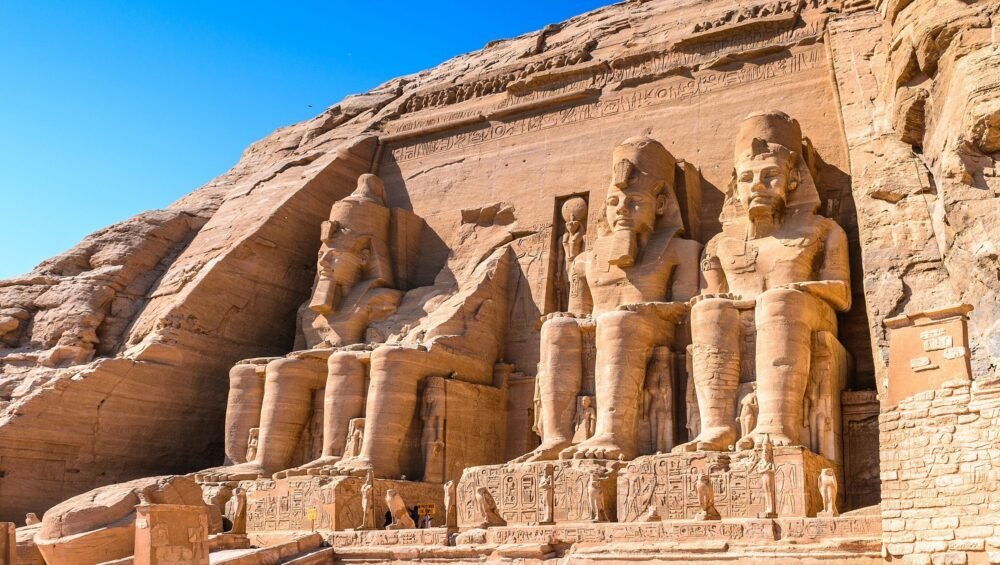
The massive rock-cut Abu Simbel temples, situated along Lake Nasser’s shores south of Aswan, rank among Egypt’s most famous landmarks. Pharaoh Ramesses II constructed these impressive structures to delineate the Egyptian Empire’s southern border with Nubia during the height of the New Kingdom.

The temples aimed to showcase the Egyptian pharaohs’ power to all beholders. They feature some of the era’s most remarkable carvings, with the entrance to the larger temple guarded by four immense statues.

Rediscovery of Abu Simbel’s Temples

Swiss explorer Johann Ludwig Burckhardt rediscovered the Abu Simbel temples in 1813 after they had remained isolated from civilization. Desert sands largely obscured the giant statues at the temple entrance until their complete uncovering in 1909, leading to the temples’ rise in fame as a symbol of southern Egypt.

Relocating the Abu Simbel Temples

The rising Nile floods due to the Aswan High Dam construction endangered the Abu Simbel temples. In response, workers disassembled and relocated the temples to a desert plateau 180 meters west and 64 meters above their original position in 1968. This meticulous operation involved breaking the temple into pieces weighing between 3 and 20 tons and reassembling it precisely in its new location. The project took over five years to complete.

Exploring the Abu Simbel Temple

There are two temples at the site. The Great Temple, Ramesses II’s temple, and the Lesser Temple were dedicated to his wife, Queen Nefertari.

Great Temple

It took about 20 years to build the Great Temple, dedicated to Amun, Rahorakti, Ptah, and Ramesses II himself. It is one of Ramesses II’s grandest temples in Egypt. Four 20-meter tall statues of a seated Ramesses II guard its entrance. The temple façade features hieroglyphs celebrating Ramesses II’s victory at the Battle of Kadesh.

The extensive temple houses several halls honoring Ramesses and his family. Its innermost chamber, the Holy of Holies, remains dark all year except for two specific days, demonstrating advanced knowledge in astronomy, mathematics, architecture, and science.

Lesser Temple

The Lesser Temple, dedicated to the goddess Hathor and Queen Nefertari, is smaller than the Great Temple. It features two large groups of figures separated by a central doorway on its rock façade.

Sun Alignment in the Great Temple

Twice a year, on February 22 and October 22, sunlight illuminates the statues of Ramesses and the gods inside the Great Temple. These dates, marking Ramesses II’s coronation and birthday, align the temple so that the sun shines on three of the four sanctuary statues, leaving the fourth, representing Ptah, in the shadows. This alignment has continued for over 3,200 years.

Visiting Abu Simbel

Most visitors reach Abu Simbel via a short flight from Aswan, though the temples are also a key stop for Lake Nasser cruises. These cruises offer unique views of the temple in early morning light and under moonlit skies.

Aswan in Egypt

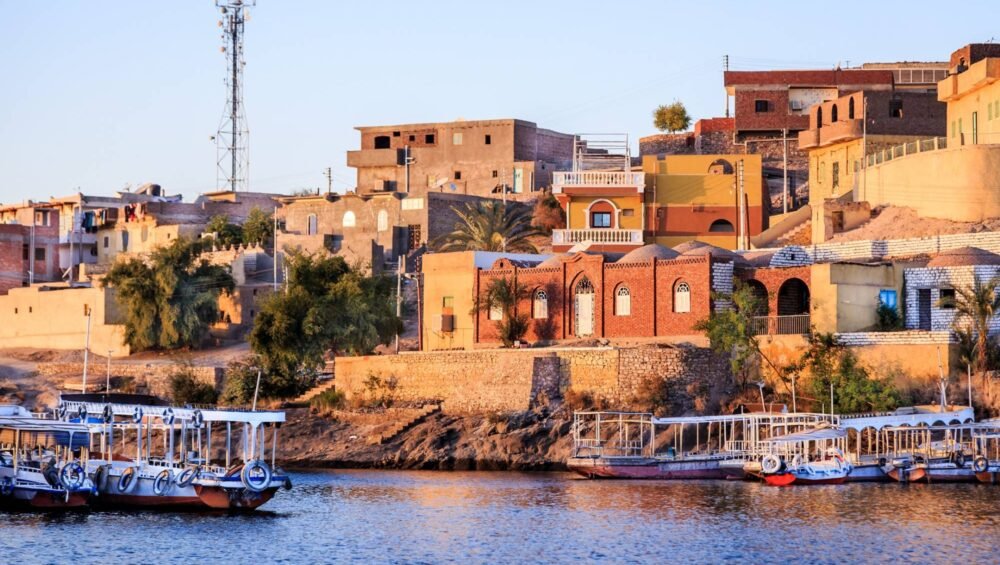
Aswan thrived historically as a strategic commercial center and gateway linking Egypt with the rest of Africa. This was due to its location at a natural economic intersection and a political boundary. It became a pivotal point where elephant and camel caravans from the south, laden with treasures, congregated to load ships heading north towards the Mediterranean Sea, thanks to the river’s navigability from north of Aswan.

Discover Aswan’s Attractions: Unveil its Charm.

The positioning of the cataracts has significantly influenced Aswan’s historical development. During the colonial era in Egypt, Aswan served as a crucial base for British Egyptian forces on missions southward to quell disturbances in Sudan. Its appeal as a tourist spot grew in the late 19th century, with Europeans seeking to flee their chilly homelands.

Today, Southern Egypt, with its stunning Nile Valley and vibrant Nubian culture, remains an essential destination in Egypt. The construction of the controversial High Dam in 1964 led to the displacement of about 100,000 Nubians who lived along the riverbanks.

Nowadays, many of these individuals have settled in and around Aswan, sustaining themselves through tourism, crafting and selling traditional Nubian goods, or engaging in various cultural performances.

In contrast to the bustling Cairo and the crowded pharaonic sites in Luxor, Aswan offers a more tranquil and reflective experience, embodying the relaxed Nubian lifestyle. Its attractions, including the magnificent Temple of Philae on the island behind the former Aswan High Dam and the famous Temple of Abu Simbel a few hours south, are essential for anyone interested in pharaonic history along Lake Nasser’s shores.

The quarries near Aswan, still accessible to tourists, were the source of many granite pieces used in ancient constructions. A notable feature is the unfinished obelisk. However, the true essence of Aswan lies in the beauty of the river and the Nubian culture. A memorable highlight is sailing across the Nile’s clear, blue waters to visit one of the island communities near the city.