
Wadi Al Hitan: Egypt’s Fossil Valley and Window into Prehistoric Oceans
Hidden deep within Egypt’s Western Desert, Wadi Al Hitan — literally the ‘Valley of the Whales’ — is a hauntingly beautiful desert expanse that reveals secrets older than civilization itself. This UNESCO World Heritage Site, located within the Fayoum & Western Desert region, is a natural time capsule containing perfectly preserved fossils of ancient whales that roamed Earth more than 40 million years ago. Those fossils vividly document one of evolution’s most fascinating transformations — the whale’s journey from land-dwelling mammal to ocean master. For travelers captivated by nature, history, and mystery, Wadi Al Hitan promises a surreal encounter between time and terrain, where endless dunes whisper stories of shifting continents and vanished seas.
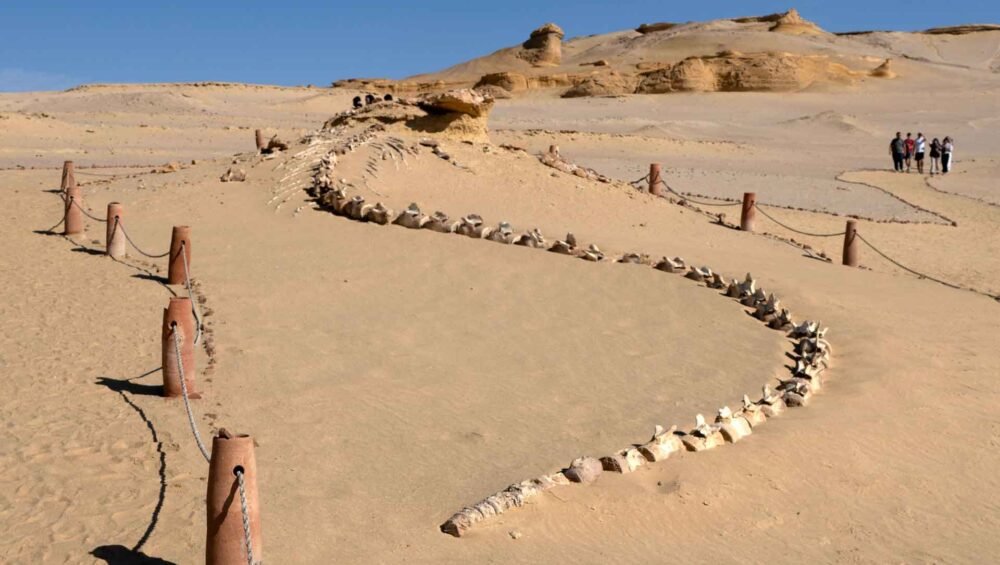
Unlike typical archaeological sites, Wadi Al Hitan doesn’t showcase temples or hieroglyphs. Instead, its treasure lies in rock and bone. The vast shallow sea that once covered this desert left behind skeletal remains that challenge and affirm our understanding of life’s adaptation to the environment. The fossils lie scattered across ochre sands beneath an endless blue sky, forming a dramatic tableau of science and beauty. Touring this site feels almost spiritual—where silence amplifies the power of nature’s ancient memory. Visitors who combine Wadi Al Hitan with peaceful desert escapes like Wadi El Rayan or serene oases such as Fayoum Oasis discover that this corner of Egypt is an unmatched reminder of Earth’s dynamic history.
The Geological Formation of Wadi Al Hitan
Millions of years before humans emerged, the area now known as Egypt’s Fayoum Depression was submerged under the prehistoric Tethys Sea. As tectonic forces shaped the African continent, this sea slowly receded, leaving behind layers of sedimentary rock rich in organic matter. These layers became a goldmine for paleontologists. The unique geographical history of Wadi Al Hitan explains the exceptional preservation of fossils — their delicate structures escaped destruction because of stable desert conditions. Over time, wind erosion and shifting sand dunes uncovered the fossils, turning the valley into an open-air museum of natural history.
Wadi Al Hitan’s sandstone cliffs contain marine fossils, plant traces, and even mangrove roots, proving that this desert once teemed with life. While the valley’s distinctive orange and red hues reflect mineral composition, they also highlight the timeless beauty of nature’s artistic layers. As part of the Protected Area of Wadi El Rayan, Wadi Al Hitan forms an essential piece in Egypt’s ecological mosaic. Many travelers explore Wadi Al Hitan as a day extension on scenic Egypt Day Tours that showcase the country’s diverse natural wonders beyond its ancient pyramids.
The Discovery of Ancient Whales: A Scientific Revolution
The first fossils in Wadi Al Hitan were discovered early in the 20th century, but serious scientific study began in the 1980s when Egyptian and international teams realized the site’s profound significance. They identified remains of two species of early whales: Basilosaurus isis and Dorudon atrox. These creatures retained traces of hind limbs, proving transitional evolution from land mammals to aquatic species — a revolutionary confirmation in evolutionary biology.
Every discovery in Wadi Al Hitan adds another brushstroke to the grand picture of life’s adaptability. Some skeletons stretch over 18 meters long and lie in natural repose as if still swimming through currents of time. Details like preserved stomach content, tooth marks, and bone joints tell stories of predation, birth, and adaptation. For eco-tourists and scientific travelers, witnessing these fossils firsthand is nothing short of awe-inspiring, comparable to seeing the monumental architecture of Abu Simbel Temples but from a biological rather than human era.
Wadi Al Hitan as a UNESCO World Heritage Site
In 2005, UNESCO recognized Wadi Al Hitan as a World Heritage Site, citing its outstanding universal value to humanity. What sets it apart is not merely the fossils’ quantity but their near-perfect preservation and environmental setting. UNESCO celebrates the site as “the most important area in the world to demonstrate the evolution of whales.” The desert’s remoteness shelters it from urban encroachment, maintaining its authenticity and serenity. Egypt’s environmental ministry has worked meticulously to protect this heritage through sustainable pathways, eco-lodges, and interpretive centers that blend seamlessly into the surrounding desert.
Visitors can now explore carefully constructed trails guiding them through well-marked exhibits where interpretative panels and multimedia presentations explain each specimen’s significance. Eco-education plays a vital role, and local Bedouin communities contribute to preservation efforts, ensuring that tourism benefits both people and nature. For those considering eco-conscious travel experiences, Wadi Al Hitan pairs beautifully with environmentally responsible adventures featured in Eco Tours in Egypt.
A Traveler’s Guide to Visiting Wadi Al Hitan
Reaching Wadi Al Hitan is an adventure itself. About 150 kilometers southwest of Cairo and roughly a two-hour drive from Fayoum city, the valley is accessible by 4×4 vehicles via desert tracks. For adventurous hearts, this journey is an exhilarating ride through wilderness dotted with limestone cliffs, dunes, and sparse vegetation. Many will choose organized expeditions that combine the visit with stops at Qarun Lake, Tunis Village Faiyum, and Qasr Qarun Temple.
Once inside the valley, the sense of isolation deepens. Temperatures fluctuate dramatically — extremely hot by day and chilly at night — so planning ahead is essential. The visitor center, built using local materials and traditional architecture, functions as both a museum and educational hub, giving travelers a deeper understanding of what they’re about to witness. Inside, displays of ancient whale bones, 3D reconstructions, and interactive maps bridge history with modern discovery.
Top Things to Do in Wadi Al Hitan
Walking the Fossil Trail is the highlight — a well-curated circuit that winds past skeletons, rock formations, and natural monuments sculpted by time. Photography enthusiasts find the play of shadows and desert light irresistible. Sunset hikes reveal a glowing horizon that transforms sand and sky into a soft watercolor of gold and crimson. Stargazing amid total darkness is equally astounding; the Milky Way spills across the sky like a celestial river. Adventurous visitors often combine their Wadi Al Hitan trip with off-road exploration or desert camping experiences reminiscent of the White Desert Egypt or the mysterious Valley of Agabat.
Authentic Bedouin meals, prepared under the stars, introduce travelers to Egypt’s desert hospitality — a perfect blend of ancient rhythm and modern comfort. Many travelers who have explored Unique Experiences in Egypt cite Wadi Al Hitan as one of the country’s most unforgettable natural destinations.
Best Time to Visit Wadi Al Hitan
The ideal season to visit Wadi Al Hitan runs from October to April, when temperatures are mild and desert conditions more comfortable. During summer, the heat intensifies sharply, making early morning or late afternoon tours preferable. Organized desert tours frequently operate from Cairo or Fayoum, offering comfortable transportation, guided interpretation, and provisions. Combining Wadi Al Hitan with refreshing activities around nearby lakes or waterfalls like Wadi El Rayan offers balance between adventure and relaxation.
Conservation and Sustainability Efforts
Preserving Wadi Al Hitan’s delicate ecosystem is crucial. The site’s management emphasizes eco-tourism that protects both fossils and the desert’s biodiversity. Wooden pathways minimize direct contact with fossil zones, while carefully controlled visitor numbers prevent erosion and pollution. Awareness campaigns educate visitors about the significance of this precious environment. Educational programs align with Egypt’s broader environmental vision, integrating natural heritage with modern ecotourism models found in protected parks such as Wadi El Gemal National Park.
The Role of Local Communities in Wadi Al Hitan’s Preservation
Local residents play a vital role in keeping Wadi Al Hitan alive — not only through guiding services but also by promoting handicrafts and sustainable hospitality. Visitors can stay in eco-lodges around the Fayoum oasis, built using natural materials and powered partly by solar energy. Such projects help balance tourism revenue with environmental protection. The valley has become a model for desert conservation that other regions of Egypt now emulate, ensuring that tourism enhances rather than threatens heritage preservation. Travelers curious about similar projects often explore eco-friendly getaways within curated Luxury Egypt Tours or All Inclusive Egypt Vacations.
Wadi Al Hitan in Modern Egyptian Tourism
While Egypt is globally renowned for its ancient pyramids and Nile temples, emerging destinations such as Wadi Al Hitan redefine its tourism narrative. They highlight the country’s natural diversity and environmental heritage. Combining a Wadi Al Hitan excursion with traditional cultural routes like Cairo Day Tours or Luxor Day Tours allows travelers to experience both the geological and historical grandeur of Egypt. The country’s unique geography, spanning Sahara sands, lush oases, and coral-rich coasts, continues to attract explorers seeking more than monuments — seeking stories written by nature itself.
Adventurers completing their Egypt itineraries often include Wadi Al Hitan within broader experiences that connect desert solitude with Nile elegance, such as a Nile Cruise holiday or even a Luxury Dahabiya Nile Cruise. The juxtaposition of fossils older than human civilization with ancient temples along the Nile creates an unparalleled Egyptian narrative stretching from prehistoric seas to historic sands.
FAQs about Wadi Al Hitan (Valley of the Whales)
Where is Wadi Al Hitan located?
Wadi Al Hitan sits within the Wadi El Rayan Protected Area in Egypt’s Fayoum Governorate, about 150 km southwest of Cairo. The journey takes roughly three to four hours by car, passing through desert landscapes and scenic lakes that enrich the travel experience.
Why is Wadi Al Hitan called the “Valley of the Whales”?
The name comes from the extraordinary concentration of ancient whale fossils found in the valley. These remains trace the evolutionary transition from terrestrial to aquatic life forms, making Wadi Al Hitan the world’s most important site for studying early whale evolution.
Is it possible to visit Wadi Al Hitan independently?
While it’s technically possible, visitors are strongly encouraged to join guided eco-tours organized from Cairo or Fayoum. Local experts ensure safe travel across the desert terrain and offer insights into geology, fossils, and conservation initiatives that greatly enrich the experience.
What should travelers pack for a trip to Wadi Al Hitan?
Essential items include sunblock, sturdy footwear, a hat, reusable water bottles, light clothing, and a camera. The desert sun can be intense, and temperatures drop sharply after sunset. A good guidebook or hiring a licensed tour operator specializing in desert travel is highly recommended.
How is Wadi Al Hitan protected today?
The Egyptian Environmental Affairs Agency manages Wadi Al Hitan under strict conservation protocols. Visitor access is controlled, infrastructure uses sustainable materials, and local rangers monitor the area to ensure its preservation for future generations.
Final Thoughts: Why Wadi Al Hitan Captures the Spirit of Timeless Egypt
Standing in the middle of Wadi Al Hitan, one realizes that


