Luxor Temple: The Timeless Jewel of Ancient Thebes
On the east bank of the Nile River in the heart of modern-day Luxor stands a spectacle that has mesmerized humanity for more than three millennia — Luxor Temple. This colossal architectural masterpiece, once called ‘Ipet Resyt’ or ‘The Southern Sanctuary,’ encapsulates ancient Egypt’s divine grandeur and political might. Commissioned primarily by Pharaoh Amenhotep III during the 14th century BC and later expanded by Ramses II, Luxor Temple was not just a monument but a living stage for sacred ceremonies uniting gods and kings. Its towering pylons, graceful colonnades, and intricate hieroglyphs beam with stories of devotion, power, and celestial harmony.
Unlike other temples dedicated to a single deity, Luxor Temple symbolized the divine embodiment of kingship itself. It was here where pharaohs went through coronation rituals, bridging mortal life and divine right. The temple complex once connected to the magnificent Avenue of Sphinxes leading to Karnak Temple, forming a sacred thoroughfare that hosted the grand Opet Festival — a celebration aligning the human king with Amun, the king of gods.
Today, Luxor Temple remains a dazzling open-air museum — a gateway to the inner soul of ancient Thebes. Whether illuminated under the fiery dusk or bathed in moonlight, its sandstone pillars whisper echoes of civilization’s dawn. For travelers exploring Luxor City, the temple is a crown jewel that fuses beauty, mythology, and mystery into one captivating experience.
The Historical Genesis of Luxor Temple
Constructed around 1400 BCE, Luxor Temple emerged at the height of Egypt’s New Kingdom. Its foundations were laid by Amenhotep III, one of Egypt’s most prolific builders, who envisioned a sanctuary dedicated to Amun-Ra, his wife Mut, and their son Khonsu — deities forming the revered Theban triad. Later expansions by Ramses II added monumental statues, reliefs, and pylons bearing scenes of his military triumphs, immortalizing his reign in stone. Subsequently, Tutankhamun, Horemheb, and Alexander the Great contributed refinements, each layering their legacy atop this enduring canvas.
As centuries marched forward, Luxor Temple evolved. Roman emperors transformed parts of it into military chapels, and in the 4th century AD, a Christian church occupied the site. Remarkably, the mosque of Abu al-Haggag, still active to this day, was built atop the ruins — symbolizing Luxor Temple’s seamless adaptation through successive epochs of religion and empire.
Architectural Grandeur and Symbolic Mastery
Luxor Temple’s architecture exemplifies refined Egyptian artistry balanced by bold political vision. The entrance is guarded by colossal seated statues of Ramses II, projecting divine authority to all who cross the threshold. Two towering obelisks once flanked the gate; one still stands here, while its twin now graces the Place de la Concorde in Paris. Beyond the gateway stretches the Great Court, adorned with detailed carvings narrating festivals, rituals, and royal offerings.
Visitors marvel at the peristyle court built by Amenhotep III, where soaring papyrus-shaped columns mimic an eternal forest reaching heavenward. The Hypostyle Hall — its roof held by tightly arranged pillars — unveils walls praising both gods and pharaohs. One can trace the inscriptions depicting the annual Opet Festival, when Amun’s statue was carried ceremoniously from Karnak to Luxor amid chants, incense, and radiant procession.
The Religious Power Behind the Design
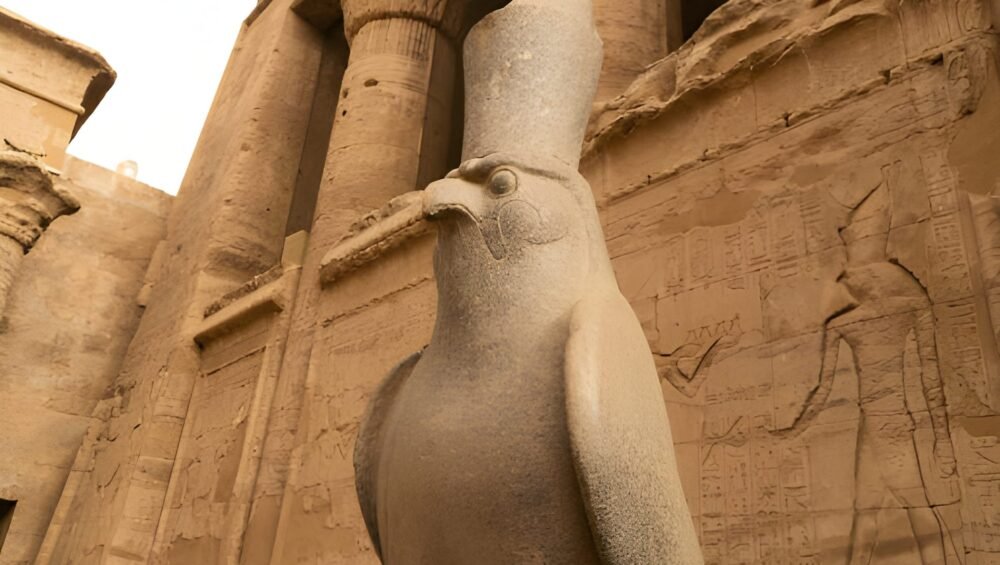
Luxor Temple’s spiritual role extended beyond worship; it reinforced the divine nature of Egyptian kingship. Through grand rituals, the pharaoh reaffirmed his status as the earthly embodiment of Horus and son of Amun. Each architectural alignment resonates with cosmic precision, symbolizing harmony between earth and heaven, mortal and divine. When illuminated by the golden Nile sunset, its carvings seem to come alive — Amun’s eternal blessings etched in hieroglyphic rhythm.
Luxor Temple and the Opet Festival
Among Egypt’s ancient festivals, none surpassed the Opet Festival in magnificence. This annual celebration marked the rejuvenation of divine energy and the reaffirmation of the pharaoh’s sovereignty. During Opet, the sacred barques of Amun, Mut, and Khonsu traveled along the Nile or through the Avenue of Sphinxes, linking Karnak Temple and Luxor Temple in a symphony of music, incense, and devotion. The event filled Thebes with pageantry that echoed divine rebirth — a spectacle reaffirming cosmic order and human faith.
Luxor Temple Through Time: Beyond the Pharaohs
The legacy of Luxor Temple is one of transformation. Under Roman rule, Emperor Diocletian erected a military stronghold within the complex, converting parts into shrines for Roman emperors depicted as pharaohs. Later, with the rise of Christianity, converts adapted the sanctuary into a church, painting religious frescoes on ancient walls. The mosque of Abu al-Haggag, built over the temple’s ruins, remains a living symbol of Egypt’s layered spiritual continuum — where Islam, Christianity, and ancient belief harmoniously intersect.
Visiting Luxor Temple: A Modern Pilgrimage through Antiquity
Today, a visit to Luxor Temple promises an unparalleled journey across time. The site is most enchanting after sunset, when strategic lighting casts dramatic shadows that highlight carvings and hieroglyphs. Many travelers pair their exploration with an immersive experience such as the Sound and Light Show at Karnak Temples or a tranquil Luxor Hot Air Balloon Ride, offering dreamy vistas of the temple glowing under dawn’s pastel hues.
Visitors often combine their exploration with guided itineraries like the 4 Day Cairo and Luxor Tour Package or extended options such as a 7 Days Cairo and Nile Cruise Package. For those craving ultimate indulgence, the 10 Day Egypt Luxury Trip with Dahabiya Nile Cruise delivers a royal experience echoing Luxor’s golden past.
Traveling along the Nile unveils a living timeline of splendor. Many routes include the 4 Day 3 Night Nile Cruise from Aswan to Luxor and the 7 Nights Nile Cruise Luxor, Aswan & Luxor, offering glimpses of Edfu Temple, Kom Ombo Temple, and the majestic Abu Simbel Temples — a journey through Egypt’s architectural soul.
Luxor Temple’s Artistic Treasures and Preservation
Preserving Luxor Temple is a mission blending archaeology, conservation, and reverence. Each relief bears witness to an epoch, decoded meticulously by Egyptologists uncovering political alliances, religious hierarchy, and myths that shaped humanity’s oldest civilization. Restoration efforts have revealed that many original pigments survived centuries beneath layers of sand, showcasing vibrant hues once painting gods and kings in divine brilliance.
Furthermore, modern initiatives align with sustainable tourism principles, ensuring that visitors appreciate the temple without compromising its heritage. Whether joining local guides on Luxor Day Tours or embarking on a cultural journey combining Egypt Vacation Packages, travelers immerse in history responsibly while empowering local communities.
Luxor Temple in the Broader Egyptian Landscape
No exploration of Egypt is complete without contextualizing Luxor Temple within the nation’s grand narrative. Nearby rise the Colossi of Memnon, solemn guardians of Amenhotep III’s vanished mortuary temple. Across the Nile, the Valley of the Queens shelters imperial tombs adorned with celestial murals, while the Temple of Hatshepsut stands as a symphony of limestone symmetry. These sites together embody the genius of Thebes — a civilization that sculpted its eternity from stone and spirit.
Why Luxor Temple Captures the Soul of Egypt
Unlike any other monument, Luxor Temple transcends physical beauty. It’s an emotional, living symbol representing rebirth, faith, and continuity. Through changing empires and evolving faiths, it has remained a sanctuary of peace. Its columns don’t merely hold stone; they hold the memory of humankind’s pursuit to connect with the divine. Every traveler who crosses its threshold partakes in the same awe once reserved for pharaohs, priests, and pilgrims alike.
Conclusion: The Eternal Pulse of the Temple of Luxor
Luxor Temple stands not only as a cornerstone of Egypt’s architectural perfection but as a timeless dialogue between past and present. Walking under its monumental colonnade is to feel history’s pulse — warm, rhythmic, immortal. It invites us to witness the continuity of civilization and to appreciate how art, religion, and human ambition converge under the Egyptian sun. For those seeking to unravel the mysteries of ancient Thebes, Luxor Temple is more than a site — it’s an experience that etches itself deep within the traveler’s heart.
Frequently Asked Questions about Luxor Temple
1. When was Luxor Temple built?
Luxor Temple was begun by Pharaoh Amenhotep III around 1400 BCE and later enhanced by Ramses II, Tutankhamun, and Alexander the Great. Each ruler added elements reflecting their era’s architectural innovations and spiritual emphasis.
2. What was the primary purpose of Luxor Temple?
The temple was principally dedicated to the Theban triad — Amun, Mut, and Khonsu. It served as a central stage for the Opet Festival, symbolizing the rejuvenation of the pharaoh’s divine authority and maintaining cosmic balance between gods and humankind.
3. How is Luxor Temple different from Karnak Temple?
While Karnak focused on worship and the power of Amun-Ra, Luxor Temple celebrated kingship and divine embodiment. The two were connected via the Avenue of Sphinxes, emphasizing their shared yet distinct ceremonial meanings.
4. Can visitors access Luxor Temple at night?
Yes, Luxor Temple transforms beautifully after sunset. Night tours reveal the site in a mesmerizing glow, with sophisticated lighting accentuating columns, statues, and hieroglyphs — creating an ethereal atmosphere. It’s one of the highlights of Luxor Day Tours.
5. What’s the best way to experience Luxor Temple?
The best approach combines guided tours with experiential travel. Consider pairing your visit with a Luxor to Aswan Nile Cruise From Hurghada or exploring local marvels like private tour to the East Bank. This enriches understanding of how Luxor Temple fits into Egypt’s grand historical mosaic.