Temple of Philae: The Sacred Marvel of Ancient Egypt
Among the sacred sanctuaries that define Egypt’s timeless heritage, the Temple of Philae stands as a breathtaking tribute to devotion, artistry, and resilience. Nestled near Aswan, this temple complex, dedicated primarily to the goddess Isis, is one of Egypt’s most enchanting sites—a blend of myth, architecture, and historical transformation. Its limestone reliefs, majestic pylons, and tranquil island setting create an atmosphere that has inspired poets, scholars, and travelers alike for centuries. The Temple of Philae represents one of the last holds of ancient Egyptian religion, marking the intersection where myth met empire, and faith endured through shifting sands of history.
Today, visitors who set foot on Aswan Day Tours marvel at the temple’s enduring might and tranquil beauty. Originally built on Philae Island and later moved to nearby Agilkia Island during the UNESCO rescue mission after the construction of the Aswan High Dam, this monument encapsulates both ancient glory and modern preservation. A visit here isn’t just a step back in time—it’s a journey into the heart of Egyptian spirituality, where gods walked among men, and myths linger like whispers along the Nile breeze. With every carved inscription and colossal column, the Temple of Philae reminds us why Egypt’s treasures are eternal symbols of devotion, artistry, and survival.
The Captivating Origins of the Temple of Philae
The Temple of Philae was originally constructed during the Ptolemaic Dynasty, around the 3rd century BCE, though the island itself had religious significance long before. Dedicated to Isis, the Egyptian goddess of magic, fertility, and motherhood, this sacred place attracted worshippers from all over the ancient world. Over time, additional shrines and chapels were added by Roman emperors such as Augustus and Trajan, each leaving their mark on this extraordinary landscape. The temple wasn’t just an architectural marvel—it was also a spiritual hub that represented Egypt’s resilience during periods of foreign rule and cultural fusion. The island’s allure even captivated early travelers, who recorded its dazzling beauty and peaceful ambience long before tourism flourished on the Nile.
Historical records show that worship continued on Philae until the 6th century CE, long after Christianity had spread across Egypt. The blending of religious traditions is seen in the adaptation of the temple’s inner halls, where early Christians etched crosses into the stone. Such symbols represent Egypt’s transformation—pivotal moments when ancient spirits merged with new beliefs, echoing the coexistence of tradition and transition. Today, those who travel with a private Egypt tour can witness this layered history firsthand.
Architectural Brilliance and Design Symbolism
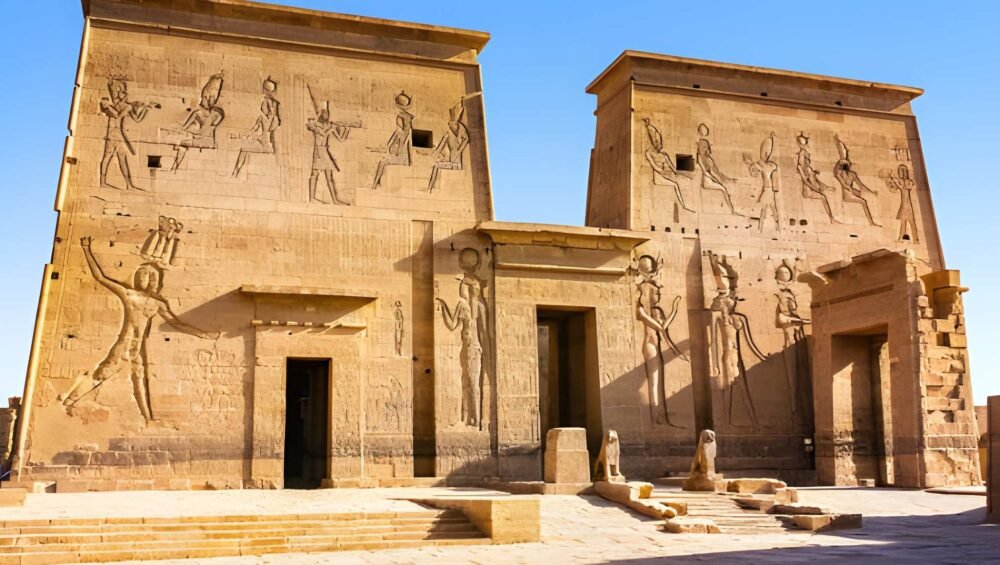
The architectural design of the Temple of Philae showcases a harmonious blend of Greek, Egyptian, and Roman influences. Dominated by two grand pylons adorned with scenes of Isis and Osiris, the temple’s structure narrates stories of divine resurrection and power. Intricately carved hieroglyphs illuminate the beliefs and rituals once performed on the island. The central sanctuary, known as the Holy of Holies, was believed to house the statue of Isis herself—a sacred relic tended to by high priests. Flanking chapels dedicated to Hathor and Horus illustrate the interconnectedness of Egypt’s mythological pantheon.
The temple complex also features the elegant Kiosk of Trajan, one of the most recognizable structures of Roman Egypt. This small yet majestic pavilion with 14 Corinthian columns appears almost like a floating shrine when seen from the Nile. Its graceful proportions earned it the nickname ‘Pharaoh’s Bed,’ and it remains one of the most photographed monuments in southern Egypt. Those enjoying an Egypt luxury Nile cruise often make this ethereal site a highlight of their journey.
The Great Relocation of Philae Temple
One of the most remarkable aspects of the Temple of Philae’s history is its physical relocation. With the construction of the Aswan High Dam in the 1960s, the original Philae Island was destined to be submerged under Lake Nasser. In an extraordinary international effort led by UNESCO, the temple complex was dismantled piece by piece—over 40,000 stone blocks—and reassembled on Agilkia Island, slightly higher and safer from the rising waters. This feat, completed between 1972 and 1980, is often hailed as one of the world’s greatest archaeological rescue missions.
The relocation preserved not just ancient architecture but also a sacred atmosphere that remains palpable today. When visitors approach the island by boat, they encounter a reflection of devotion—both ancient and modern. This preservation effort symbolizes Egypt’s dedication to protecting its cultural legacy for generations to come. Travelers who embark on a day trip to Philae and Kalabsha Temples and Nubian Museum can experience the impressive results of this global collaboration firsthand.
The Goddess Isis and Her Eternal Influence
At the heart of the Temple of Philae lies the worship of Isis, the beloved goddess whose myth transcended Egypt and influenced civilizations across the Mediterranean. Ancient Egyptians revered her as the mother of Horus and the bringer of life and magic. Legends describe her as the one who resurrected her husband, Osiris, symbolizing eternal love and rebirth. The temple’s reliefs portray her with regal elegance, nursing her divine son, or performing sacred rites. These scenes not only celebrated Isis’s divine powers but also embodied the enduring faith of her followers. Her cult persisted so strongly that worship continued at Philae even under Roman and Byzantine rule.
The spread of Isis’ worship beyond Egypt, particularly into Greece and Rome, underscores the temple’s historical and cultural significance. Her image became a symbol of feminine strength and devotion. Even today, visitors feel a sense of calm reverence when standing before her shrine, while scholars admire Philae as one of the last true strongholds of ancient Egyptian religion.
The Spiritual Journey: Visiting the Temple Today
Visiting the Temple of Philae is not merely a sightseeing excursion—it’s a spiritual pilgrimage through time. Travelers typically begin their journey in Aswan city, boarding small motorboats that glide across the shimmering waters toward Agilkia Island. As the temple comes into view, framed by palm trees and desert hills, its serenity leaves visitors awe-struck. Upon arrival, intricate reliefs, column-lined courtyards, and tranquil courtyards welcome them into a world once reserved for priests and pharaohs.
By night, the site transforms into a realm of magic during the Sound and Light Show at Philae Temple. The illuminated columns and narrated stories of Isis bring the monuments to life under a starlit sky. For those seeking cultural immersion, it’s a moment of pure enchantment—combining history, legend, and emotion in one unforgettable experience. Many travelers pair their visit with a serene felucca ride on the Nile in Aswan, enhancing the mystical atmosphere.
The Temple’s Role in Nubian and Egyptian Culture
The Temple of Philae bridges the cultural landscapes of both Egypt and Nubia. Historically located near the border of Nubia, it served as a gateway for trade, spirituality, and diplomacy. Nubian craftsmen and priests contributed to its maintenance, intertwining local belief systems with traditional Egyptian deities. Visitors exploring with a trip to the Nubian Villages by boat can trace this shared heritage in the art and architecture that still resonate throughout Aswan.
The artwork of Philae displays Nubian aesthetics alongside Egyptian symbolism, showcasing cultural exchange and artistic innovation. This synergy of faith and craftsmanship resulted in a spiritual wonder that embodies harmony among peoples, beliefs, and artistic traditions. Even after centuries, it continues to stand as a testament to the human spirit’s interconnectedness and creativity.
Modern Tourism and Preservation Efforts
Today, the Temple of Philae remains one of Egypt’s best-preserved ancient sites and a crown jewel of Egypt Day Tours. Each year, thousands of visitors from around the world come to admire its splendor. Guided tours, educational exhibits, and multi-lingual interpretation boards help visitors connect deeply with its context and significance. Egypt’s Ministry of Antiquities continues to oversee conservation projects to ensure that its carvings, structures, and inscriptions remain safe for future generations.
Those seeking immersive experiences can include it in well-curated itineraries like the four-day Nile cruise from Aswan to Luxor, or extend their adventure through an 11-day luxury Egypt tour package, which explores ancient temples, vibrant markets, and river life. Whether for spiritual reflection or academic curiosity, the Temple of Philae continues to inspire reverence among all who visit.
When to Visit the Temple of Philae
The best time to visit the Temple of Philae is during Egypt’s cooler months—October through April. The early morning light reveals the site’s intricate carvings, while sunset immerses it in golden hues reflecting off the Nile. For photographers and history enthusiasts, this synergy of light and legend offers moments that linger forever in memory. Convenient Aswan transfers and local guides ensure seamless access, allowing travelers to fully focus on the awe-inspiring beauty and serenity of the temple complex.
FAQs About the Temple of Philae
1. Where is the Temple of Philae located?
The Temple of Philae is located on Agilkia Island, near the city of Aswan in southern Egypt. It was relocated there after the original Philae Island was flooded following the construction of the Aswan High Dam.
2. Who built the Temple of Philae?
The Temple of Philae was primarily built during the Ptolemaic Dynasty, starting with Ptolemy II, and expanded by later Ptolemies and Roman rulers, including Augustus and Trajan.
3. What deity was worshipped at the Temple of Philae?
The main deity worshipped at the Temple of Philae was Isis, the goddess of magic, fertility, and motherhood. However, other Egyptian deities such as Hathor, Osiris, and Horus were also honored within the complex.
4. How was the Temple of Philae saved from flooding?
In the 1960s, the temple complex faced submersion due to the creation of Lake Nasser. UNESCO launched an international project to relocate the temple block by block to Agilkia Island, successfully preserving this invaluable monument.
5. Can visitors attend the Sound and Light Show at Philae?
Yes, visitors can attend the spectacular Sound and Light Show at Philae, held in the evening. The show narrates the myths of Isis and Osiris through captivating storytelling, music, and illuminated projections against the temple walls.
In every stone, relief, and sacred inscription, the Temple of Philae tells a story of devotion and endurance—a legacy shaped by gods, preserved by humanity, and celebrated by all who step into its eternal embrace. It remains not merely a monument but a living reminder of the spiritual pulse that continues to define Egypt’s heart along the timeless Nile.