White Desert Egypt – The Surreal Wonderland of Chalk Formations and Golden Horizons
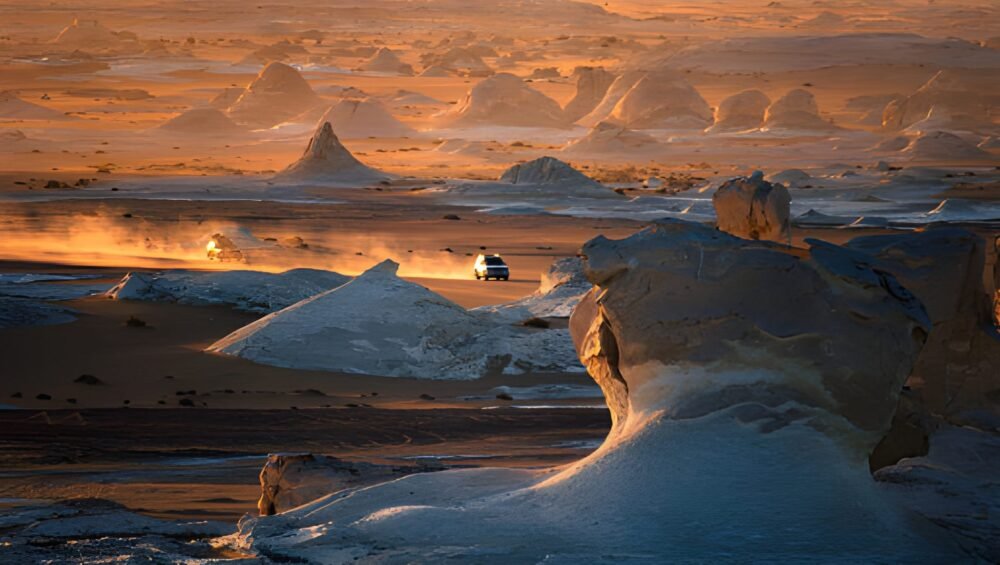
Tucked deep in the heart of Egypt’s Western Desert lies a landscape so unearthly, it feels like you’ve stepped onto another planet — the White Desert. Known locally as Sahara el Beyda, this dreamlike expanse astonishes travelers with its ghostly white rock formations shaped by millennia of wind erosion. Sculpted from soft chalk limestone, its terrain is dotted with mushrooms, towers, and ethereal monoliths rising from powdery sand, glistening under the desert sun. This natural masterpiece offers a rare blend of geological wonder, serenity, and adventure, drawing intrepid explorers and photographers from all over the world.
As part of the Farafra Depression, the Western Desert of Egypt encapsulates timeless beauty. The White Desert forms a sharp contrast to the nearby Black Desert and crystalline hills of the Crystal Mountain. For those who yearn for remote serenity, vast horizons, and mystical nights beneath dazzling starfields, the White Desert is nothing short of magical. Whether approached from the Bahariya Oasis or the quaint Farafra Oasis, every route promises an unforgettable encounter with nature’s silent artistry.
Desert adventurers often combine their visit with Egypt Day Tours that include off-road safaris, stargazing, and overnight camping under a blanket of stars. Not only does this region ignite curiosity, but it also revives the spirit of ancient exploration — a journey that blends Egypt’s majestic history with its boundless natural grandeur.
The Geological Marvel Behind White Desert Egypt
The White Desert’s distinctive beauty stems from chalk and limestone deposits formed millions of years ago when the area was submerged beneath an ancient sea. As the waters receded, marine sediments solidified into thick strata of chalk. Over eons, wind and time carved these layers into strange, captivating sculptures resembling everything from giant mushrooms to frozen waves. This geological evolution places the White Desert among the most awe-inspiring natural attractions in Egypt.
Travelers often marvel at how the formations take on different hues depending on sunlight. During daylight, the desert glows a blinding white, while sunset drenches it in shades of gold and rose. At night, moonlight reflects off the alabaster surfaces, illuminating the entire plain in a silvery glow. Few other landscapes in the world evoke such ethereal beauty and solitude.
Exploring the White Desert National Park
Established as a national park in 2002, the White Desert National Park spans over 3,000 square kilometers. This protected area preserves one of Egypt’s most fragile ecosystems, safeguarding both its stunning scenery and rare fauna. Inside the park, you’ll find gazelles, fennec foxes, desert hares, and various bird species. The serenity here offers a stark contrast to the bustling life of Cairo or the archaeological splendor of Luxor.
For adventure seekers, the park is an off-road playground. Visitors can embark on guided safaris from Bawiti in Bahariya Oasis, journeying through stretches of golden dunes and black volcanic hills before arriving at the White Desert’s breathtaking panorama. Travelers can also book specialized tours like the Desert Safari Trip by Quad Bike to experience the thrill of desert driving while witnessing the park’s remarkable scenery firsthand.
Top Sights Inside the White Desert
Among its many wonders, two iconic rock formations stand out — the “Chicken and Mushroom” and the “Ice Cream Cone.” These landmarks became symbols of the White Desert and are favorites among photographers. Another fascinating area is the Valley of Agabat, a narrow corridor of golden dunes surrounded by chalk cliffs that glow dramatically during sunset. Close to this stretch lies the Valley of Agabat, often described as a gateway to another world.
The desert’s remarkable formations make it a haven for photographers and nature enthusiasts. Each twist of the road reveals new shapes carved by centuries of wind, resembling everything from animals to mythical creatures. If you’re lucky, you may even stumble upon prehistoric fossils — relics of an ancient seabed hidden beneath the sands.
Camping Under the Stars in the White Desert
One of the most unforgettable experiences in White Desert Egypt is overnight camping. Tourists often pitch tents directly among the chalk formations, creating an otherworldly backdrop. As evening falls, the desert seems to transform; temperatures drop, silence deepens, and the sky unveils a dazzling canopy of stars. Visitors often gather around campfires, sharing stories and traditional meals in true Bedouin style.
Many Egypt adventure programs incorporate White Desert camping into their itineraries, including options like the 7 Days Cairo, Luxor, Abu Simbel & Sahara Trip, blending culture and wilderness exploration. A night spent under this cosmic ceiling is a highlight that leaves lasting impressions long after the journey ends.
Nearby Oases and Attractions Around the White Desert
The White Desert sits between two of Egypt’s most enchanting oases — Bahariya and Farafra. Bahariya Oasis, the main access point, enchants visitors with palm groves, hot springs, and remnants from ancient Egyptian and Roman periods. In contrast, Farafra Oasis offers a quieter, more authentic desert experience with mud-brick villages and warm thermal pools. Both serve as gateways to desert adventures.
If your wanderlust craves even more, the surrounding region brims with natural and historic wonders. The Black Desert, famous for its volcanic hills capped with black basalt, lies just a short drive away. The nearby Crystal Mountain gleams with calcite crystals, scattering sunlight like shattered glass. Exploring these awe-inspiring sites is often included in combined desert circuits, guided by local experts who reveal the geological and cultural stories behind each site.
Best Time to Visit White Desert Egypt
The ideal time to explore the White Desert is between October and April, when daytime temperatures are mild, making the desert comfortable for exploration and camping. Summer months can bring scorching heat, reaching over 40°C, making travel exhausting and potentially unsafe. During the cooler season, the climate is crisp, perfect for photography, stargazing, and long walks among the formations.
Travelers can arrange private journeys through established operators offering Egypt Private Tours or comprehensive desert itineraries combining the best of Egypt’s landscapes and culture. Choosing a guided expedition ensures safety, expert navigation, and a richer understanding of the area’s natural history.
How to Get to the White Desert
Most visitors start their trip from Cairo and travel about 370 kilometers southwest to Bahariya Oasis — the usual launching point. From there, local guides take travelers in 4×4 vehicles through rough desert tracks that lead to the White Desert National Park. Depending on road conditions, the ride takes about four hours, filled with scenic stops like the Black Desert and the Crystal Mountain along the way.
Travel packages, such as the 7 Days Egypt Adventure Tour, offer hassle-free transfers, camping gear, and cuisine prepared under the stars, making the trip safe and memorable. Visitors can also extend their exploration, linking the desert to Nile Valley destinations like Aswan or Luxor Temple.
Preserving the White Desert’s Fragile Beauty
Because of its sensitive ecosystem and geological significance, visitors must adhere to strict environmental rules. Guides ensure that no litter is left behind, and vehicles follow designated tracks to avoid damaging rock formations. The Egyptian authorities and local communities collaborate to promote sustainable tourism that balances adventure with preservation.
For those passionate about eco-friendly exploration, the White Desert stands as a model of harmony between nature and responsible travel. Sustainable tourism practices also support nearby communities, ensuring economic benefits while protecting one of Egypt’s most otherworldly environments.
FAQs about White Desert Egypt
What makes the White Desert unique?
The White Desert’s uniqueness lies in its chalky landscape formed by marine sediments millions of years ago. Its wind-sculpted formations resemble surreal shapes — a visual wonder unlike anywhere else in the country or world.
Where is the White Desert located?
The White Desert lies within Egypt’s Western Desert, approximately 45 kilometers north of Farafra Oasis and about 370 kilometers southwest of Cairo.
Can you camp overnight in the White Desert?
Yes. Camping is one of the highlights of visiting the White Desert. Licensed guides arrange overnight trips with proper equipment, meals, and campfire gatherings under starlit skies.
Is it safe to visit the White Desert?
Absolutely. Guided tours ensure a secure experience as all routes are well‑charted. Trusted operators provide transportation, experienced drivers, and all necessary permits for park entry.
What should I bring for a trip to the White Desert?
Essentials include sturdy shoes, sunscreen, sunglasses, warm clothes for night, and plenty of water. Visitors should also bring cameras to capture the desert’s one‑of‑a‑kind vistas and delicate hues.