The Citadel Of Qaitbay: The Glorious Guardian of Alexandria’s Coastline
Standing proudly at the edge of the Mediterranean Sea, the Citadel of Qaitbay in Alexandria, Egypt, is more than just a fortress—it’s a living symbol of resilience, history, and architectural brilliance. Built on the ruins of the legendary Lighthouse of Alexandria, one of the Seven Wonders of the Ancient World, this 15th-century stronghold tells tales of power, defense, and maritime glory. When you walk through its timeworn corridors, you’re stepping into the footsteps of Mamluk sultans, Ottoman warriors, and Egyptian defenders who once stood guard against the threat of invaders approaching the northern coast. The Citadel of Qaitbay isn’t just a monument—it’s a journey through the soul of Egypt’s coastal heritage.
The fortress dominates the eastern harbor of the Alexandria City, radiating timeless charm and evoking the majesty of the days when this strategic seaport was a global maritime power. The Citadel’s limestone walls, weather-beaten by centuries of briny air, overlook the turquoise waters that once carried Greek ships, Ottoman fleets, and European traders. Inside, the labyrinth of stone corridors and echoing chambers reveals the ingenuity of its 15th-century builders, who combined artistry and function in brilliant harmony. Every stone whispers stories of naval battles, trade, and ancient civilization. The Citadel of Qaitbay is not only an architectural marvel but also a testament to Egypt’s perpetual determination to protect and preserve its legacy.
Today, it stands as one of Egypt’s most visited landmarks. Travelers who embark on Egypt Day Tours or enriching Egypt Vacation Packages often find themselves mesmerized by this coastal guardian. Its panoramic views, historical depth, and deep cultural connection make the Citadel of Qaitbay a must-see destination for those intrigued by the grandeur of Alexandria and the legends that shaped it.
Historical Background of the Citadel of Qaitbay
The Citadel of Qaitbay was constructed in 1477 AD by Sultan Al-Ashraf Sayf al-Din Qaitbay, one of the most prominent rulers during the Mamluk period. The fortress was built on the exact site of the world-renowned Lighthouse of Alexandria (Pharos), which had collapsed centuries earlier due to devastating earthquakes. To utilize what remained of the famous lighthouse, Qaitbay incorporated parts of its stones and foundations into his citadel, giving new life to an ancient wonder through a structure of formidable strength and design.
During the 15th and 16th centuries, the Citadel guarded Egypt’s Mediterranean coast against potential invasions by the Ottoman Empire and other foreign powers. Later, under Ottoman rule, the fortress continued serving as a defensive structure, housing military garrisons and artillery. When Napoleon’s forces invaded Egypt in 1798, the Citadel once again played its defensive role, standing defiantly even as Alexandria’s fate changed hands. Such layers of history make this site one of the most vital fortifications in North Africa, bridging centuries of maritime warfare, architectural innovation, and Egypt’s unwavering sovereignty.
Architectural Excellence and Design of the Citadel of Qaitbay
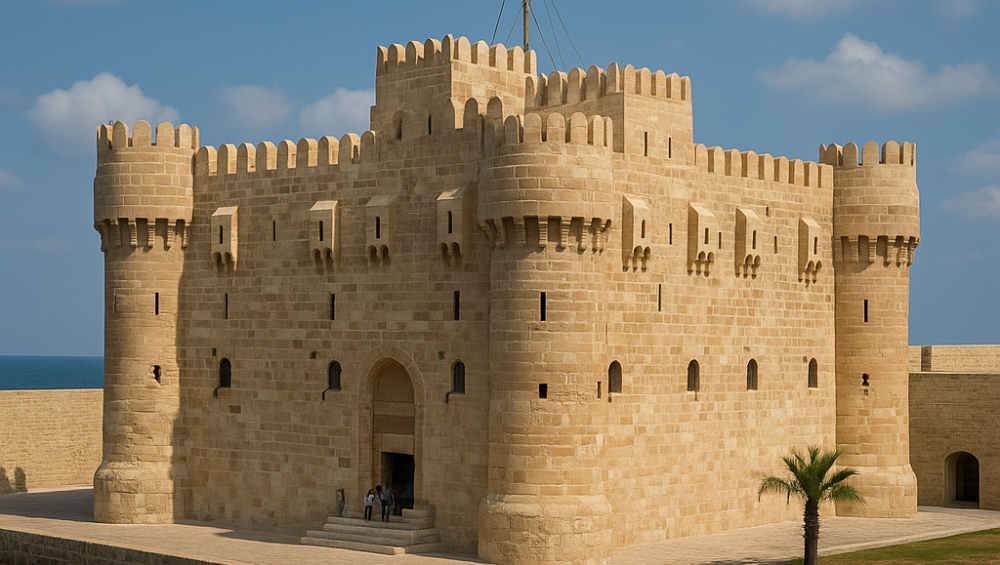
The Citadel’s design ingeniously merges Islamic architectural elegance with military fortification principles. Its square blueprint is surrounded by high stone walls fortified by circular towers at each corner, giving it both defensive and aesthetic balance. The main tower rising at the center served as a lookout post and command room. The use of limestone, sourced locally from the coasts of Alexandria, adds a warm cream hue that glows under the Mediterranean sun.
Inside the Citadel, visitors find vaulted halls, soldier’s quarters, prayer rooms, and storerooms constructed with remarkable precision. The fortress once held cannons along its seaward walls, placed strategically to repel enemy fleets. The layout reveals remarkable attention to defense mechanisms, including narrow openings for archers, concealed staircases, and hidden chambers. This high level of craftsmanship continues to attract scholars and enthusiasts fascinated by the Mamluk era’s architectural legacy, much like structures such as the Citadel Of Salah El-Din in Cairo, another masterpiece from Egypt’s defensive history.
The Citadel’s Symbolism and Cultural Importance
The Citadel of Qaitbay isn’t merely a monumental relic—it embodies Egypt’s spirit of resilience and adaptation. Throughout the centuries, it symbolized strength, vigilance, and pride. Alexandria’s coastal residents often viewed it as more than stone and mortar; it became their steadfast guardian, especially during turbulent times when foreign fleets threatened the harbor.
Moreover, the Citadel has served as a symbol of continuity between ancient and medieval Egypt. By integrating remnants of the Pharos Lighthouse into the Mamluk fortress, Qaitbay intentionally restored Alexandria’s glory as a beacon of culture and innovation. Its robust silhouette continues to inspire artists, historians, and travelers. For those exploring Egypt’s remarkable legacies—from the magnificent Montazah Palace to the fascinating Catacombs Of Kom El Shoqafa—the Citadel remains a timeless highlight of architectural heritage.
Exploring the Surroundings of the Citadel of Qaitbay
Positioned at the far end of the Alexandria Corniche, the Citadel commands sweeping sea views. Around the fortress, cafés and local eateries tempt visitors with fresh seafood and authentic Egyptian flavors. The clear blue sea that stretches beyond the walls offers an almost romantic sight, creating an inviting escape for photography enthusiasts and travelers seeking tranquility. The nearby Alexandria Bibliotheca and Stanley Bridge Alexandria are perfect additions for a full cultural excursion connecting the city’s modern charm with its ancient roots.
When visiting, travelers might also enjoy a guided tour within the Citadel’s interior, where historical artifacts and maritime relics showcase Egypt’s naval past. Many Cairo Day Tours or coastal itineraries include stops at Qaitbay, linking history with scenic leisure. It’s a destination that caters equally to families, cultural explorers, and photographers with an eye for dramatic landscapes.
Best Time to Visit the Citadel and Practical Travel Tips
The most delightful time to visit the Citadel of Qaitbay is between October and April, when Alexandria enjoys mild Mediterranean weather and gentle breezes. The fortress’ stone walls reflect golden sunlight during the late afternoon, creating unforgettable views especially for sunset watchers. Comfortable shoes are recommended, as navigating the fortress involves climbing steps and exploring uneven paths. Morning visits offer tranquil settings for reflection, while evenings allow the dramatic sea breeze to enhance the sensory experience.
Many visitors prefer organized excursions through reputable local companies like Cindrella Egypt Travel, ensuring convenient transportation, professional guides, and enriching narratives. Extended journeys combining the Citadel with other grand destinations such as 8 Days Pyramids and Nile Cruise Holidays deliver a complete Egyptian experience—melding Alexandria’s maritime allure with the timeless splendor of the Nile.
Legends, Restoration, and Modern Significance of the Citadel
Over centuries, the Citadel underwent several restorations, particularly during the Ottoman and Mohamed Ali era. Each ruler left a mark, whether by reinforcing the towers, adding decorative engravings, or revitalizing its battlements. The most extensive modern restoration took place in the 20th century, when Egyptian authorities aimed to preserve and showcase this monument as a cultural treasure. Today, the Citadel stands as a proud museum of maritime heritage, attracting historians, architects, and travelers from every corner of the globe.
The fortress vividly embodies Alexandria’s layout as a maritime capital bounded by beauty and power. While the original Pharos Lighthouse may have fallen, the Citadel of Qaitbay continues its legacy as a guiding landmark for Egypt’s identity. It reminds onlookers that from fallen stones rise stronger fortresses, carried by the spirit of creativity and national pride.
FAQs About the Citadel of Qaitbay
What makes the Citadel of Qaitbay historically significant?
The Citadel of Qaitbay was erected on the exact site of the ancient Lighthouse of Alexandria, merging two distinct eras of history. It exemplifies both Mamluk military architecture and the enduring Egyptian tradition of innovation and defense. Its preservation allows visitors to experience a living connection to Alexandria’s glorious maritime past.
When was the Citadel of Qaitbay built?
The Citadel was constructed in 1477 AD by Sultan Qaitbay during the Mamluk period. The goal was to safeguard Egypt’s Mediterranean coast from frequent naval threats and to commemorate Alexandria’s historical greatness as a coastal stronghold.
Can visitors tour the interior of the Citadel?
Yes, visitors can enter and explore various sections of the fortress, including ancient chambers, watchtowers, and courtyards that evoke the grandeur of Mamluk engineering. Guided tours often reveal captivating insights about its strategic architecture and defensive systems.
How can travelers reach the Citadel of Qaitbay?
The Citadel is located at the western edge of Alexandria’s corniche, easily accessible by car, bus, or taxi. Many travelers integrate it into excursions like the Day Tour to Alexandria City or multi-day holidays that highlight Egypt’s coastal wonders.
What are the nearby attractions worth visiting?
Alongside the Citadel, visitors can explore the impressive Serapeum Of Alexandria, the beautiful Montazah Palace, and the magnificent Alexandria Bibliotheca. Each offers a perfect complement to the Citadel experience, showcasing Alexandria’s blend of ancient and modern culture.
Timeless, enduring, and awe-inspiring—the Citadel of Qaitbay invites explorers to step beyond the pages of Egypt’s maritime heritage and into a sanctuary that guards the waves of the Mediterranean. It’s a monument that stands unshaken, echoing the power and poetry of the ages.