Kom Ombo Temple: The Dual Sanctuary of the Nile Gods
Perched on a graceful bend of the Nile River between Aswan and Luxor, the Kom Ombo Temple is an astonishing testament to Egypt’s divine duality and architectural precision. With its unique twin design—dedicated equally to Sobek, the crocodile god of fertility and creation, and Horus the Elder, the falcon-headed god of divine kingship—the site radiates spiritual balance and intrigue. Its imposing sandstone walls, adorned with intricate hieroglyphics, echo tales of power, faith, and mythology from the Ptolemaic period.
Kom Ombo isn’t just another ancient site—it’s where religion, medicine, and artistry pierced time’s veil to tell humanity’s oldest stories. The temple’s symmetry symbolizes equilibrium between chaos and order, sun and shadow, Nile and desert. Built during Egypt’s Greco-Roman era, it whispers of a time when pharaohs embraced both tradition and foreign influence, blending Greek architectural flair with time-honored Egyptian symbolism. Every relief, hallway, and hidden chamber was crafted with divine intent, designed to honor deities while showcasing royal devotion and scientific advancement.
Standing here, surrounded by the golden desert glow and the serene Nile breeze, visitors sense an almost supernatural energy. The Kom Ombo Temple isn’t merely a ruin—it’s a living museum that reveals the heart of ancient Egypt’s spiritual complexity. With perfectly preserved carvings depicting surgical instruments and astronomical symbols, the temple was both a spiritual sanctuary and a research hub of its era. Travelers arriving via Nile River Cruises or Aswan day tours are enchanted by this architectural jewel and the contrast of civilizations united within its dual sanctum. Let’s dive deeper into the story, mystery, and magnificence of the Kom Ombo Temple.
The Dual Design: Temple of Sobek and Horus the Elder
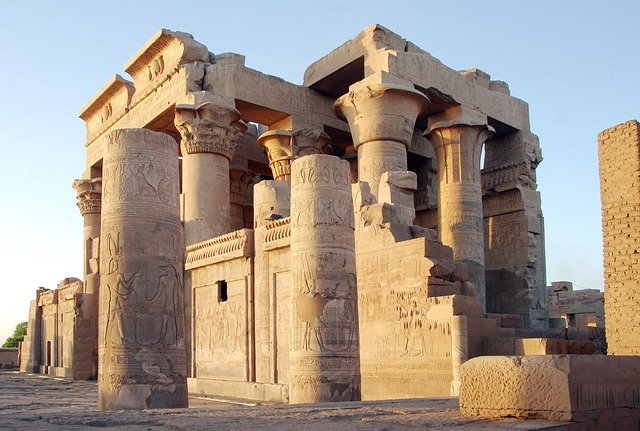
What makes the Kom Ombo Temple so extraordinary is its rare symmetrical design. Unlike most temples in ancient Egypt, which are devoted to a single deity, Kom Ombo splits its purpose down the middle. On one side, Sobek—the mighty crocodile god linked to water, fertility, and the raw force of the Nile—was worshiped. On the opposite side, Horus the Elder, protector of kings and embodiment of the sun, was honored with equal reverence. Two sanctuaries, two sets of corridors, and two identical shrines mirror one another, symbolizing cosmic balance.
This ingenious structure reflects a spiritual duality that Egyptians saw in life: fertility versus strength, light versus darkness. Each half of the temple offers identical architectural details, down to the columns and hieroglyphs, amplifying its precision and symmetry. Explorers strolling through both sections often marvel at how artisans created perfect harmony without modern tools, achieving mathematical finesse that remains impressive even today.
Historical Timeline of Kom Ombo Temple
The Kom Ombo Temple was built during the reign of Ptolemy VI Philometor in the 2nd century BCE. Subsequent rulers like Ptolemy XIII and Roman emperors added features over time, ensuring the site remained vibrant and active for centuries. The Greco-Roman period shaped its artistic tone, incorporating classical flourishes while preserving Egyptian religious essence.
Kom Ombo thrived not only as a place of worship but also as an economic hub along the Nile. Merchants trading between Upper and Lower Egypt would stop to honor Sobek for safe journeys. After floods, ceremonies were held to thank him for the life-giving waters. Archaeologists have also found evidence of a medical school within or near the complex—fitting, given the temple’s detailed carvings of ancient surgical instruments. This extraordinary evidence positions Kom Ombo as a cornerstone of both spiritual devotion and intellectual pursuit. Those journeying through similar marvels in the region, such as the Temple of Philae, recognize comparable patterns of mystical symbolism.
Architectural Brilliance and Artistic Symbolism
Kom Ombo’s architecture reflects an astonishing level of craftsmanship. Massive sandstone blocks form grand colonnades, while ceiling hieroglyphs depict celestial deities guiding humanity. The entrances align perfectly with the setting sun during specific times of the year, a phenomenon believed to represent divine communication between deities and mortals.
Each column in the hypostyle-hall narrates sacred stories—scribes carved prayers asking for protection from illness and floods. Reliefs depict pharaohs presenting offerings to Sobek and Horus, while adjacent walls show scenes of fertility rituals and healing ceremonies. Interestingly, one prominent panel displays ancient surgical instruments—scalpels, forceps, and probes—confirming Egypt’s advanced knowledge of medicine. Visitors fascinated by traditional and religious architecture may also enjoy the Sultan Hassan Mosque for its grandeur and symmetry, reminiscent of the sacred balance reflected here.
The Crocodile Museum: Guardians of the Nile
Adjacent to the temple lies the Crocodile Museum, a fascinating complement to the Kom Ombo experience. It houses mummified crocodiles once revered as living manifestations of Sobek. These creatures, embalmed with care, were discovered in nearby tombs—proof of the god’s enduring presence and the locals’ devotion.
The museum’s exhibits showcase artifacts retrieved from temple ruins, such as amulets, votive objects, and funerary items. Each tells a story of the residents who lived in constant respect—and sometimes fear—of the Nile’s mighty reptiles. The conservation team’s effort in preserving these relics helps modern visitors grasp Egypt’s depth of reverence for life’s natural and divine forces.
Kom Ombo’s Role in Nile Cruises and Tourism
Kom Ombo’s strategic Nile-side position turns it into an essential stop for travelers seeking spiritual and historical enrichment. Most Nile cruises from Aswan to Luxor dock briefly to allow visitors to wander through its timeless corridors. As the sun sets behind the sandstone pillars, the golden hues cast surreal reflections over the hieroglyphs, producing a celestial ambiance unmatched elsewhere.
Many tourists combine their visit with the Private Tour to Kom Ombo and Edfu Temples from Aswan, optimizing their route across Upper Egypt’s architectural masterpieces. After exploring Kom Ombo, travelers often sail to Edfu, home to the impeccably preserved Temple of Horus. Those planning immersive experiences can explore customized Egypt vacation packages that weave together the legacy of pharaohs, gods, and artistic brilliance along the historic Nile.
Spiritual Symbolism and Mythological Depth
Kom Ombo operates on duality, mirroring the balance Egyptians sought in all things. Sobek represented creation and aggressive power, protecting the people from Nile crocodiles and ensuring agricultural prosperity. Horus symbolized intellect, righteousness, and order. Together, they embodied both chaos and harmony.
The Ptolemies leveraged this symbolism politically, using the temple to unify different religious factions. Offerings and ceremonies conducted simultaneously in both halves of the temple demonstrated the ruling dynasty’s inclusiveness and maintained social order. This divine dualism reflected not only faith but governance—a wise balance between Egyptian tradition and Greek innovation. Similar mythological depth can be experienced by visiting the Temple of Hatshepsut, where divine symbolism manifests through architecture and reliefs.
Scientific Insights: Medicine and Astronomy in Kom Ombo
Few ancient temples reveal as much about medicine as Kom Ombo does. Reliefs etched on its rear walls portray forceps, scalpels, levers, and bandages, all arranged in systematic order—evidence of medicinal practices long before modern healthcare. Priests of Sobek were not mere spiritual leaders but also healers trained in anatomy and herbal treatments.
In addition, astronomical elements abound. Carvings reference lunar cycles used to determine ritual dates and agricultural timelines. The interplay between astronomy and religion illustrated the Egyptians’ deep understanding of cosmic connections. For a deeper dive into Egypt’s astronomical heritage, one could visit the High Dam of Egypt nearby, symbolizing how the Nile has always governed life and time.
Kom Ombo at Sunset: An Ethereal Encounter
As dusk sets, Kom Ombo undergoes a breathtaking transformation. The fading light paints the sandstone golden, while shadows from its colossal columns stretch across the courtyard. The combination of ancient reliefs and the soft hum of the Nile creates an ethereal calm few places can rival.
Visitors often describe a mystical sensation here—the feeling of history breathing through stone. This twilight spectacle attracts photographers and spiritual seekers alike, particularly those traveling on a Luxury Nile Cruise, where sunset tours at Kom Ombo become unforgettable highlights.
Practical Travel Tips for Visiting Kom Ombo
Kom Ombo Temple lies roughly 45 kilometers north of Aswan, and it’s easily accessible by road or river. Many choose to include it in itineraries like the 4-Day Luxor, Edfu, Kom Ombo, Aswan and Abu Simbel Tour. Visiting early morning or late afternoon avoids the heat while offering magical light for photography.
Comfortable walking shoes, water, and sun protection are essential. To immerse fully, hire a local Egyptologist guide who can decode intricate carvings. For smooth logistics, consider arranging transportation with Aswan Transfers services or joining an expert-led Egypt Private Tour. Those planning to sail onward can enjoy tailored options such as the Steigenberger Minerva Nile Cruise or Adonis Nile Cruise for an unforgettable journey between legendary temples.
FAQs about Kom Ombo Temple
What makes Kom Ombo Temple unique among Egyptian temples?
Kom Ombo stands out for its twin dedication to two deities, Sobek and Horus the Elder. This symmetrical design symbolizes cosmic harmony and reflects the religious and philosophical sophistication of ancient Egyptian civilization.
When was Kom Ombo Temple built?
Construction began during the reign of Ptolemy VI in the second century BCE. Subsequent additions were made by Roman emperors, blending Greek and Egyptian artistry into a single magnificent structure.
Where is Kom Ombo Temple located?
The Kom Ombo Temple perches on the east bank of the Nile River, about 45 km north of Aswan. It’s easily accessible through Aswan Day Tours or scenic Nile cruise itineraries connecting Luxor and Aswan.
What artifacts can be found in the Crocodile Museum?
The Crocodile Museum adjacent to the temple displays mummified crocodiles, votive offerings, statues of Sobek, and relics found nearby, giving visitors insight into ancient Egypt’s rituals and reverence for the Nile’s creatures.
How can travelers include Kom Ombo in a Nile cruise itinerary?
Many luxury and dahabiya cruise programs, like the Luxury Dahabiya Nile Cruise or the 4 Nights Nile Cruise Luxor to Aswan, feature Kom Ombo as a stop between Edfu and Aswan. Travelers enjoy guided tours during late afternoon sail visits when the temple glows under sunset light.