Dahshour: The Forgotten Gem of Egypt’s Ancient Pyramid Fields
Just a short drive south of Giza and Saqqara lies Dahshour, a captivating archaeological treasure trove that seldom makes it onto mainstream tourist itineraries. Yet, for those who venture beyond the well-trodden paths of Egypt’s more famous sites, Dahshour rewards every traveler with a serene, profoundly historic, and visually stunning experience. This ancient necropolis was the experimental playground for Pharaoh Sneferu, whose architectural innovations here sparked the evolution of Egypt’s iconic pyramids. Dahshour’s blend of mystery, engineering marvels, and raw desert landscapes offers an unforgettable glimpse into Egypt’s golden age of pyramid construction.
Dahshour is home to some of Egypt’s earliest, best-preserved pyramids, which uniquely capture the transition from the step-sided to the smooth-faced structures we now associate with pharaonic power. Visitors can explore the mighty Bent Pyramid, the Red Pyramid, and the lesser-known Black Pyramid, enveloped in an atmosphere far quieter and more contemplative than that at Giza. Here, where desert dunes kiss ancient stone, history whispers through every gust of wind. Dahshour isn’t merely a site to tick off—it is a story of ambition, engineering genius, and eternal glory.
For those planning immersive Egypt day tours, Dahshour offers a superb opportunity to connect with authentic antiquity, away from crowds and chaos. Whether explored alongside neighboring sites like Saqqara or included in tailor-made Egypt private tours, this hidden wonder delivers both educational insights and visual splendor. Let’s delve into the rich narrative of Dahshour, Egypt’s pioneering pyramid landscape that changed architecture and eternity forever.
The Historical Significance of Dahshour’s Necropolis
Dahshour served as a royal burial ground during Egypt’s Old and Middle Kingdoms, particularly under Pharaoh Sneferu of the Fourth Dynasty. Sneferu’s reign, famed for architectural innovation, birthed not one but multiple pyramids across this field as the Egyptians refined the concept of a true pyramid. These experiments resulted in monumental achievements such as the Bent Pyramid, with its unique change in angle, and the Red Pyramid, recognized as Egypt’s first perfect true pyramid.
The necropolis of Dahshour reveals invaluable insights into early pyramid construction techniques. Excavations have unearthed mud-brick temples, causeways, and small subsidiary pyramids, reflecting the complexity of ritual life linked to royal burials. Discoveries at Dahshour mirror cultural and technological leaps that defined Egypt’s signature architectural identity. Through these ruins, visitors encounter a turning point in Egypt’s monumental legacy—an age when innovation met divine ambition.
Modern travelers often combine Dahshour with iconic sites like Memphis or Saqqara, included in specially curated private tours to Pyramids, Sakkara and Dahshur, to fully grasp the evolution of Egyptian royal tombs. These combined explorations shed light on Sneferu’s experimentation, ultimately paving the way for his son, Khufu, to build the Great Pyramid of Giza.
The Bent Pyramid: A Marvel of Ancient Engineering
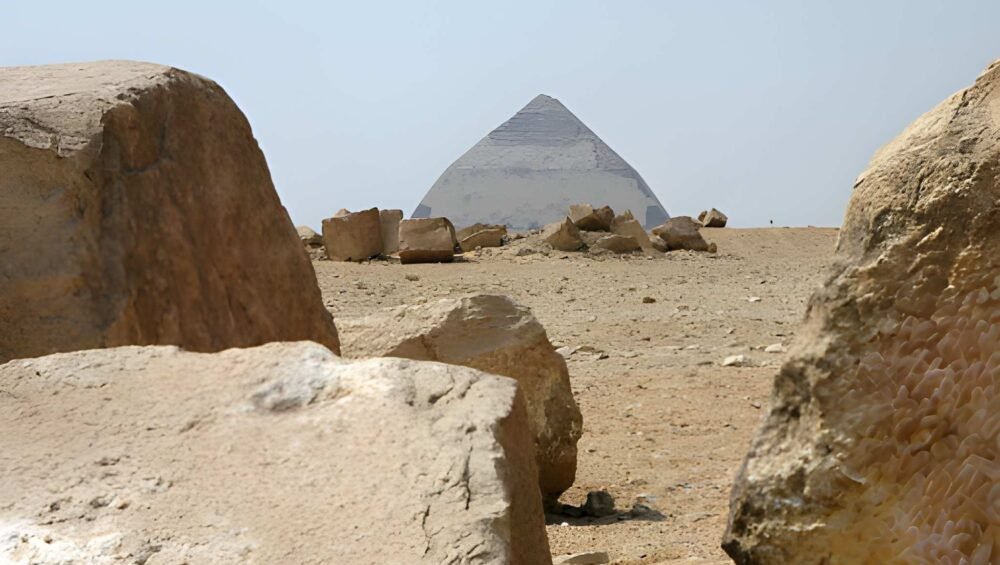
Standing 101 meters tall, the Bent Pyramid remains one of ancient Egypt’s most enigmatic monuments. Built around 2600 BCE, this pyramid is famed for its unusual shape: a lower incline of 54 degrees abruptly shifts to 43 degrees midway up. Scholars theorize that structural instability or symbolic design changes caused this modification. Whatever the truth, the Bent Pyramid’s partial smooth casing stones—still visible today—offer rare insight into how the Great Pyramid at Giza would have originally appeared.
What makes the Bent Pyramid even more extraordinary is its surrounding landscape. Flanked by a smaller satellite pyramid and remnants of a mortuary temple, it captures both spiritual and architectural sophistication. Independent travelers and scholars alike find this site a dream for close-up photography and quiet reflection. On-site exploration, particularly during early mornings or late afternoons, reveals incredible play of desert light across its limestone face—a photographer’s paradise rivaling any structure around Cairo.
The Red Pyramid: Egypt’s First True Pyramid
The Red Pyramid, named after its reddish hue, marks Sneferu’s crowning engineering success. With a perfect 43-degree slope and precise inner chambers, this structure effectively became Egypt’s earliest complete true pyramid. Measuring an impressive 104 meters in height and 220 meters on each side, it set the gold standard for pyramid craftsmanship, influencing every royal tomb to follow for centuries.
Tourists can actually enter the Red Pyramid, trekking through its 61-meter descending passage into massive corbelled galleries. Inside, one can still sense the echoes of Sneferu’s vision and the labor of thousands who built this wonder. A climb within the pyramid is not for the faint-hearted—it’s hot, narrow, and steep—but it’s an unparalleled adventure that evokes a sense of connection few sites can replicate. Nearby panoramic dunes expand the view, encapsulating both the Bent and Red Pyramids in one unforgettable vista.
Travelers combining Dahshour visits with Cairo discoveries can easily extend their trips into unforgettable itineraries, such as the 5-Day Cairo and Luxor Tour Package that blends urban and ancient experiences flawlessly.
The Black Pyramid: A Testament to Ambition and Innovation
Constructed during the Middle Kingdom, the Black Pyramid of Amenemhat III represents Egypt’s continued pyramid tradition. Unlike its Old Kingdom predecessors, this structure used mudbrick cores coated with stone, creating a darker, almost haunting appearance. Though partially collapsed due to unstable materials, the Black Pyramid remains a crucial archaeological link demonstrating evolving engineering and economic strategies during a more centralized era of Egyptian rule.
Today, the Black Pyramid’s ruins still command an air of melancholic beauty. Its subsurface chambers, originally supported by complex wooden reinforcements, reveal the ambitious—but ultimately flawed—attempts to adapt pyramid architecture centuries after Sneferu. Standing amidst its remains, modern travelers reflect on human persistence—how even ancient kings dared to push limits to immortalize their legacies.
To pair such ancient marvels with modern excellence, travelers might enjoy a classic 4-Day Cairo Tour Package, seamlessly integrating Dahshour within the grand story of ancient Egypt.
The Desert Setting and Scenic Beauty of Dahshour
Dahshour unfolds across a sweeping expanse of golden sands, where tranquility reigns supreme. Unlike the bustling tourist centers around Giza, the Dahshour pyramids rise in splendid isolation, surrounded by uninterrupted desert vistas and timeless quietude. This setting enhances not only the site’s mystique but also its contemplative atmosphere, ideal for travelers seeking deeper cultural immersion.
The nearby village life offers an authentic touch of Egyptian rural charm. Camel caravans occasionally cross the horizon, while local farmers tend their fields along the fertile Nile fringes. The juxtaposition between ancient royal tombs and everyday life underscores Egypt’s enduring connection to land, labor, and legacy. For those craving off-the-beaten-path journeys, Dahshour encapsulates all that’s fascinating about Egypt—mystery, solitude, and history, bound into one extraordinary place.
Exploring Dahshour often complements broader heritage tours such as Cairo day tours or longer expeditions combining 8 Days Best Egypt Tour with Nile Cruise, enabling travelers to savor historical diversity at every step.
Travel Tips for Visiting Dahshour
Reaching Dahshour is remarkably easy from Cairo—it’s about an hour’s drive south of the capital. For efficiency and comfort, hiring a private guide through agencies specializing in Egypt vacation packages ensures a smooth experience. As temperatures can soar, visits during morning or late afternoon are ideal. Comfortable shoes and light clothing are recommended for exploring the sandy terrain and descending pyramid passages.
Photography enthusiasts should bring good lighting equipment, as interior chambers are dimly lit. Additionally, combining visits with other nearby archaeological wonders like Saqqara or Memphis—once Egypt’s ancient capital—offers context to Dahshour’s architectural breakthroughs. A mixture of history and hands-on exploration awaits anyone ready to travel slightly beyond the beaten path.
Why Dahshour Deserves More Recognition
Dahshour is not just another pyramid site—it’s the foundational chapter of Egypt’s monumental legacy. Many travelers underestimate its value, yet historians agree that without Sneferu’s experiments here, the Great Pyramid of Giza might never have existed. The lessons of failure and triumph written in Dahshour’s limestone set architectural standards that lasted for millennia. In essence, Dahshour encapsulates humanity’s timeless pursuit of perfection, ambition, and immortality.
Incorporating Dahshour into luxury itineraries like the 11 Days Luxury Egypt Tour Package transforms any holiday into a journey through innovation and eternity. Every traveler who steps into its sand-swept silence instantly understands why Egypt’s kings looked to Dahshour for divine inspiration.
FAQs About Dahshour
Where is Dahshour located?
Dahshour lies approximately 40 kilometers south of Cairo, near the western bank of the Nile River. It forms part of the greater Memphis necropolis, linked closely with Saqqara and Giza. Its proximity makes it ideal for half-day tours from the capital, especially for travelers aiming to witness Egypt’s earliest true pyramids.
Which pyramids can be found in Dahshour?
Visitors to Dahshour can explore several pyramids, most notably the Bent Pyramid, the Red Pyramid, and the Black Pyramid. Each represents a unique stage in ancient Egyptian architectural evolution—from experimental to perfected designs. The Red Pyramid, Egypt’s first smooth-sided pyramid, is particularly renowned for its accessibility and preservation.
Is entry into the Red Pyramid allowed?
Yes, tourists are permitted to enter the Red Pyramid. The interior features narrow tunnels and grand chambers leading deep into the core of the structure. Although the descent is steep, it’s one of the few pyramids where travelers can stand within the ancient royal tomb itself, offering a profound firsthand experience of Egyptian ingenuity.
How can travelers include Dahshour in their Egypt itinerary?
Dahshour can easily be integrated into Cairo-centered itineraries or broader historical tours. Packages like the 6 Days Cairo to Luxor Tour allow visitors to include Dahshour along with other prominent sites, combining the convenience of guided travel with immersive historical storytelling.
What makes Dahshour unique compared to Giza?
Unlike Giza’s crowded atmosphere, Dahshour offers serenity and authenticity. With far fewer visitors, it provides a raw, immersive sense of discovery, bringing travelers closer to ancient craftsmanship and natural desert beauty. It’s not just the innovation of the Bent and Red Pyramids that makes Dahshour exceptional but also its peaceful ambiance and intact historical context that transport visitors straight into Egypt’s Old Kingdom era.