The Timeless Splendor of King Tutankhamun’s Mask: Egypt’s Golden Enigma
King Tutankhamun’s Mask stands as perhaps the most recognizable symbol of ancient Egypt—a stunning masterpiece crafted in gold and inlaid with precious stones that reveals the incredible artistry of an empire devoted to its deities and kings. This funerary mask, unearthed in 1922 by archaeologist Howard Carter in the young pharaoh’s nearly intact tomb, encapsulates more than just the visage of a boy king. It represents divine authority, eternal life, and the culmination of Egyptian art and craftsmanship at its zenith.
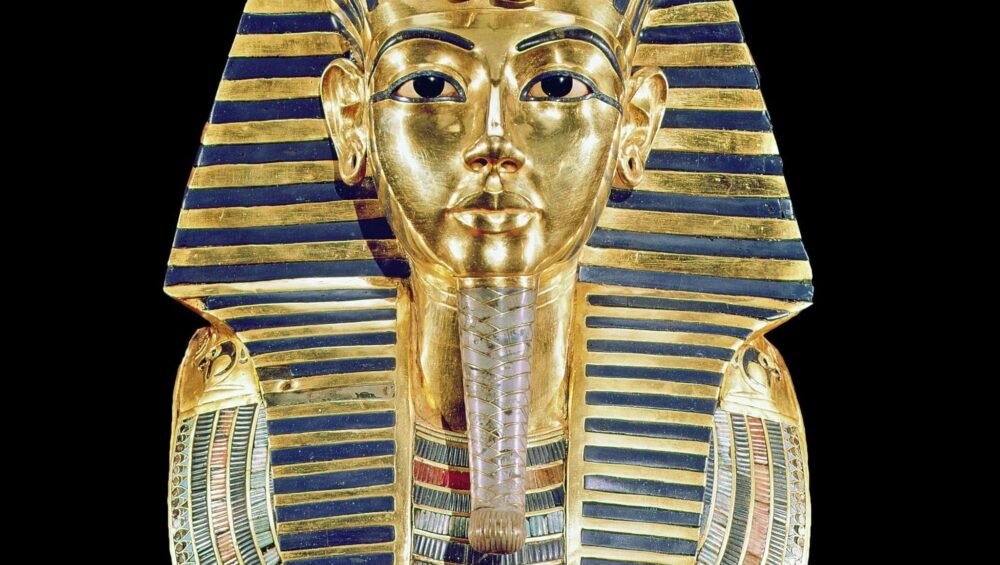
The mask of Tutankhamun is not simply an artifact but a profound cultural emblem that reflects the beliefs, aesthetics, and spiritual grandeur of the New Kingdom’s 18th Dynasty. Measuring about 54 centimeters in height and weighing nearly 11 kilograms of solid gold, it continues to mesmerize historians, art enthusiasts, and travelers visiting the Grand Egyptian Museum. The gleaming silhouette of Tutankhamun’s serene face is a window into an ancient world obsessed with eternity, transformation, and cosmic balance.
Through this masterpiece, one can glimpse the very essence of Egyptian civilization’s devotion to its gods, the meticulous care of mummification, and the artistry preserved within every golden contour. For those enchanted by ancient mysteries, standing before King Tutankhamun’s Mask is not merely looking at gold—it’s witnessing the face of history itself.
The Discovery of Tutankhamun’s Tomb and Its Priceless Mask
The discovery of Tutankhamun’s tomb in the Valley of the Kings in 1922 remains one of archaeology’s most exhilarating triumphs. Resting untouched for over three thousand years, the tomb of the young pharaoh was laden with treasures—each telling a story of power, piety, and an unyielding quest for immortality. Among these treasures, none caught the world’s imagination quite like his funerary mask. Found draped over the linen-wrapped mummy, it immediately became the crown jewel of the modern fascination with ancient Egypt.
Howard Carter’s find sparked a global sensation, transforming the boy king into a timeless icon. Tourists who later travel on Cairo and Nile Cruise tours often retrace the steps of discovery through museums displaying replicas of the mask, while the original resides under tight security in Egypt. The expression of the mask—gentle yet godlike—embodies the pharaoh’s transformation from mortal ruler to eternal deity, fulfilling the Egyptian concept of rebirth in the afterlife.
Craftsmanship and Symbolism Behind King Tutankhamun’s Mask
Constructed primarily from solid gold sheets, Tutankhamun’s Mask displays unmatched precision in design. The artisans of the 18th Dynasty mastered metallurgy and lapidary techniques that even modern craftsmen find astonishing. Embedded with lapis lazuli, turquoise, obsidian, and carnelian, the mask’s intricate details create a dazzling interplay of color and light symbolizing divine radiance and protection.
The golden visage of Tutankhamun represents the skin of the gods—specifically associated with the sun god Ra. The inlaid stripes of blue glass and semi-precious stones on the headdress portray the sacred nemes worn by pharaohs. Across his brow glisten the emblems of Wadjet, the cobra goddess, and Nekhbet, the vulture goddess—both symbols of protection over Upper and Lower Egypt. The mask perfectly marries divine symbolism with royal iconography, affirming the pharaoh’s exalted role as intermediary between gods and men.
Visitors interested in exploring Egyptian craftsmanship often combine museum visits with excursions such as Cairo Day Tours to experience where ancient artisans left behind astounding works carved in stone and gold.
Artistry and Engineering: A Testament to Ancient Skill
Every millimeter of the mask highlights a civilization far ahead of its time. The eyes, made from quartz and obsidian, give an uncanny sense of realism, while the combination of soft curves and strong symmetry showcases a harmony that Egyptologists call ‘sacred proportion’. Beneath the surface, microscopic analysis reveals forged joints so precise that modern tools can barely identify the seams.
Even more intriguing is the survival of delicate materials—pigments mixed with organic binders, turquoise mosaics, and precious copper details—that have endured millennia. To truly appreciate such detail, travelers on Luxor Day Tours often explore workshops that recreate similar ancient techniques, seeing firsthand how the legacy of ancient Egypt’s perfection in gold and stone still thrives today.
The Divine and Spiritual Significance of the Mask
King Tutankhamun’s Mask wasn’t designed merely as ornamentation—it was a divine instrument safeguarding his spirit in the afterlife. Ancient Egyptians believed that after death, a soul would journey through the underworld and be judged by Osiris. The mask served as a spiritual shield during this passage, ensuring the pharaoh’s identity remained intact. Its inscriptions contain spells from the Book of the Dead, invoking protection and eternal life.
One spell carved delicately on the mask’s shoulders reads as a magical safeguard guiding the pharaoh’s spirit through the Duat—the mysterious underworld. This connection between religion, art, and science makes Tutankhamun’s Mask one of the most profound religious artifacts of the ancient world. Those exploring the mystique of the afterlife can complement their journey with historical stops such as the Valley of the Queens or the sacred temples dedicated to Osiris and Isis along the Nile.
Cultural Symbol and Modern Legacy
In the modern era, King Tutankhamun’s Mask has transcended archaeology—it has become a global cultural icon. The mask adorns exhibitions, documentary covers, and academic research, standing for the revival of Egyptomania that swept the 20th century. Artists, designers, and historians alike continue to draw inspiration from its timeless beauty.
Travelers taking Best Nile River Cruises often find themselves gazing upon Egypt’s ancient wonders reconnecting with this boy king’s story. The mask’s gaze—both haunting and tranquil—reflects a lost era where art, belief, and royalty coexisted in divine symmetry.
Where To See King Tutankhamun’s Mask Today
The original mask currently resides in Cairo, housed within the dazzling halls of the Egyptian Museum—soon to be permanently displayed at the National Museum of Egyptian Civilization or the Grand Egyptian Museum. Each institution preserves Egypt’s treasures with remarkable care, inviting visitors to witness the resplendence of pharaonic artistry firsthand.
Tourists eager to include the exhibit in their itineraries can select from luxurious travel packages such as the 11 Days Luxury Egypt Tour Package or a shorter yet equally immersive 5 Day Cairo and Luxor Tour, merging cultural enlightenment with world-class relaxation. These curated journeys allow enthusiasts to step closer to ancient brilliance while exploring Luxor Temple, the resting sites of kings, and the artistic achievements of their craftsmen.
Conservation and Controversy
Over time, conservation efforts on Tutankhamun’s Mask have sparked debates within the archaeological community. A 2014 incident involving improper restoration raised concerns about preservation techniques and ethical museum practices. Nevertheless, modern conservation teams have since used advanced imaging and non-invasive methods to protect this irreplaceable masterpiece.
Efforts to maintain Egypt’s most valued relic symbolize the balance between cultural heritage and scientific preservation—ensuring that future generations can stand face to face with the pharaoh who inspired an enduring fascination.
The Enduring Allure of King Tutankhamun’s Mask
Every glint from the polished gold reminds onlookers of the young pharaoh’s eternal story. King Tutankhamun’s Mask isn’t simply a vestige of death—it’s a proclamation of immortality. Its delicate craftsmanship, symbolic layering, and divine aura make it one of the most captivating objects humanity has ever created. In every contour lies the intersection of faith and artistry, a tale as radiant today as it was under the torchlight of ancient tomb builders.
Modern explorers tracing its legacy through Egypt Vacation Packages discover not just the relic itself but the broader picture of cultural transmission, spirituality, and the unrelenting human desire to live forever through beauty and art.
Frequently Asked Questions About King Tutankhamun’s Mask
What is King Tutankhamun’s Mask made of?
The mask is primarily composed of solid gold weighing around 11 kilograms, intricately inlaid with semi-precious stones like lapis lazuli, carnelian, turquoise, and obsidian. These materials symbolized divine attributes—gold representing the flesh of the gods and blue symbolizing the heavens.
Where can I see King Tutankhamun’s Mask today?
King Tutankhamun’s Mask is displayed in Cairo’s Egyptian Museum and will soon take a permanent position in the Grand Egyptian Museum in Giza. Visitors planning Egypt Day Tours often make it a centerpiece of their itinerary.
What does the mask symbolize in ancient Egyptian culture?
It symbolizes the divine transformation of the deceased into a godly form fit for eternal life. The mask’s inscriptions, colors, and protective deities reflect ancient beliefs about resurrection and cosmic harmony, ensuring the pharaoh’s protection in the afterlife.
Who discovered Tutankhamun’s mask and tomb?
British archaeologist Howard Carter unearthed the tomb of Tutankhamun in 1922 in the Valley of the Kings. The discovery revealed thousands of treasures, but none as iconic as the golden funerary mask that instantly captivated the world.
How old is King Tutankhamun’s Mask?
The mask dates back to approximately 1323 BCE, over 3,300 years old. Despite its age, its craftsmanship, color, and condition remain remarkably preserved—a testament to ancient Egypt’s artistry and spiritual devotion.
From its ancient splendor to modern-day admiration, King Tutankhamun’s Mask continues to embody the grandeur of Egypt’s golden past, drawing countless travelers through heart-stealing expeditions such as 4 Day 3 Night Nile Cruise from Aswan to Luxor that blend history, luxury, and timeless wonder across the land of the pharaohs.