Temple of Hatshepsut: The Timeless Masterpiece of Ancient Egyptian Architecture
Resting majestically against the rugged cliffs of Deir el-Bahari, the Temple of Hatshepsut is more than an architectural wonder—it’s a statement of power, devotion, and divine legitimacy. This ancient mortuary temple, built during Egypt’s 18th Dynasty, stands as a breathtaking tribute to Pharaoh Hatshepsut, one of the most remarkable and controversial women to rule ancient Egypt. The temple’s bold terraces, symmetrical lines, and awe-inspiring reliefs make it one of Luxor’s most iconic attractions, drawing travelers, historians, and architects from around the globe. The Temple of Hatshepsut isn’t merely a structure; it’s an experience that immerses visitors in the glorious age of pharaohs and gods.
Visiting the Temple of Hatshepsut during your Luxor Day Tours offers a spectacular glimpse into the grandeur that defined Ancient Egypt. Nestled near the fabled Valley of the Queens and facing the mighty Nile River, its location alone is steeped in symbolism—life, death, and rebirth converge here in a masterpiece carved into the limestone. The temple was designed to honor both the gods and the queen who dared to reign as a pharaoh in a male-dominated world, forever leaving her mark on Thebes’ sacred landscape.
The Visionary Pharaoh Behind the Temple: Queen Hatshepsut
Queen Hatshepsut is often celebrated as one of Egypt’s most innovative monarchs. Her rule from 1479 to 1458 BCE marked a golden era of peace, prosperity, and artistic revival. While women had wielded influence in Egypt before, none had taken on the full regalia of a male king until Hatshepsut. She adopted the royal kilt, the false beard, and all traditional symbols of pharaonic authority. Building her temple at Deir el-Bahari was her grand declaration of legitimacy and divine favor.
The Temple of Hatshepsut wasn’t simply a monument to her reign; it was also a deeply spiritual project devoted to Amun-Ra, the most powerful god of the Egyptian pantheon. The temple’s location, directly aligned with the Temple of Karnak across the river, reflects a cosmological connection between the two sacred sites. During festivals, statues of Amun would be ferried from Karnak to Hatshepsut’s temple, symbolizing union between the divine and the mortal realm.
Architectural Marvel: The Design and Structure of the Temple
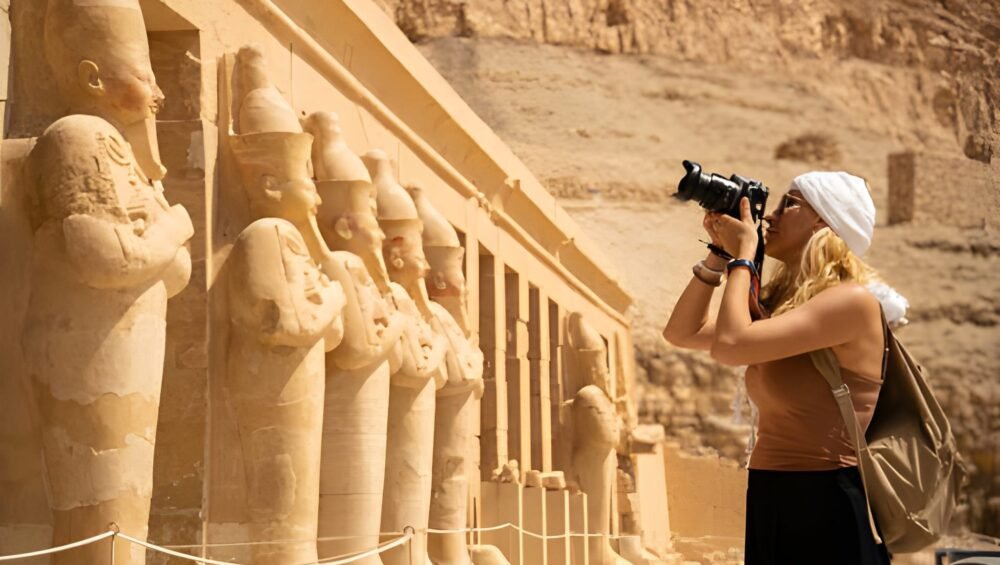
Designed by Senenmut, Hatshepsut’s trusted architect and advisor, the Temple of Hatshepsut revolutionized funerary architecture in ancient Egypt. The temple is built on three ascending terraces connected by long ramps flanked by colonnades, giving the illusion of harmony between human artistry and the surrounding cliffs. Each level had a unique purpose and sacred meaning.
The lower courtyard served as a gathering space for processions; the middle terrace displayed intricate reliefs narrating Hatshepsut’s divine birth and her ambitious expedition to the Land of Punt—an extraordinary trading mission depicted in one of the most detailed scenes of ancient Egyptian art. The upper terrace, accessible through soaring pillared corridors, was reserved for rituals dedicated to Amun-Ra and Hatshepsut’s deified soul.
For those eager to delve into Luxor’s legendary architecture, a visit to the nearby Luxor Temple and Colossi of Memnon perfectly complements the journey through Hatshepsut’s temple complex. Each structure tells a part of the grand narrative of Thebes, the religious capital of the ancient world.
Symbolism and Sacred Design of Deir el-Bahari
Every architectural element in the Temple of Hatshepsut is imbued with symbolism. The temple’s alignment with the winter solstice sunrise suggests deep astronomical and religious significance. When sunlight strikes the temple’s innermost sanctuary, it illuminates the statue of Amun-Ra, creating a divine connection between the heavens and earth. The blending of natural cliffs with artificial terraces mirrors the Egyptian belief in balance—Ma’at—between chaos and order.
Nearby lies the marvelously preserved Habu Temple, showcasing similar architectural finesse but on a grander military scale. Comparing these temples reveals how pharaohs used architecture not only for devotion but also as declarations of political and divine authority.
The Reliefs and Inscriptions: Voices of Antiquity Carved in Stone
The walls of the Temple of Hatshepsut pulse with life through intricate reliefs narrating epic tales. One of the most captivating sequences is the depiction of the expedition to the Land of Punt—considered today’s Eritrea or Somalia—where Egypt traded for myrrh, incense, gold, and exotic trees. The scenes portray the ships, foreign ambassadors, unusual animals, and flourishing trade, emphasizing Egypt’s far-reaching influence during Hatshepsut’s reign.
Other carvings tell myths of her divine conception, suggesting that the god Amun-Ra himself fathered her, legitimizing her rule in the eyes of her subjects and the clergy. Despite later attempts by Thutmose III to erase her legacy, many of these inscriptions survived, whispering through time of a queen whose ambition reshaped history. A visit to the Luxor Museum reveals artifacts and fragments that further illuminate her reign’s artistic brilliance.
The Temple’s Role in Religious and Funeral Ceremonies
The Temple of Hatshepsut served as both a mortuary temple and a ceremonial center for the worship of Amun-Ra. Priests conducted daily rituals, offerings, and festivals, ensuring the queen’s spirit remained united with the gods. During the annual Festival of the Beautiful Valley, the temple transformed into a hub of celebration as Amun’s statue journeyed from Karnak to the west bank, symbolizing divine visitation to the deceased king’s temples. The echoes of chanting, incense smoke, and rhythmic drumming once filled these massive courtyards, creating an ethereal connection between mortals and the divine.
Legacy of Destruction and Rediscovery
After Hatshepsut’s death, her successor Thutmose III initiated a systematic campaign to erase her memory. Her statues were defaced, her cartouches chiseled away, and her name omitted from kings’ lists. Yet, despite centuries of defacement and neglect, the temple’s enduring structure withstood both natural decay and human vengeance. Rediscovered and meticulously restored by archaeologists in the 19th and 20th centuries, the temple now stands as a pristine ode to her defiant legacy. Exploring its restored chambers through Egypt Day Tours feels like turning back time itself.
Today’s Visitor Experience: What to Expect at The Temple of Hatshepsut
Modern travelers to the Temple of Hatshepsut can expect a journey that blends history, archaeology, and adventure. Approaching the temple via its grand causeway, you’re greeted by tiers of colonnades rising beneath towering cliffs. The views over the Theban necropolis and the lush Nile Valley are breathtaking. The best time to visit is early morning, when the sun softly bathes the limestone in hues of gold and rose. For an unforgettable experience, book a guided tour or include it in multi-day packages such as the 7 Days Cairo and Nile Cruise Package or 8 Days Best Egypt Tour with Nile Cruise.
Nearby attractions further enrich the journey—stunning sites like the Ramesseum Temple, Avenue of Sphinxes, and Luxor Hot Air Balloon Ride all complement the experience, turning Luxor into an open-air museum of ancient grandeur.
The Enduring Legacy of Hatshepsut’s Temple in Egyptian Heritage
The Temple of Hatshepsut continues to influence modern design, storytelling, and archaeological understanding. It marks a shift from the rigid pyramid-style funerary monuments to imaginative and integrated cliffside complexes that harmonized with their environment. For Egyptologists, the temple provides invaluable insight into gender politics, religion, and imperial diplomacy of New Kingdom Egypt. Visitors feel its pulse even today—its symmetry, spirituality, and silence tell stories words can’t capture.
Hatshepsut dared to defy convention, and her temple immortalizes that defiance. Rising proudly under the sun after more than three millennia, it represents human ingenuity, divine artistry, and the timeless allure of Egypt’s heritage. A true gem of Luxor’s west bank, it inspires admiration, reverence, and wonder in all who behold it.
Frequently Asked Questions About the Temple of Hatshepsut
Where is the Temple of Hatshepsut located?
The Temple of Hatshepsut lies in Deir el-Bahari on Luxor’s west bank of the Nile River, near the Valley of the Kings. It’s easily accessible from central Luxor, often included in guided tours through Day Tour to Luxor from Hurghada or similar itineraries.
Who built the Temple of Hatshepsut?
The temple was commissioned by Pharaoh Hatshepsut and designed by her chief architect Senenmut. Together, they created one of the most advanced architectural achievements in ancient Egyptian history.
What is unique about the design of the Temple of Hatshepsut?
Its multi-terraced layout, integration with the cliffs, and symmetrical alignment with celestial events make it a masterpiece of harmonious design. The balance between nature and architecture remains unmatched in ancient Egyptian art.
Can visitors explore inside the Temple of Hatshepsut?
Yes, the site is open to the public and includes access to terraces, relief-filled chambers, and sanctuaries. Combining it with excursions like a Day Tour to Edfu and Kom Ombo from Luxor enhances the historical experience.
When is the best time to visit the Temple of Hatshepsut?
The ideal visiting months are from October to April, when the weather is mild, allowing for delightful exploration. Early morning visits offer the most captivating views as sunlight awakens the cliffs, creating a surreal contrast against the blue Luxor sky.