The Valley Temple of Khafre – The Eternal Gateway to Ancient Egypt’s Mystical Afterlife
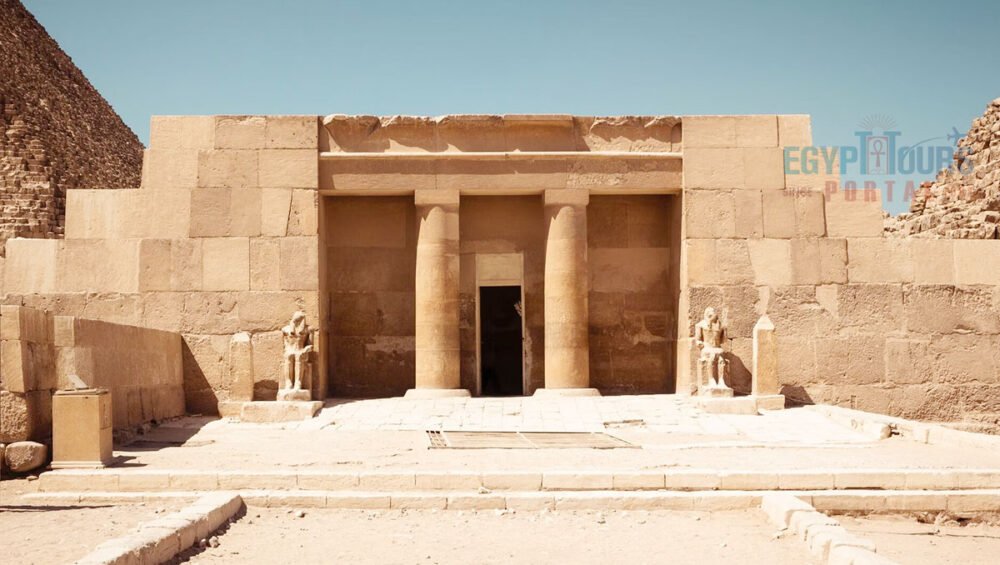
Standing like a sentinel of stone beside the mighty Giza Plateau, the Valley Temple of Khafre is one of Egypt’s most enigmatic and well-preserved monuments. Unlike the colossal Great Sphinx that guards it or the towering pyramids that overshadow it, this temple exudes quiet grandeur. Its smooth limestone walls, solid granite pillars, and masterful symmetry embody both function and faith. Built during the 4th Dynasty of the Old Kingdom around 2520 BCE, the Valley Temple was part of the royal pyramid complex of Pharaoh Khafre—son of Khufu, the builder of the Great Pyramid. This ancient wonder served as both a mortuary site and a sacred threshold between the earthly realm and the afterlife. Visitors today still marvel at the temple’s uncompromising precision, timeless materials, and spiritual resonance that bridges more than four millennia of Egyptian history.
Exploring the Valley Temple isn’t merely stepping into a monument—it’s walking into a timeless ritual space. Here, divine power, architectural genius, and cosmic alignment merge seamlessly. Each stone whispers tales of religious rites, funerary purification, and eternal continuity. In its halls, Egyptian priests prepared Khafre’s body for his journey to immortality, an act symbolizing rebirth beyond death. The Valley Temple stands as a living testimony to Egypt’s unwavering belief in the afterlife, a concept that shaped its art, culture, and religion for generations. With its proximity to the Giza Pyramids, it forms an indispensable chapter in Egypt’s monumental narrative, echoing the grandeur of civilization’s dawn.
Architectural Brilliance of the Valley Temple of Khafre
The Valley Temple’s design reflects pure mastery in engineering and spiritual symbolism. Built primarily from massive limestone blocks lined with red granite and alabaster, the temple was designed to endure eternity. Despite the ravages of time, erosion, and centuries of shifting sands, the temple stands remarkably intact. Its interior layout follows a meticulous plan—rectangular halls supported by columns, corridors leading to offering chambers, and a central courtyard drenched in sunlight. Scholars believe polished diorite statues of Khafre once adorned its sanctuaries, such as the one now displayed at the National Museum of Egyptian Civilization.
This precision-cut structure mirrors the ingenuity that made Egypt’s builders legendary. Without iron tools or modern machinery, ancient craftsmen transported and positioned blocks weighing dozens of tons. The architectural symmetry of the Valley Temple aligns harmoniously with both Khafre’s Pyramid and the Sphinx, forming an interconnected sacred design meant to guide the pharaoh’s soul toward eternity. The temple’s floor plan exemplifies the Old Kingdom’s mastery in integrating function and faith within architectural expression, emphasizing ritual purification, divine transformation, and royal ascension.
Stone Selection and Construction Techniques
The Valley Temple’s enduring elegance owes much to the ancient Egyptians’ meticulous selection of materials. The core structure was crafted from local limestone, quarried directly from the Giza Plateau. Red granite—transported laboriously from Aswan—lined the temple’s walls and pillars, a symbol of strength and divine permanence. Polished alabaster, used for floors and decorative insets, bathed the temple’s inner chambers in an ethereal glow.
Remarkably, modern engineers still puzzle over how these tremendous stones were cut and fitted with such precision. Some stones reveal joints so tight that even a sheet of paper cannot fit between them. The seamless bonding demonstrates advanced knowledge of geometry and balance, unmatched in the ancient world. Those fascinated by ancient craftsmanship often compare such techniques across monuments like the Temple of Hatshepsut in Luxor and the Abu Simbel Temples of Ramses II—both later marvels inspired by the architectural precision pioneered in Khafre’s era.
The Religious Function of the Valley Temple
At its heart, the Valley Temple functioned as a critical element in the funerary complex of Pharaoh Khafre. Here, priests purified the royal body before it was ferried via a paved causeway to the mortuary temple beside the pyramid. Ritual cleansing symbolized rebirth, ensuring the king’s spiritual transition. The temple also hosted offerings, chants, and incense ceremonies meant to secure Khafre’s eternal sustenance. This confluence of architecture and ritual made the Valley Temple a divine laboratory of transformation, where the mortal was molded into the divine.
Egyptian religion emphasized harmony between the physical and spiritual worlds—known as Ma’at. The Valley Temple became a stage for this cosmic order, uniting heaven and earth through sacred geometry. Comparable religious symbolism is later mirrored in sites such as the Temple of Philae, where preservation of tradition lingered well into the Ptolemaic age.
Hidden Scientific and Astronomical Alignments
The ancient Egyptians built with purpose, not coincidence. The Valley Temple aligns perfectly with Khafre’s Pyramid, both situated in relation to solar and stellar pathways. Many Egyptologists propose these designs symbolized the pharaoh’s union with the sun god Ra, emphasizing resurrection and cosmic balance. As sunlight streamed into specific chambers on certain days of the year, it transformed the temple into a celestial observatory, marking transitions of life and afterlife. This interplay between architecture and astronomy also characterizes sanctuaries like the Dendera Temple Complex.
Preservation and Modern Significance of the Valley Temple
Despite its antiquity, the Valley Temple retains much of its original form thanks to its robust construction and partial burial under sand until excavation in the 19th century. Archaeologists have since uncovered remarkable insights into Egypt’s ritual life. When visitors step into these granite-lined halls, they can vividly imagine the orations, processions, and divine incantations that once resonated here. The temple’s preservation now serves scholars, travelers, and archaeologists alike as a prime example of early Egyptian stone architecture in its purest form.
Modern explorers visiting Giza often combine their journey with nearby attractions like the Grand Egyptian Museum or the Day Tour to Pyramids, Memphis and Sakkara, where Egypt’s timeline unfolds before their eyes. From here, travelers frequently embark on extended voyages such as a Luxury Nile Cruise to experience the breath of Egypt’s ancient heritage from Giza to Aswan.
Unveiling the Mysteries: Symbolism Behind the Valley Temple
The Valley Temple’s enigmatic presence isn’t confined to stone. Every architectural decision, relief carving (though most eroded over time), and spatial configuration carries layers of symbolism. The temple served as the pharaoh’s resurrection chamber—a physical embodiment of transformation, linking corporeal death to divine awakening. Its lower location represented the earthly domain where purification began, while pathways led heavenward toward the pyramid—Khafre’s eternal resting point. The layout thus mirrored the cosmic journey from mortality to immortality.
Some archaeologists hypothesize that the temple’s minimalist design was deliberate—spiritual rather than decorative. Unlike richly ornamented temples of the New Kingdom, this Old Kingdom edifice emphasized function over form, reflecting the purity of divine ascension. In this simplicity, the Valley Temple proclaims an eternal truth: perfection lies not in embellishment but in sacred purpose. Visitors interested in symbolic interpretation often explore related themes at sites like Abydos Temple, Egypt’s enduring center of Osirian worship.
The Valley Temple within the Giza Complex
The Valley Temple forms one segment of Khafre’s larger necropolis ensemble—an architectural triad including the pyramid itself, the causeway, and the mortuary temple. Together, they reflect Egypt’s cosmic worldview. The pyramid symbolized the pharaoh’s ascension, the mortuary temple served as his eternal cult site, and the Valley Temple represented the threshold where his earthly remains transformed into divine essence. Positioned strategically east of the pyramid, it connected both spiritually and physically via a causeway once adorned with celestial motifs.
Modern visitors marvel at the Temple’s closeness to the Great Sphinx, likely serving as its guardian companion. Both structures embody royal divinity, with the Sphinx gazing eternally eastward toward the sunrise—a reflection of rebirth central to Egyptian theology. Exploring both monuments offers insight into King Khafre’s ambitious vision of divine kingship merging architecture, religion, and cosmic symbolism.
Tourist Experience and Modern Exploration
Today, the Valley Temple of Khafre stands as one of the essential stops on any Cairo Day Tour. Visitors marvel at the interplay of sunlight and shadow across polished granite, the absence of roof slabs revealing open skies, and the haunting stillness enveloping each hall. Guides often recount how, centuries ago, intrusive sand nearly concealed the structure until excavation revived its lost majesty.
Combining a visit here with a broader historical experience like the Private Tour to Pyramids, the Egyptian Museum and Khan Khalili enriches one’s understanding of ancient artistry and daily ritual. For travelers who desire to extend this historical immersion into Upper Egypt, joining a 4 Day 3 Night Nile Cruise from Aswan to Luxor unveils how this architectural precision evolved through successive dynasties.
FAQs about the Valley Temple
What was the primary function of the Valley Temple of Khafre?
The Valley Temple served as a mortuary purification hall where priests prepared Pharaoh Khafre’s body for burial. Ritual washing and embalming took place here before transporting the body through the causeway to the pyramid. It also hosted ongoing offerings to ensure the pharaoh’s eternal sustenance in the afterlife.
How old is the Valley Temple of Khafre?
The temple dates back approximately 4,500 years to Egypt’s 4th Dynasty, built around 2520 BCE during King Khafre’s reign. Its stones and design remain among the most well-preserved examples of Old Kingdom architecture.
Why is the Valley Temple significant in ancient Egyptian religion?
The Valley Temple symbolized the junction between life and afterlife. Through purification rituals performed inside it, the deceased ruler transitioned spiritually, securing his immortality. It thus embodied the concept of rebirth central to Egypt’s belief system.
Can visitors explore the Valley Temple today?
Yes. The Valley Temple is open to visitors as part of the Day Tour to Giza Pyramids & Sakkara experience. Tourists can walk through its limestone corridors, observe ancient granite columns, and stand near the entrance aligned with the Sphinx, feeling the palpable aura of eternity.
How does the Valley Temple relate to other Egyptian monuments?
Architecturally and spiritually, the Valley Temple represents the prototype of later Egyptian mortuary temples. Its precision and symbolism influenced structures from the Luxor Temple to the Kom Ombo Temple. Its alignment strategy also inspired future architects in mirroring cosmic beliefs through monumental design.
The Valley Temple of Khafre, carved from earth and designed for eternity, remains not just a monument but a dialogue between time and faith. Every visitor who steps upon its threshold retraces footsteps taken millennia ago, connecting with humanity’s earliest and most profound pursuit—the desire for eternal life under the Egyptian sun.