Coptic Cairo (Old Cairo): The Heart of Egypt’s Christian Heritage and Timeless History
Nestled in the southern quarters of modern Cairo lies a remarkable enclave shimmering with centuries of spiritual and historical significance — Coptic Cairo, also known as Old Cairo. This mesmerizing district stands as a living testament to Egypt’s layered civilizations, where ancient Pharaonic remnants, Roman ruins, and Christian sanctuaries intertwine in a harmonious medley. Coptic Cairo isn’t merely a neighborhood; it’s a chronicle of human endurance, devotion, and artistry. Walking through its narrow alleys feels like flipping through the pages of a living Bible, echoing with whispers from Egypt’s earliest Christians who fled persecution to seek solace amid the fortress walls of Babylon. The sound of church bells mingling with the hum of the bustling city gives the place an irresistible charm that’s both sacred and vibrant.
For history lovers, pilgrims, and architecture aficionados, Coptic Cairo is one of Egypt’s most treasured jewels. Its churches, monasteries, and synagogues date back over fifteen centuries, forming a diverse patchwork of faith and resilience. Here, the Hanging Church perches gracefully above ancient gates, the Babylon Fortress looms as a silent protector, and the Ben Ezra Synagogue preserves valuable Judaic history. Each site narrates tales that merge scriptural legends with local history. Today, this area isn’t just a pilgrimage site—it’s an essential stop for anyone embarking on Cairo day tours or exploring Egypt’s ancient roots. The air feels thick with devotion, mystery, and nostalgia—a rare blend that’s impossible to forget once experienced.
Tracing the Origins of Coptic Cairo: Where Christianity Found Shelter
The origins of Coptic Cairo stretch back to the very dawn of Egypt’s Christian era. After the death of Christ, Christianity spread across the Mediterranean world, finding fertile ground in Egypt. Early believers settled within the protective embrace of the Roman-built Babylon Fortress, giving rise to what would later become the cradle of Coptic Christianity. According to tradition, the Holy Family — Mary, Joseph, and the infant Jesus — sought refuge here during their journey through Egypt. This profound connection elevated Coptic Cairo from a mere fortress town into a sacred destination cherished by pilgrims for generations.
By the 3rd century AD, this area had transformed into a thriving Christian hub. The establishment of monasteries and churches reflected not just religious fervor but also defiance against Roman authorities who sought to suppress the burgeoning faith. Today, remnants of those early days can still be felt in the spiritual energy that radiates from every stone and mosaic. For travelers on curated Egypt vacation packages, delving into this timeless district feels like unearthing the faith’s oldest roots amidst the backdrop of one of the world’s oldest cities.
The Babylon Fortress: The Ancient Gateway to Old Cairo
No visit to Coptic Cairo is complete without encountering the monumental Babylon Fortress. Built initially by the Romans around the 1st century AD, it served as both a military stronghold and later a spiritual anchor for the developing Christian community. Strategically positioned near the Nile River, this fortress controlled trade routes and river access to Upper Egypt. When Christianity arrived, the soldiers’ barracks gradually gave way to sanctuaries and chapels, transforming the fortress into a symbol of resilience and conversion. The fortress now envelopes several holy structures, including the famed Hanging Church and the Abu Serga Church, both brimming with tales of faith and endurance.
The Hanging Church: An Icon of Faith Suspended in Time
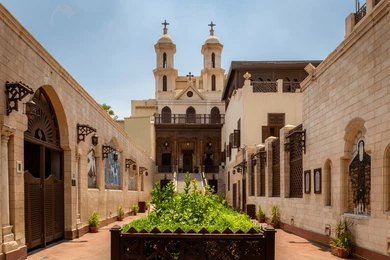
Perhaps the most iconic landmark in Coptic Cairo, the Hanging Church—or Al-Muallaqa—captivates visitors with its ethereal beauty and spiritual magnetism. Built atop the southern gate of the Babylon Fortress, its name derives from its seemingly suspended position above ancient Roman towers. Constructed between the 3rd and 7th centuries, the church’s wooden roof mimics the shape of Noah’s Ark, symbolizing salvation and divine refuge. Inside, intricate Coptic art, religious icons, and marble structures create a sanctuary where spirituality and craftsmanship meet in perfect unison.
The Hanging Church also serves as the official seat of the Coptic Orthodox Pope, reinforcing its undeniable importance in Egyptian Christianity. Travelers on spiritual tours often pair their visit with explorations of the Coptic Museum, located nearby, which houses an invaluable collection of early manuscripts, textiles, and icons that shed light on centuries of Christian tradition in Egypt.
Saint Sergius and Bacchus Church (Abu Serga): The Holy Family’s Refuge
The Abu Serga Church, one of the oldest in Egypt, carries an aura of divine memory. This sacred site is believed to mark the very place where the Holy Family rested during their flight into Egypt. Built over a crypt that once sheltered them, the church emanates peace and solemnity. Its design reflects early Coptic architecture with a basilica-style layout, mosaics, and carved wooden screens. For pilgrims, standing inside Abu Serga is an emotional journey—one that bridges the miraculous and the tangible.
Visitors who follow in these spiritual footsteps often extend their itinerary with other sacred Egyptian destinations such as St. Catherine’s Monastery and Mount Sinai (Jebel Musa), both of which deepen the spiritual tapestry that binds Egypt’s religious legacy together.
Ben Ezra Synagogue: Judaic Heritage in Christian Surroundings
In a remarkable show of harmony, Coptic Cairo also shelters Egypt’s oldest synagogue — the Ben Ezra Synagogue. Nestled within the same historical quarter as the churches, it underscores the city’s diverse religious mosaic. According to tradition, this was where baby Moses was found among the reeds of the Nile. The synagogue’s 9th-century structure, adorned with Arabian motifs, shelters the legendary Cairo Geniza — a treasure trove of ancient Hebrew manuscripts that unveiled profound insights into medieval Jewish life. For anyone interested in interwoven faiths, Ben Ezra encapsulates Egypt’s inclusivity and intellectual depth.
The Coptic Museum: A Window into Early Christian Art
Housing the world’s most comprehensive collection of Coptic art, the Coptic Museum is undeniably the crowning jewel of Old Cairo. Founded in 1908, it exhibits a mesmerizing array of relics from Egypt’s early Christian period—icons, frescoes, manuscripts, textiles, and stone carvings that trace the evolution of Egyptian Christianity from its origins through medieval times. Strolling through its galleries is like reading an illustrated gospel of artistic genius and spiritual devotion.
Experiencing Coptic Cairo Today: A Living Spiritual Heritage
Modern Coptic Cairo continues to thrive as both a pilgrimage center and a vibrant cultural district. Visiting this quarter provides travelers with a deeper perspective of Egypt beyond its pharaonic grandeur. The area hums with life—vendors selling incense, artisans crafting crosses, and monks guiding visitors through ancient sanctuaries. The narrow cobbled streets exude a timeless aura where every stone whispers stories of faith and fortitude. Tour packages like Coptic and Islamic Cairo Tour offer excellent guided explorations, combining historical insight with spiritual enrichment.
After exploring the historic landmarks, travelers can unwind along the Nile through serene experiences such as a felucca trip on the Nile in Cairo or immerse in Egypt’s luxury offerings with an exquisite Luxury Dahabiya Nile Cruise. Those crafting tailor-made Egypt private tours often highlight Coptic Cairo as a must-see stop for its unique combination of spirituality and history.
Architecture, Art, and Symbolism of Coptic Cairo
The visual allure of Coptic Cairo lies in its seamless fusion of Egyptian, Greek, and Roman influences reinterpreted through Christian symbolism. Its churches brim with intricate iconostasis screens carved from ebony and ivory, while biblical scenes depicted in mosaic floors evoke deep devotion. The art, characterized by humble simplicity yet spiritual depth, reveals a distinct Egyptian interpretation of early Christianity. The architectural motifs blend the ancient lotus and papyrus with the cross, creating an unmistakable aesthetic uniquely Coptic.
Spiritual Significance: The Soul of Coptic Christianity
Coptic Cairo stands as the pulsating heart of global Coptic Christianity, hosting annual celebrations, liturgical events, and pilgrimages that draw believers from all corners of the world. This spiritual magnetism reinforces Egypt’s pivotal role in Christianity’s early narrative. It’s not uncommon for visitors to find priests chanting timeless hymns in Coptic script, preserving a language descended directly from the hieroglyphs of ancient Egypt.
How to Visit and When to Go
Exploring Coptic Cairo is best done during the cooler months, from November through March, when the weather is comfortable for walking. Most sites lie within walking distance of each other inside the Old Cairo region, near Mar Girgis metro station. Opting for a guided cultural experience like those offered under Cultural Tours Egypt ensures deeper understanding and access to lesser-known corners rarely seen by casual tourists.
Why Coptic Cairo Belongs on Every Egypt Itinerary
Beyond its religious prestige, Coptic Cairo provides a soul-stirring exploration into the very identity of Egypt. It embodies the meeting point of civilizations—Pharaonic, Roman, Byzantine, and Islamic—forming a crossroads of cultural memory and coexistence. While the Grand Egyptian Museum showcases Egypt’s earthly glory, Coptic Cairo reveals its spiritual resilience. Together, they present the full spectrum of the Egyptian legacy—one grounded in eternity.
FAQs about Coptic Cairo (Old Cairo)
1. What is Coptic Cairo famous for?
Coptic Cairo is celebrated as the cradle of Egyptian Christianity. It’s home to some of the world’s oldest churches, including the Hanging Church, Abu Serga, and the Church of St. Barbara, alongside the Ben Ezra Synagogue and the Coptic Museum. This area reflects Egypt’s diverse religious heritage and ancient architecture.
2. How can I reach Coptic Cairo?
Coptic Cairo is easily accessible via the Mar Girgis metro station in central Cairo. Many travelers include it in guided Egypt day tours or private itineraries from central hotels. It’s also featured in several multi-day cultural and luxury Egypt tours.
3. What are the best attractions in Coptic Cairo?
Top attractions include the Hanging Church, Babylon Fortress, Abu Serga Church, St. Barbara’s Church, Ben Ezra Synagogue, and the Coptic Museum. Each site unveils centuries of faith, artistry, and historical transformation. Pairing this visit with the Islamic Cairo district offers a complete perspective on Cairo’s multicultural spirit.
4. Is Coptic Cairo safe for tourists?
Absolutely. Coptic Cairo remains one of Cairo’s safest areas, frequented daily by local families, pilgrims, and global travelers. The Egyptian government actively preserves and protects the area. Pairing your visit with trusted operators like Cindrella Egypt Travel ensures seamless and secure experiences.
5. When is the best time to visit Coptic Cairo?
The most suitable time to explore Coptic Cairo is between October and April. During these months, temperatures are ideal for sightseeing. Visitors can also witness Coptic celebrations such as Christmas in Egypt, which adds an