
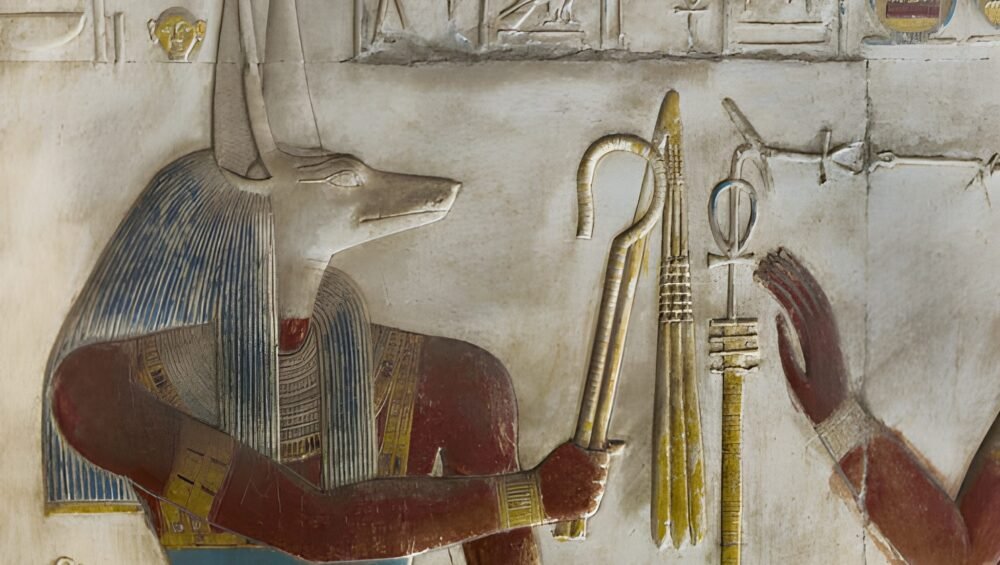
The Anubis Symbol: Guardian of the Afterlife and Eternal Protector of Souls
The Anubis symbol stands as one of the most influential and enduring icons in Ancient Egyptian mythology. Representing the god of mummification, embalming, and the afterlife, Anubis is depicted with a striking black jackal’s head that has become synonymous with protection, guidance, and judgment of souls. Long before the rise of Osiris as a central deity of the dead, Anubis was revered as the chief guardian of the necropolis, the divine protector who oversaw the sacred transition between earthly existence and eternal rest. His emblem, often found inscribed on tombs, papyrus scrolls, and amulets, captured the Egyptians’ fascination with immortality and the meticulous balance between life and death. The Anubis symbol wasn’t just an emblem of fear or reverence—it represented hope. Ancient Egyptians believed that this god, through his divine power, could weigh the heart of the deceased with fairness, ensuring their safe journey into the afterlife. His jet-black hue symbolized the fertile soil of the Nile and rebirth, while his canine form reflected keen senses—a perfect protector in both physical and spiritual worlds. The legacy of the Anubis symbol persists today, inspiring art, jewelry, tattoos, and pop culture, serving as a mystical link between modernity and ancient beliefs surrounding death and resurrection.
Origins and Evolution of the Anubis Symbol in Ancient Egypt
The origins of the Anubis symbol trace back to the Predynastic Period, even before the unification of Upper and Lower Egypt. Initially known as ‘Inpu’ or ‘Anpu,’ his role was to preside over funerary rites, ensuring that bodies were preserved for the afterlife. As religious practices evolved, Anubis transitioned from being the sole god of the dead to the patron of mummification and tomb protection, sharing divine duties with Osiris. His emblem—a jackal or dog figure—was not coincidental. Wild jackals were often seen prowling cemeteries, and the Egyptians associated them with the guardians of the sacred burial grounds. Thus, the image of Anubis transformed into one of respect and sanctity, guarding the spirits from desecration and chaos. During the Old Kingdom, priests who performed embalming rituals often donned masks shaped like Anubis, invoking his protection over the deceased.
To witness remnants of this divine transformation, travelers exploring the Luxor Temple and the tombs in the Valley of the Kings can find carvings and murals where Anubis is depicted gently attending to Pharaohs during their ceremonial passage. These depictions reinforce his timeless role as the watcher of eternity.
The Symbolism Behind the Black Jackal
The color black in the Anubis symbol represents rebirth, fertility, and the regenerative power of the Nile’s silt. Contrary to modern associations of black with evil, Egyptians linked it with life, renewal, and resurrection. The jackal, embodying vigilance and sharp intuition, signified a creature capable of detecting spiritual danger. Anubis’s hybrid form—half human, half jackal—embodied the balance between mortality and divinity. This visualization perfectly captured the Egyptian ideal of dual existence: the living spirit and the eternal soul coexisting beyond physical death. The fine artistry of his symbol, often found on funerary treasures, offered assurance that Anubis was ever-present to guide souls safely through the hall of judgment.
Modern visitors exploring the Abu Simbel Temples or Temple of Philae will uncover inscriptions honoring him, underscoring his importance throughout hundreds of dynasties.
The Role of the Anubis Symbol in Funerary Rituals
The Anubis symbol was deeply intertwined with every stage of Ancient Egyptian burial rites. His presence was invoked during the ritual of ‘Opening of the Mouth,’ a ceremony granting the deceased spiritual senses in the afterlife. Embalmers prayed to Anubis before they purified the body, believing he would protect them from mistakes. His image adorned coffins, sarcophagi, and burial chamber walls, serving as a visual prayer for safe passage. The notion of judgment was central—Anubis was the divine facilitator during the ‘Weighing of the Heart’ ceremony, where the heart was balanced against the feather of Ma’at, symbolizing truth. Those who passed the test could enter eternity, while others faced annihilation. The Anubis symbol was thus more than aesthetic; it was a literal key to eternity.
Artifacts discovered in ancient necropolises—from Saqqara Necropolis to Valley of the Queens—reveal amulets inscribed with his likeness, crafted to ward off evil and preserve soul purity. These grave goods illustrate just how sacred his symbol became over millennia.
Anubis and the Weighing of the Heart Ceremony
In the Hall of Truth, Anubis watched vigilantly as the souls of the dead faced judgment before Osiris. His scale determined salvation or destruction. This vivid imagery, immortalized on papyrus such as the ‘Book of the Dead,’ symbolized fairness and the inevitability of cosmic justice. Even in modern psychology and philosophy, the Anubis symbol evokes introspection—inviting reflection on moral balance and the weight of one’s actions. For Egyptians, his symbol embodied peace, guiding hearts burdened by earthly deeds toward redemption.
The Use of the Anubis Symbol in Amulets and Statues
Throughout history, Egyptians wore amulets bearing the Anubis symbol to invoke spiritual protection. Crafted in gold, obsidian, or faience, these charms were placed inside wrappings of the deceased for eternal guardianship. Temples dedicated to Anubis depicted grand statues with meticulous craftsmanship, revealing devotion to his divine power. Even now, visitors seeking deeper connections to Egyptian heritage can explore representations of Anubis in ancient art while cruising on the Nile aboard the Steigenberger Minerva Nile Cruise or visiting the Grand Egyptian Museum where his sacred effigies continue to captivate audiences worldwide.
The Spiritual Meaning of the Anubis Symbol in Modern Times
In contemporary culture, the Anubis symbol transcends its origins to embody transformation, wisdom, and strength against adversity. Spiritual enthusiasts and historians alike interpret Anubis as a guardian guiding humans through personal metamorphosis—through loss, rebirth, and moral awakening. His presence in jewelry, tattoos, and art still honors the ancient belief that death is not an ending but a transition. Those who meditate on this symbol often associate it with shadow work, evoking the courage to confront inner darkness and emerge renewed. The symmetry and poise embedded within the Anubis symbol make it a timeless compass for seekers of balance, much as it once guided departed souls across the veil of eternity.
Many travelers visiting Egypt immerse themselves in this symbolism by touring sacred sites such as Temple of Seti in Abydos or embarking on serene voyages like the Luxury Dahabiya Nile Cruise, where storytellers recount the mysteries of Anubis under starlit skies.
Representation of the Anubis Symbol Across Cultures
The influence of the Anubis symbol extended beyond Egypt’s borders. In ancient Greek writings, Anubis was equated with Hermes, merging into the deity ‘Hermanubis,’ symbolizing the syncretism between death and communication. Coptic traditions and later mystic practices preserved traces of his archetypal role as a psychopomp. In popular culture, Anubis has continued to inspire films, literature, and gaming—portrayed as a symbol of mystery and justice. This cross-cultural endurance highlights how universal his symbolism remains, encompassing both fear of mortality and awe toward eternal order.
Architectural Depictions and Hieroglyphic Significance
Ancient temples such as those in Kom Ombo Temple and Edfu Temple were adorned with hieroglyphs incorporating the Anubis symbol in prayers for the pharaoh’s longevity. The hieroglyphic representation—often featuring a seated jackal atop a shrine—embodied vigilance, guarding every soul resting beneath the earth. Each carved stroke narrated Egypt’s devotion to the eternal cycle, mirroring the desert’s rhythm of dusk and dawn. Studying these inscriptions provides profound insight into the intersection between language, art, and faith in ancient times.
The Enduring Legacy and Influence of the Anubis Symbol
Modern Egyptologists regard the Anubis symbol as one of humanity’s earliest metaphors for spiritual guidance. He continues to bridge philosophical discourse, artistic expression, and religious study. From the walls of Temple of Hatshepsut to the exhibitions of the Nubian Museum in Aswan, Anubis’s black silhouette remains awe-inspiring. He serves as a reminder that ancient wisdom endures through symbols, communicating truths that transcend millennia. The Anubis symbol is not merely historical—it continues to shape how humanity comprehends mortality, morality, and the sacred cycle of life and rebirth.
Those seeking a firsthand encounter with the remnants of his cult may explore sites through curated Egypt Private Tours or picturesque Luxury Nile Cruises, where knowledgeable Egyptologists reveal ancient inscriptions depicting his majesty. As the Nile whispers stories of kings and gods, the spirit of Anubis lingers, watching over eternity with steadfast gaze.
Symbolic Connection Between Anubis and the Spiritual Traveler
In modern spirituality, the Anubis symbol resonates deeply with those embarking on inner journeys. Whether one travels physically through Luxor City or metaphysically through meditation, this ancient emblem acts as a guide toward enlightenment. It assures travelers that transitions—whether between worlds or life phases—carry purpose and divine order. The jackal-headed guardian remains an unwavering ally for those who respect both the seen and unseen realms.
FAQs about the Anubis Symbol
What does the Anubis symbol represent?
The Anubis symbol represents protection, mummification, and guidance to the afterlife. It embodies fairness, resurrection, and divine judgment, ensuring the soul’s safe transition from earthly life into eternity.
Why is Anubis depicted with a black jackal head?
The black jackal symbolizes rebirth and fertility. The color black, associated with the rich soil of the Nile, conveys regeneration, while the jackal’s nature as a nocturnal guardian mirrors Anubis’s role as protector of tombs.
Where can I see the Anubis symbol in Egypt today?
Travelers can witness the Anubis symbol in temples such as Dendera Temple Complex, the tombs in Luxor, and the exhibits at the National Museum of Egyptian Civilization. Many guided tours, including Egypt Day Tours, showcase his depictions in context.
What materials were used to create Anubis amulets in ancient times?
Amulets featuring the Anubis symbol were commonly made from gold, lapis lazuli, obsidian, or faience. These materials carried spiritual connotations of immortality and divine protection throughout the afterlife.
What modern meanings does the Anubis symbol hold today?
Today, the Anubis symbol signifies guidance, transformation, and spiritual awakening. It appeals to those exploring rebirth, moral introspection, and the courage to walk through life’s unknowns with unwavering strength.