Snorkeling in Sharm El-Sheikh: House Reefs, Boat Trips and Ras Um Sid
The best snorkeling in Sharm El-Sheikh comes from three options: the house reefs in front of many resorts, Ras Um Sid reef near the Old Town lighthouse, and boat trips to offshore sites and Ras Mohammed National Park. Shore entries cost little and suit beginners; boats reach the richest coral and the open-water drop-offs.
Key Takeaways
- Ras Um Sid is a shore-entry reef below the lighthouse at the edge of the Old Town; a ramp and pontoon give access to the reef wall.
- House reefs are the reef directly in front of a resort beach; access and quality depend on the hotel, and some are open only to guests.
- Boat trips are the way to reach Ras Mohammed National Park and the offshore sites of the Strait of Tiran.
- Sharm’s average daily high is 21.9 degC in January and 38.8 degC in August, per the World Meteorological Organization, so water and air comfort change a lot with the season.
- Bring or hire a rash vest, mask and fins, and never stand on or touch the coral.
What Makes Snorkeling Here Special
Sharm El-Sheikh sits at the southern tip of the Sinai Peninsula, where the Red Sea splits into the Gulf of Suez and the Gulf of Aqaba. Fringing reefs, meaning coral that grows directly off the shoreline rather than on isolated islands, run along much of this coast. That geography is the reason a snorkeler can step off a beach and be over live coral within a few fin kicks.
The reefs are known for their steep walls, shallow reef tops called reef flats, and dense schools of small orange anthias that hover above the coral heads. Because the water is clear and the reef edge is close to shore, even weaker swimmers can see a great deal without going far from the beach.
House Reefs: Snorkeling From the Resort Beach
A house reef is the stretch of coral directly in front of a hotel or resort. Many Sharm resorts build a pier or a sand-free entry point so guests can reach the reef without walking over live coral. The big advantage is flexibility: you can snorkel at dawn, return for lunch and go back in the afternoon without booking anything.
Quality varies from property to property. Some house reefs have a gentle slope with healthy coral and plenty of reef fish; others are sandier or more worn. Before booking a hotel for the snorkeling, check recent guest photos of the reef itself rather than the beach, and ask whether the reef is accessible to non-guests. Some resorts allow day visitors for a fee, others do not, and policies change, so confirm directly with the property.
Entry points matter. Use the designated pier or ramp, and enter the water where staff indicate. Walking across the reef flat at low tide damages coral and risks cuts from fire coral and sea urchin spines.
Ras Um Sid: The Classic Shore Dive and Snorkel Site
Ras Um Sid is a headland just south of the Old Town, marked by a white lighthouse on the cliff top. Its reef is one of the most popular shore sites in Sharm because it combines easy access with genuine reef scenery. A short stairway leads down from the clifftop park to a ramp and platform, and from there you slip into the water and swim out to the reef wall.
The wall drops away steeply, so the reef edge is the place to look: coral gardens, sea fans, and a constant traffic of reef fish. Experienced snorkelers can drift along the wall, while beginners should stay over the shallow reef top near the entry and keep the shore in view.
Practical points: the site is busy in the morning and around midday, so going early gives clearer water and fewer people. Currents can run along the headland, so swim into the current first so the return is easy, and keep a float or buoy handy if you tire easily. A small fee may apply to enter the park or use the facilities; it is not a published national tariff, so ask on site.
Boat Trips: Reaching the Best Offshore Reefs
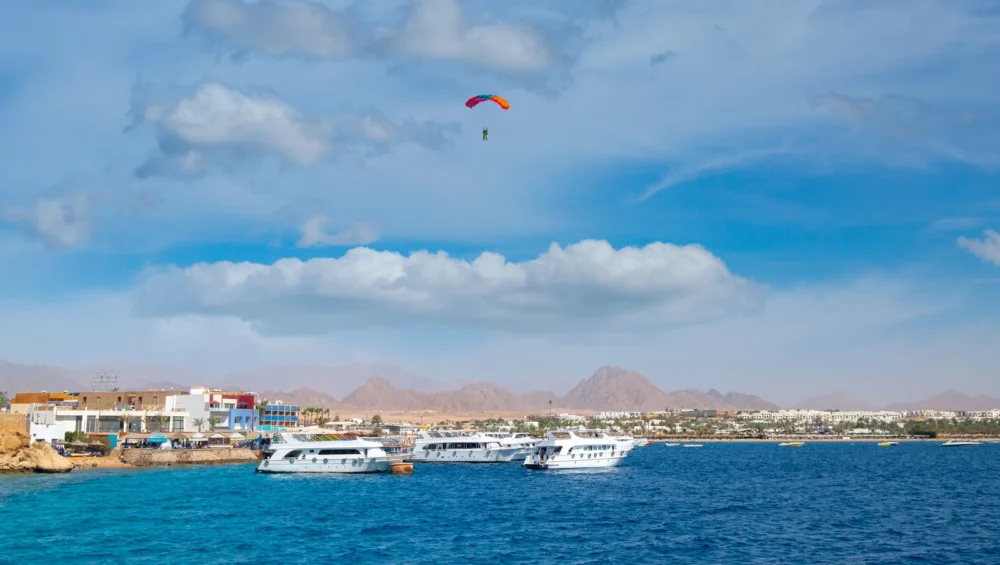
Boat trips are how most visitors see the top-tier sites. Day boats leave from the marinas and the harbor, carry guests to two or three reef stops, and usually include lunch, snorkel gear and a guide in the water. This is the best choice if you want the walls, pinnacles and coral blocks that cannot be reached from the beach.
Typical stops include sites in the Strait of Tiran, where four reefs sit in the channel between Sinai and Saudi Arabia, and sites inside Ras Mohammed National Park. Boats allow time at each reef, shelter from wind, and a safe point to climb back aboard, which matters if the sea is choppy.
When comparing operators, ask about group size, whether a lifeguard watches the water, whether life jackets or floating belts are provided, and how many reef stops are included. Smaller boats usually mean more time in the water and less crowding on the reef.
Ras Mohammed National Park by Boat
Ras Mohammed National Park lies at the very tip of the Sinai Peninsula and is the most celebrated marine protected area in the region. Its reefs are managed as a conservation zone, so boats moor at set sites and visitors are asked to follow strict rules about touching coral, feeding fish and collecting anything from the sea or shore. You can read more about the park in this guide to Ras Mohammed National Park.
For a guided option, a boat excursion such as snorkeling by boat to Ras Mohamed combines transport, gear and stops at the park’s reefs in a single day. Passports are normally needed for park entry and boat registration, so carry yours on the day.
When to Go: Seasons, Air and Comfort
Snorkeling is possible all year, but comfort changes with the season. Air temperatures from the World Meteorological Organization show how different the months feel on the boat deck and on the beach.
| Month | Average daily high | Average daily low |
|---|---|---|
| January | 21.9 degC | 13.5 degC |
| April | 30.1 degC | 20.3 degC |
| July | 37.9 degC | 27.8 degC |
| August | 38.8 degC | 28.3 degC |
| October | 31.9 degC | 23.5 degC |
| December | 23.4 degC | 15.1 degC |
In winter the air feels cool when you step out of the water, so a wetsuit top or a long-sleeved rash vest makes a real difference. In summer the heat on the surface is intense, so sun protection and shade between swims matter more than extra warmth. Spring and autumn offer the most balanced conditions for most travelers.
Gear, Safety and Reef Etiquette
A well-fitting mask is the single most important item; test it by pressing it to your face without the strap and breathing in through your nose. If it holds, it is likely to seal in the water. Fins add comfort and control, and a snorkel vest or float is sensible for anyone who is not a confident swimmer.
Wear a rash vest or long-sleeved top, because the sun on your back while you float face-down is stronger than most people expect. Use reef-safe sun protection if you apply cream at all, and never rely on cream alone.
The golden rule is simple: look, do not touch. Standing on coral, grabbing it for balance or kicking it with fins kills it and can cut you badly. Fire coral causes burning stings, sea urchins have long spines in sandy and rocky areas, and some fish bite if provoked. Do not feed fish, do not chase turtles or rays, and never remove shells, coral or sea creatures. Swim with a buddy, keep track of boats, and signal the crew if you are tired.
Combining Snorkeling With Other Trips
Snorkeling fits easily into a wider Sinai itinerary. Many visitors pair reef days with a day on land, and the town itself has a few indoor stops for rest days. The Sharm El-Sheikh Museum is run by the Ministry of Tourism and Antiquities; per the Ministry’s official ticketing service, a foreigner general admission adult ticket is EGP 200 and a student ticket is EGP 100, with Egyptian adult admission at EGP 40 and student at EGP 20. Hours are listed per season: in the summer season it opens at 10:00 am with last entry at 12:00 pm, and in the Ramadan season it opens at 10:00 am with last entry at 01:00 pm. A valid student ID is required and the age must not exceed 24. Official fees and hours are revised periodically, so check the Ministry’s ticketing portal before you go.
For a longer overview of the destination, including where to stay and what else to see, see this guide to Sharm El Sheikh. If you want to add a major excursion beyond the reef, a cruise-based option such as the Petra tour from Sharm takes you across the Gulf of Aqaba for a very different kind of day.
Planning Your Snorkeling Days
A sensible plan for a five-day stay is one house-reef morning to test your gear, one shore session at Ras Um Sid, one full boat day to Ras Mohammed or the Strait of Tiran, and a rest day on land. Keep the boat day for calm weather, since wind affects visibility and comfort on deck more than on the shore.
Book boat trips directly with licensed operators, check what is included, and arrive at the marina with time to spare. Carry water, a hat, a dry change of clothes and a waterproof bag for valuables. Phones and cameras photograph best in clear, shallow water in the middle of the day when the sun is high.
Frequently Asked Questions
Where is the best place to snorkel from the shore in Sharm El-Sheikh?
Ras Um Sid, below the lighthouse near the Old Town, is the best-known shore-entry site because a ramp and platform lead straight to the reef wall. Many resort house reefs are also very good, but access depends on the hotel.
Do I need to be a strong swimmer to snorkel here?
No, but you should be comfortable in water and wear a life jacket or float if you are not confident. Stay over the shallow reef top near the entry point and avoid swimming out past the reef edge alone.
What is a house reef?
A house reef is the coral reef directly in front of a hotel or resort beach, reachable by a pier or ramp without needing a boat. Quality and access rules differ by property, so check before you book.
Is a boat trip better than snorkeling from the shore?
Boat trips reach offshore reefs, walls and national park sites that shore entry cannot, so they usually show richer coral and more marine life. Shore snorkeling is cheaper and more flexible, so many visitors do both.
Can I touch the coral or feed the fish?
No. Touching or standing on coral damages it and can injure you, and feeding fish disrupts the reef. The rule at every site, especially inside Ras Mohammed National Park, is to look without touching.
What should I wear for snorkeling in winter?
Wear a long-sleeved rash vest and consider a thin wetsuit top, because winter air feels cool when you leave the water. Sharm’s average daily high in January is 21.9 degC and the low is 13.5 degC, per the World Meteorological Organization.