Farafra Oasis: The Quiet Gateway To The White Desert
Farafra is the smallest and most remote of Egypt’s inhabited Western Desert oases, and it is the closest settlement to the White Desert’s chalk formations. About 45 km north of the town lies the national park, so most travellers use Farafra as the base for overnight desert camping, hot springs and a slow, uncrowded look at oasis life.
Key Takeaways
- Farafra town sits roughly 630 km southwest of Cairo, and the White Desert National Park begins about 45 km to the north.
- Most visitors reach the oasis by road or on a multi-day Western Desert loop that links Bahariya, Farafra, Dakhla and Kharga.
- The Badr Museum, a mud-brick gallery by the painter Badr Abdel Moghny, is the town’s main cultural stop.
- The Black Desert, Crystal Mountain and Agabat viewpoint are common waypoints on the road between Bahariya and Farafra.
- Nights in winter can fall close to freezing, so warm layers matter as much as sun protection.
Where Farafra Sits On The Map
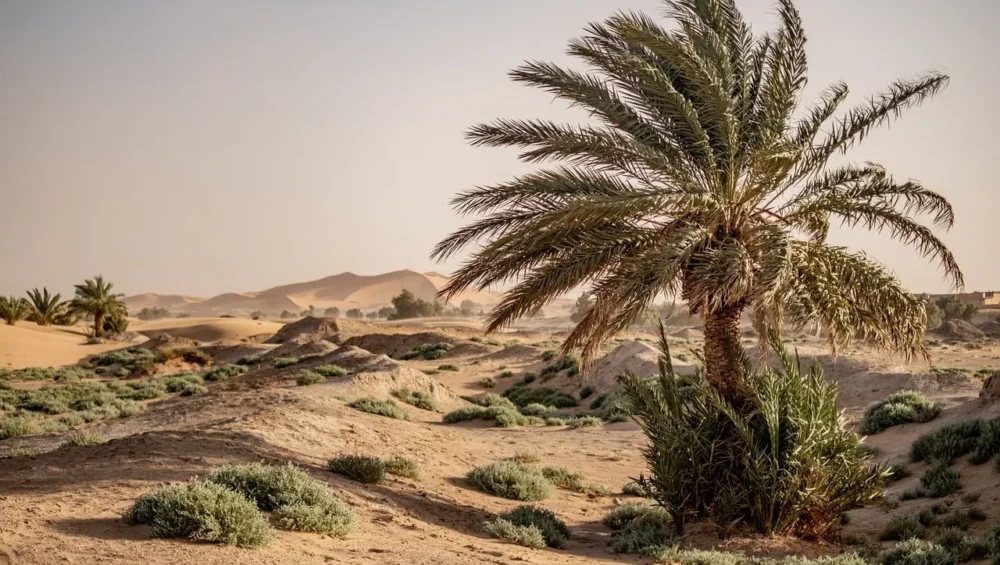
Farafra lies in Egypt’s New Valley Governorate, the large desert province that holds the Western Desert oases. It is a depression, meaning a sunken basin where groundwater reaches the surface through wells and springs. The main settlement, Qasr el-Farafra, is a modest town of low buildings, date palms and olive groves, home to only a few thousand residents. This small scale is the point of the place: there are no crowded streets, no hawkers and very little traffic.
Farafra sits between Bahariya to the north and Dakhla to the south, which makes it a natural midpoint on the classic oasis circuit. The roads are paved and in decent condition, but distances are long and services are sparse between settlements, so fuel and water should never be left to chance. The region’s wider geography is covered in a guide to Fayoum and the Western Desert, which helps put the oases in context.
Getting There And Getting Around
Most travellers arrive by road. From Cairo the drive runs through Bahariya Oasis, and the full journey takes the better part of a day. Public buses connect Cairo with the oases, but schedules are limited and timings are slow. Hiring a driver or joining an organised overland trip is the more practical option, especially if you want to enter the White Desert, where a four-wheel-drive vehicle and an experienced guide are essential.
Many trips pass through Bawiti in Bahariya Oasis, the usual first stop before the road continues south to Farafra. Once you are in town, everything central can be reached on foot. For the desert, vehicles leave from Farafra with a driver-guide who knows the tracks, because the terrain has few landmarks and navigation errors can be serious.
The Town Of Qasr el-Farafra
The old heart of the oasis is Qasr el-Farafra, a cluster of mud-brick houses and a ruined fortress, or “qasr”, that once protected residents from raiders. Wandering the lanes at a gentle pace shows how locals have used palm trunks, clay and straw to keep interiors cool through summers that regularly exceed 40°C. The oasis economy rests on dates, olives, apricots and, increasingly, small-scale farming irrigated by deep wells.
Daily life moves slowly. Shops open and close according to the heat, and conversation with residents is easy and unhurried. Farafra is a good place to buy basic supplies before heading out, including water, bread, fruit and dates. The surrounding gardens are shaded and green, a sharp contrast to the pale sand a few kilometres away.
The Badr Museum And Local Art
The best-known cultural stop in town is the Badr Museum, a mud-brick gallery and studio created by the Egyptian artist Badr Abdel Moghny. It houses his paintings and sculptures, which draw on oasis scenery, rural figures and desert light, and the building itself is worth seeing for its domes and vaulted rooms. It reflects the way Farafra has attracted artists who value solitude and clear skies.
Opening hours and entry arrangements can change, so it is sensible to ask at your hotel or camp before walking over. Visits are usually short, an hour or less, which fits easily around a morning or late-afternoon schedule. The museum is a useful reminder that the oasis is a living community with its own creative voice, not only a launch point for desert trips.
The White Desert National Park
The reason most people come is the White Desert, a protected area north of Farafra where wind has carved chalk and limestone into pale, sculptural shapes. Rocks resemble mushrooms, giant birds, camels and ice cream cones, and they glow orange and pink at sunrise and sunset. The effect is strongest in low light, so the best photography happens at the edges of the day.
Visitors usually camp overnight on soft sand among the formations, eating a simple meal cooked over a fire and sleeping beneath a dense field of stars. For a fuller picture of the park’s landscapes and what to expect, see this overview of the White Desert in Egypt. Rules in the park generally ask visitors to remove all rubbish and avoid breaking or climbing the fragile formations.
Black Desert, Crystal Mountain And Other Stops
The road between Bahariya and Farafra passes several distinctive sights that make the journey part of the experience. The Black Desert is a field of dark volcanic hills and scattered basalt that contrasts sharply with the pale terrain beyond. Crystal Mountain is a small ridge of quartz crystals that was exposed when the road was built, and Agabat is a viewpoint over a broad, open drop of desert.
The contrast between dark and pale ground explains why the region is sometimes described in terms of both colours. A separate guide to the Black and White Desert explains how the two landscapes relate and how itineraries usually combine them. These stops are quick, often 20 to 40 minutes each, so they fit comfortably into a travel day without needing extra nights.
Hot Springs And Oasis Gardens
Farafra has natural springs that supply both farms and bathing pools. The best-known is Bir Sitta, a hot spring about 20 km from the town, where warm, mineral-rich water collects in a pool and is popular for a restorative soak after a dusty day. Water temperature is comfortable rather than scalding, and the contrast with the cold desert air at night is memorable.
Local guides can also point you to smaller springs and shaded gardens around the oasis. Wear modest swimwear, because local custom favours conservative dress even at bathing sites, and bring a towel and drinking water. Tipping the attendant or guide who looks after the pool is customary and appreciated.
Planning Your Visit: Season, Packing And Costs
The best months are October to April, when days are warm and clear and nights are cool. Summer temperatures can be punishing and make camping uncomfortable, while winter nights can drop close to freezing, so bring a warm jacket, a hat and a decent sleeping bag if your operator does not supply one. Sturdy shoes, sunglasses, sunscreen and a headscarf for wind and dust are also useful.
| Stop | Typical Time Needed | Best Time Of Day |
|---|---|---|
| Black Desert | 20–40 minutes | Morning or late afternoon |
| Crystal Mountain | 20–30 minutes | Midday or afternoon |
| White Desert camp | Overnight | Sunset and sunrise |
| Bir Sitta hot spring | 1–2 hours | Evening |
| Badr Museum | About 1 hour | Morning |
Accommodation in Farafra ranges from simple guesthouses to small eco-lodges, and camping in the desert is the more atmospheric choice. Prices and availability vary with the season, so confirm costs with your operator in advance. Travellers who like variety can pair a Farafra stay with the surrounding oases, such as Dakhla Oasis to the south, which adds historic villages and springs to the route.
Extending Your Trip Beyond Farafra
Farafra works well as one chapter in a longer Egyptian itinerary. Travellers who want a softer contrast to the empty desert often add green, lake-filled Fayoum Oasis, which is far closer to Cairo and suits a short side trip. Those with limited time can combine a desert stay with a quick Cairo visit, and if your schedule includes the Red Sea coast, a two-day Cairo trip from Marsa Alam shows how easily the capital fits into a wider plan.
For a lighter taste of desert adventure closer to the coast, a morning quad bike desert safari offers an energetic alternative to the quiet, slow-paced camping that defines Farafra. Each option suits a different traveller, and Farafra rewards those who are comfortable with silence, simple facilities and long, unhurried days.
Frequently Asked Questions
How far is Farafra from the White Desert?
The White Desert National Park begins roughly 45 km north of Farafra town. The drive to the first formations takes under an hour in a four-wheel-drive vehicle, depending on the route and track conditions.
Do I need a guide to visit the White Desert from Farafra?
Yes, an experienced driver-guide is strongly recommended, and a four-wheel-drive vehicle is essential. The tracks are unmarked, navigation is difficult and help is far away, so travelling independently is unsafe.
When is the best time to visit Farafra?
October to April is the best period, with warm days and cool, clear nights. Summer is very hot, while winter nights can approach freezing, so pack warm clothing for camping.
Can I visit Farafra as a day trip from Cairo?
It is not practical, because the oasis is about 630 km from Cairo and the journey takes most of a day each way. Plan at least one night, and ideally two, to enjoy the White Desert properly.
What is there to do in Farafra town itself?
You can visit the Badr Museum, explore the old mud-brick quarter and its ruined fortress, and relax in the oasis gardens. Nearby, the Bir Sitta hot spring is a popular evening soak.
Is Farafra suitable for first-time visitors to Egypt?
Yes, provided you book through a reputable operator and accept simple facilities. The oasis is quiet and welcoming, and it suits travellers who value landscape and calm over sightseeing variety.