
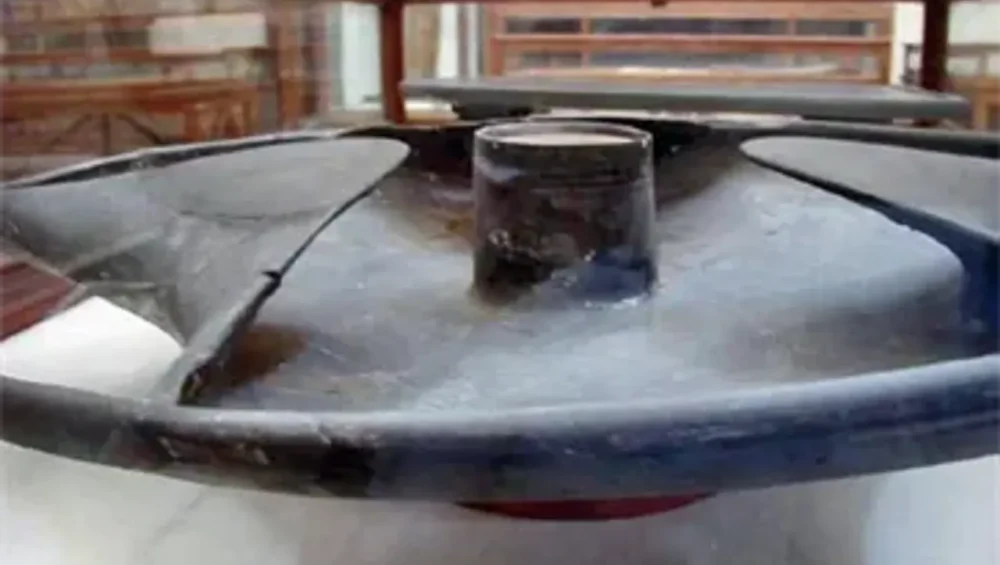
The Sabu Disk: Unraveling Egypt’s Mysterious Ancient Artifact
Few ancient discoveries ignite as much fascination and debate as the Sabu Disk, a 5,000-year-old relic unearthed from Egypt’s sands. This enigmatic artifact, recovered from the Tomb of Prince Sabu in the Saqqara necropolis, continues to challenge archeologists, engineers, and historians with its unique design and unclear purpose. Despite being fashioned during Egypt’s early dynastic period, between 3100 and 3000 BCE, its sophisticated features look surprisingly advanced, even by today’s standards. The disk’s aerodynamic shape, precision symmetry, and wheel-like structure have led some to call it one of the earliest examples of advanced ancient technology.
In the ever-growing list of mysterious Egyptian artifacts, the Sabu Disk holds a position of high intrigue. Is it a ritual object, a lamp, or possibly part of an ingenious mechanical device lost to time? The answer is buried beneath layers of myth, science, and speculation — but by exploring its discovery, structure, and theories, we can gain insight into the minds of early Egyptians and their ingenious craftsmanship. In this article, we’ll explore where the Sabu Disk was found, how it was made, and why it continues to puzzle the modern world. For travelers intrigued by ancient mysteries, adding a visit to the Saqqara Pyramids or the Sakkara Necropolis—where the disk was discovered—should be high on your Egyptian itinerary.
Unearthing the Sabu Disk: A Discovery in the Tomb of Prince Sabu
The Sabu Disk was discovered in 1936 by the eminent Egyptologist Walter Bryan Emery during excavations of Mastaba S3111 at Saqqara, a site dating back to Egypt’s First Dynasty. The tomb belonged to Prince Sabu, the son of Pharaoh Anedjib. When the funerary chamber was opened, archaeologists found stone bowls, copper tools, and other everyday objects — but one peculiar object stood out among the relics: a small, grayish disk carved from a fragile metamorphic rock known as schist.
Unlike anything else from the early dynastic period, the disk measured about 61 centimeters in diameter and featured a deep concave design with three evenly spaced lobes protruding from its outer edge. This complex form baffled Emery and his colleagues, as it couldn’t be replicated using the Stone Age tools believed available at the time. Today, visitors exploring Memphis Egypt, The Old Egyptian Capital and its nearby necropolises can imagine the kind of discoveries early archaeologists made when unearthing such advanced relics.
The Material and Craftsmanship of the Sabu Disk
The disk’s construction from schist—a brittle and layered rock known to fracture easily—makes its creation even more puzzling. To craft such a precise and symmetrical object from fragile material would require exceptional skill, delicate tools, and a deep understanding of stone properties. Many researchers have argued that creating the object with the hand tools available in 3000 BCE should have been nearly impossible.
This raises the question: did the ancient Egyptians possess more advanced workmanship than previously assumed? Some experts point out that even the bowls and vessels discovered in early dynastic tombs demonstrate remarkable craftsmanship, hinting at a level of expertise later mirrored in Egypt’s monumental building projects. As visitors touring ancient sites like the Luxor Temple soon realize, artistic refinement and engineering prowess were deeply ingrained in Egyptian culture from its very beginning.
The Shape and Design of the Sabu Disk
Unlike typical Egyptian stone vessels, the Sabu Disk isn’t simply decorative; its design suggests mechanical intent. The central hole, surrounded by lobed indentations, leads some to believe it was mounted on an axle or used in rotational movement. Others theorize that the holes held cords, or that the shape represented a specific symbolic meaning perhaps tied to solar or funerary rituals. Its aerodynamic configuration even inspired wild theories connecting it to ancient flight or alien technology—a claim unsupported by evidence, but revealing humanity’s fascination with Egypt’s mysteries.
Theories About the Purpose of the Sabu Disk
1. The Ritual Object Theory
Some archaeologists suggest that the Sabu Disk served as a ceremonial object used during funerary rites. Given its discovery in a royal tomb, this theory holds weight. Its shape could symbolize the cyclical passage between life, death, and rebirth—concepts central to Egyptian spirituality. It may have once adorned sacred altars, held offerings, or served decorative purposes reflecting solar and cosmic beliefs. Such interpretations echo the symbolic alignments visible at sites like the Temple of Hathor and Abydos Temple.
2. The Functional Mechanism Theory
Others view the Sabu Disk through an engineering lens. Its balanced radial symmetry, central hole, and curved interior edges suggest it could have rotated around an axis or served in liquid movement—perhaps as part of a primitive pump, pulley, or ventilation device. Some even liken it to an impeller used in modern fluid dynamics. While the evidence remains circumstantial, this interpretation aligns with the disk’s aerodynamic structure and smooth contours that appear intentionally designed for motion.
3. The Symbolic or Ornamental Theory
A more conservative explanation is that the artifact was symbolic—a representation of a wheel, a floral motif, or even an emblem of the god Ra’s solar disk. Its three-lobed design might correspond to triadic deities or the sacred number three, often linked to Egyptian cosmology. Ancient artisans frequently blurred the line between art and function, making the disk both visually striking and spiritually charged.
Connections to Other Ancient Artifacts and Advanced Technologies
The Sabu Disk isn’t an isolated case of advanced craftsmanship in early Egypt. Intricate artifacts such as precision-drilled granite vases, machined limestone blocks, and high-polish diorite sculptures have been found in other early dynastic and pre-dynastic contexts. These relics suggest that Egypt’s earliest civilizations mastered mechanical concepts long before Greece or Rome. Tourists exploring the Grand Egyptian Museum can see comparable examples that boggle the modern mind. Similar engineering mysteries surround architectural feats at the Valley Temple near the Great Sphinx and other monuments around Giza City.
Comparisons with Modern Industrial Components
When viewed objectively, the Sabu Disk bears resemblance to parts used in turbines or pumps due to its radial curvature. This parallel, while likely coincidental, underscores the aesthetic logic behind efficient, balanced design—a principle both ancient and modern engineers share. Studies using modern imaging techniques reveal its deliberate geometric proportionality. For ancient craftsmen, achieving that precision without steel tools or mechanical lathes represents a stunning testament to human creativity.
Influence on Modern Speculation and Popular Culture
The disk’s mystique has inspired countless documentaries, exhibitions, and conspiracy theories. It has been labeled a “prehistoric propeller” by fringe theorists and cited in pseudo-archaeological arguments suggesting lost technologies or extraterrestrial involvement. While mainstream scholars dismiss these ideas, they spotlight how deeply the Sabu Disk captivates collective imagination, embodying the intersection of myth and science just as monuments like the Abu Simbel Temples do for Egyptian artistry and astronomy.
The Legacy and Significance of the Sabu Disk
Beyond mystery, the disk symbolizes the Egyptians’ relentless pursuit of perfection and symbolic beauty. It reflects a civilization that married art, religion, and science seamlessly, weaving complexity from simplicity. For Egyptologists, it serves as a reminder that innovation transcends time. The Sabu Disk’s baffling precision, whether ritualistic or mechanical, tells of a world in which artisans and priests alike looked to the heavens for inspiration.
Visitors with a passion for archaeology often include Saqqara and Memphis on their itineraries through Egypt Day Tours or longer Egypt Vacation Packages. For those intrigued by Egypt’s ancient engineering wonders, journeying through temples, tombs, and museums provides tangible connections to Egypt’s mysterious technological past.
Preservation and Display of the Sabu Disk
Today, the Sabu Disk resides in the Grand Egyptian Museum, drawing crowds eager to glimpse its enigmatic contours firsthand. Under protective casing, the disk gleams softly, reflecting both ancient skill and modern curiosity. Preservation efforts ensure future generations can explore this historical enigma while supporting Egypt’s goal of showcasing early innovation to the world. For immersive experiences, travelers can combine visits to Saqqara and the Grand Egyptian Museum with scenic journeys along the Nile aboard luxury vessels like the Luxury Egypt Tour Package for a complete cultural discovery.
Frequently Asked Questions About the Sabu Disk
What is the Sabu Disk made of?
The Sabu Disk is carved from schist, a fine-grained metamorphic rock that fractures easily. Crafting such a complex object from this delicate material suggests remarkable ancient skill and advanced knowledge of stone properties.
Where was the Sabu Disk discovered?
It was discovered in 1936 in the tomb of Prince Sabu at Saqqara, part of the ancient necropolis near Memphis. This site, rich with early dynastic tombs, remains one of Egypt’s most important archaeological zones.
What is the purpose of the Sabu Disk?
The purpose of the Sabu Disk remains unknown. Scholars propose it could have served as a ritual object, a symbolic artifact, or even a functional component in ancient mechanisms. No definitive explanation has yet been proven.
Is the Sabu Disk evidence of advanced technology?
While the Sabu Disk appears technologically sophisticated for its era, mainstream archaeology interprets it as an example of exceptional craftsmanship rather than futuristic technology. Its balanced design and symmetry do, however, align with principles later recognized in mechanics and aerodynamics.
Where can one see the Sabu Disk today?
The original Sabu Disk is displayed at Egypt’s Grand Egyptian Museum near Giza, allowing visitors to observe its peculiar shape and craftsmanship up close, alongside other marvels of the early dynastic period.