
The Serapeum of Alexandria: A Lost Wonder of Faith, Knowledge, and Power
The Serapeum of Alexandria once stood as a grand symbol of unity between Greek and Egyptian spirituality, intellectual ambition, and royal authority. Perched majestically on the acropolis of Egypt’s shining coastal city, this magnificent temple dedicated to Serapis—the hybrid deity combining Osiris and Apis with aspects of Zeus and Hades—wasn’t just a sanctuary of worship but also a treasure house of scholarship and culture. It embodied the eclectic soul of Alexandria, where philosophers debated, scholars read scrolls, and pilgrims sought divine wisdom under one resplendent roof.
Founded during the Ptolemaic era, the Serapeum exemplified the cosmopolitan genius of Hellenistic Egypt. Towering columns, intricate sculptures, and expansive courtyards turned it into an architectural and spiritual beacon. Historians describe it as the second greatest temple complex in Alexandria after the grand library, seamlessly blending Greek aesthetics with Egyptian symbolism. For centuries, it remained a meeting point for worshippers, thinkers, and travelers from around the Mediterranean world.
However, like many great monuments of ancient Alexandria, the Serapeum’s glory succumbed to waves of political strife, religious transformation, and natural calamities. Today, only scattered ruins whisper of its former magnificence. Still, its story resonates as a compelling testament to the city’s role as the beating heart of ancient cultural exchange. Exploring the Serapeum of Alexandria is more than studying a lost temple—it’s diving into a chapter of human ingenuity and devotion that helped bridge civilizations and faiths.
Origins of the Serapeum: Birth of a Divine Synthesis
The historical foundation of the Serapeum of Alexandria dates back to the reign of Ptolemy I Soter around the 3rd century BCE. Ptolemy, striving to unite the divergent Greek and Egyptian populations under one religion, sought a deity that embodied both cultures. Thus emerged Serapis—a god with the wisdom of Greek philosophy and the regenerative essence of Egyptian theology. The Serapeum became the centerpiece of this vision.
Much like the reverence given to monumental temples such as the Temple of Philae or the grand sanctuaries of Abu Simbel, the Serapeum stood as both a political statement and a religious marvel. Architectural evidence suggests the temple complex was adorned with colonnaded courts, halls, and underground galleries, symbolizing the underworld connection of Osiris-Serapis. Its elevated position overlooked Alexandria, serving as a physical and spiritual landmark guiding ships entering the city’s famed harbor.
Serapis: The God of Harmony Between Worlds
Serapis wasn’t just another deity in the pantheon. He was a divine innovation that merged Egyptian and Greek philosophical ideals. With a beard and regal demeanor like Zeus, yet holding an Egyptian symbol of fertility—the modius—on his head, Serapis represented abundance, healing, and the afterlife. The Serapeum in Alexandria became his most venerated shrine, housing the colossal seated statue of the god, which was said to awe worshippers with its grandeur.
The Serapeum’s theological purpose mirrored Alexandria’s broader identity as a crossroads of cultures. Philosophers of the Alexandria Bibliotheca debated metaphysics near its steps, poets wove hymns inspired by its rituals, and pilgrims traveled from across the Mediterranean to witness its wonders. As a result, the Serapeum became an anchor of intellectual and spiritual tourism in the ancient world.
Architectural Grandeur: Design, Art, and Symbolism
Accounts from ancient writers like Rufinus and Ammianus Marcellinus describe the Serapeum as one of antiquity’s greatest masterpieces. Its architecture reflected sheer audacity and refinement. Sculpted marble façades, colonnades reaching skyward, and ornate sanctuaries framed the divine image of Serapis himself. The Serapeum’s design combined classical Greek proportions with Egyptian symbolism—an architectural dialogue between two worlds.
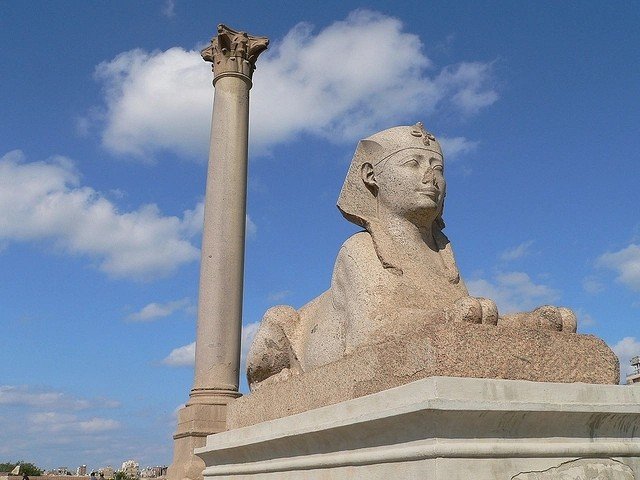
Within the complex, wide stairways led to sacred crypts, where priests performed secret rituals. Murals and reliefs depicted the cosmic journey of Serapis, illustrating the fusion of life, death, and resurrection. The temple’s peristyle court, where devotees gathered, was surrounded by sphinxes—perhaps echoes of the grandeur of the Great Sphinx of Giza, linking the Serapeum’s sanctity to Egypt’s ancient royal past.
The Daughter Library of the Serapeum
The Serapeum of Alexandria was said to house a “daughter library”—a branch of the Great Library of Alexandria. This repository held thousands of scrolls collected from scholars across Greece, Egypt, and Mesopotamia. It made the Serapeum not only a religious hub but also a guardian of human knowledge. Scholars seeking tranquility often preferred the Serapeum’s calm environment compared to the bustling main library near the royal quarter.
The temple thereby served as a physical bridge between worship and wisdom—a reflection of the Alexandrian philosophy that intellect and spirituality could coexist. Many argue this shared literary presence made it one of the world’s earliest examples of a multidisciplinary center of learning, a forerunner to modern religious universities and academies.
Destruction and Decline: The Fall of the Serapeum
The downfall of the Serapeum of Alexandria heralded the end of the old gods. By the late 4th century CE, as Christianity rose across Egypt, religious tensions escalated. Pagan worshippers clung to Serapis as a symbol of identity, while Christian converts, backed by the Roman Empire, sought to dismantle paganism. In 391 CE, Emperor Theodosius I issued decrees banning all non-Christian cults, effectively sealing the Serapeum’s fate.
The once-majestic temple became a battlefield of faith. Historical records recount how the Christian mob, under imperial approval, stormed the sanctuary, toppling statues and burning scrolls. The statue of Serapis was smashed, marking a decisive victory for Christianity and an irreversible loss for ancient heritage.
The destruction of the Serapeum echoed through history much like the tragic loss of the Great Library, leaving historians to mourn what vanished knowledge might have been preserved there. Yet, even in ruins, the Serapeum’s spirit remained—a silent reminder of Alexandria’s complex evolution from polytheism to monotheism.
What Remains at the Site Today
Modern archaeologists have uncovered limited remains of the Serapeum, including subterranean chambers, fragments of statues, and the famed “Pompey’s Pillar,” which now rises as the site’s most iconic survivor. Contrary to its name, the pillar wasn’t erected for Pompey but for Emperor Diocletian in the 3rd century CE, possibly built amid reconstruction efforts following a civil war.
Travelers exploring Alexandria today can visit these remnants during day tours in Alexandria, where guides recount tales of grandeur associated with the temple and the divine fusion that inspired it. Walking among the stones of the Serapeum allows visitors to experience, firsthand, the enduring allure of Alexandria’s mythic past.
Cultural Significance: The Serapeum’s Role in Ancient Alexandria
The Serapeum wasn’t merely a temple; it was an epicenter of community, culture, and diplomacy. The cult of Serapis unified Greeks and Egyptians under one spiritual banner, fostering peace and cooperation. The site also influenced artistic expressions, inspiring sculptures and mosaics across the Hellenistic world. Artists captured Serapis in divine repose, his sacred serpent curling beside him, symbolizing eternity.
The Serapeum’s influence extended to other cities. Temples dedicated to Serapis appeared throughout Egypt and the Mediterranean, including Rome’s Campus Martius and Canopus. The cult set the stage for religious syncretism that later shaped Gnostic and early Christian philosophies.
Even after its destruction, echoes of the Serapeum’s ideology lingered. The merging of faith and intellect that defined Alexandria’s golden age laid the groundwork for later Renaissance thought, where reason and spirituality would once again intersect.
Modern Tourism and Legacy
For modern travelers uncovering Egypt’s layered past through an Egypt day tour or a luxury Egypt tour, the Serapeum stands out as a must-visit historic marvel. Its ruins echo the grandeur once rivaling that of the Citadel of Qaitbay or Montazah Palace. Whether explored as part of a cultural journey or an academic pilgrimage, the site provides an intimate glimpse into Alexandria’s enduring blend of myth, mystery, and knowledge.
Exploring Beyond: Egypt’s Connected Wonders
Those deeply moved by the story of the Serapeum can continue their exploration across Egypt—from visiting the serene banks of the Nile River and its temple-laden cities, to wandering through Luxor Temple or sailing aboard a luxury Nile cruise. These experiences reveal how ancient Egyptians balanced devotion, architecture, and artistry—qualities embodied by the Serapeum itself.
The Symbolism That Endures
At its core, the Serapeum of Alexandria remains a timeless allegory of unity. It reminds us that civilizations flourish when cultural exchange thrives and decline when intolerance takes root. Though its walls have crumbled, the ideals it stood for—the intertwining of divine mystery, human intellect, and artistic brilliance—continue to inspire historians, philosophers, and dreamers alike.
Frequently Asked Questions About the Serapeum of Alexandria
1. Where was the Serapeum of Alexandria located?
The Serapeum stood on Alexandria’s acropolis, in the Rhakotis district—the oldest part of the city. This elevated position gave it prominence over the city’s skyline and made it visible to ships arriving at Alexandria’s famous harbor.
2. Who built the Serapeum, and why?
Ptolemy I Soter built the Serapeum in the 3rd century BCE to unify Greek immigrants and native Egyptians. The temple was dedicated to Serapis, a deity blending aspects of Osiris and Zeus, symbolizing harmony between the two civilizations.
3. What was inside the Serapeum?
The temple housed a massive statue of Serapis, libraries, ritual chambers, and underground catacombs. The Serapeum also featured sacred spaces used by priests for ceremonies honoring resurrection and prosperity.
4. How was the Serapeum destroyed?
In 391 CE, after Christianity became the state religion of Rome, the Serapeum was destroyed by a Christian mob following imperial orders from Emperor Theodosius I. The act marked the end of pagan cult practices in Alexandria.
5. Can visitors see the Serapeum today?
Yes, visitors to Alexandria can explore the archaeological remains of the Serapeum, including Pompey’s Pillar and surviving underground chambers. Many Alexandria day tours include the site on their itineraries, offering travelers an up-close look at the ruins of one of antiquity’s greatest temples.