
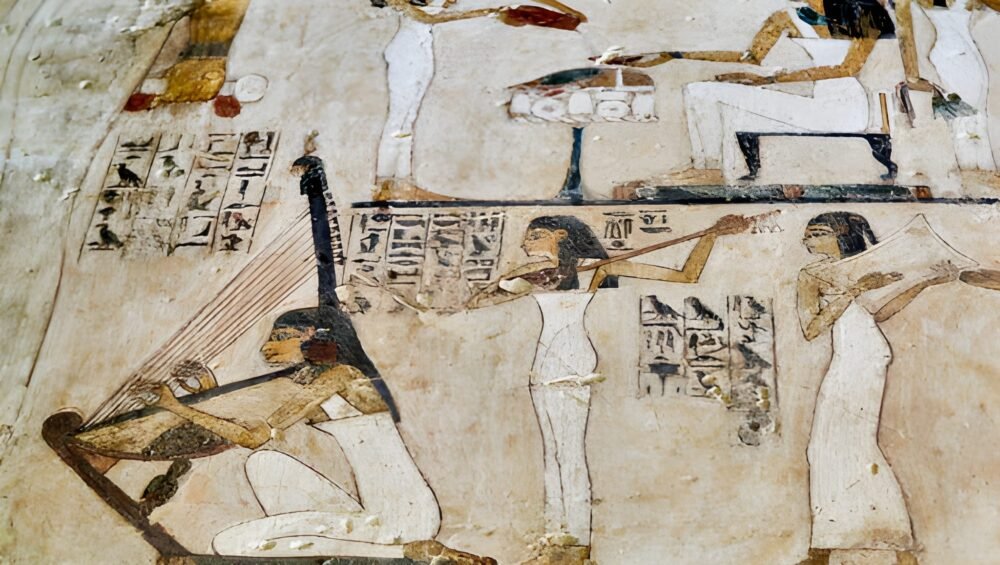
The Harmonious Divinity: Exploring the Egyptian God of Music and His Sacred Symphony
In the heart of ancient Egypt, where the rhythm of the Nile dictated the pulse of life, music was more than mere sound—it was divine expression. Among Egypt’s pantheon of gods, one deity stood out as the embodiment of melody, rhythm, and harmony: Ihy, the Egyptian God of Music. Often depicted as a youthful, radiant god playing a sistrum, Ihy bridged the mortal and divine worlds through sound, joy, and celebration. His name itself means ‘Sistrum Player’, representing not only the music’s sound but the sacred connection it created between people and gods. Ancient Egyptians didn’t just make music—they worshiped it. For them, sound was creation, vibration was power, and music was the pure language of gods. Ihy, son of Hathor—the goddess of love, dance, and beauty—and sometimes Horus or Ra, personified ecstatic sound that linked heaven and earth. Through the ages, the Egyptian God of Music remained a symbol of vitality, festivity, and divine communication that inspired temples, rituals, and artistic expression across the kingdom.
His cult thrived in Dendera, where his mother, Hathor, was venerated. Together, they formed a divine musical duet, orchestrating cosmic balance. The ancient hymns that honored Ihy reverberated through temple walls, affirming the power of music to awaken the gods, purify the soul, and maintain Ma’at—the law of universal harmony. Even today, Ihy’s story fascinates scholars and travelers exploring sites like the Dendera Temple Complex and the Temple of Hathor, where vivid inscriptions immortalize his youthful joy and divine performance. From sacred processions to royal festivities, Ihy’s influence pulsed through ancient Egyptian life, making him not just a god of music but a keeper of life’s spiritual rhythm.
Ihy: The Child of Joy and Divine Harmony
Ihy personified ecstatic musical energy, encapsulating joy, youth, and divine artistry. Represented as a child with a sidelock of youth and often holding a sistrum or menat necklace, his image was vibrant, tender, and filled with the promise of renewal. Ancient Egyptians saw the sistrum—a ritual instrument associated with Hathor—as a magical conduit capable of pleasing gods and warding off evil spirits. Ihy’s melodies summoned divine presence, transforming temples into spiritual orchestras where the universe and humans sang in one accord. His connection to his mother positioned him as the living rhythm of her joy, spreading life, fertility, and harmony to all creation. In festivals celebrating Hathor, such as those at Dendera, Ihy’s music echoed across processional routes, turning devotion into dance and prayer into song. Visitors to Egypt who experience modern cultural echoes of such ceremonies, like the Sound and Light Show at Karnak Temples, often feel the ancient rhythm still alive in Egypt’s soul.
The Divine Lineage: Ihy’s Sacred Parentage and Meaning
Ihy’s origin rests between heaven and earth. His mother, Hathor, symbolized love, fertility, dance, and motherhood, while his father—variously Horus, Ra, or another aspect of the solar god—represented divine authority and light. This celestial heritage made Ihy the offspring of cosmic balance, blending joy and order into perfect harmony. Temples inscribed with his titles refer to him as “He Who Satisfies with His Music” or “He Who Fills the Sanctuary with Joy.” His childhood eternalized innocence and creation’s beginnings, reminding Egyptians that divine joy started with sound—the sacred vibration that brought the world to life. The people of Egypt, from priests to commoners, saw Ihy as both god and muse, inspiring them to sing, play instruments, and celebrate life’s rhythm daily.
Symbolism of the Sistrum in Ihy’s Worship
The sistrum, Ihy’s signature instrument, held deep ritual significance. A rattle-like device made of bronze or precious metal, it emitted delicate jingles symbolizing the laughter of Hathor and the awakening of gods. The sistrum’s gentle shake was believed to rejuvenate Ra’s sun each day and guard the world against chaos. Priestesses played it during festivals, particularly in honor of Hathor and Ihy. Modern travelers exploring Egypt’s cultural heritage often encounter ancient depictions of these instruments in wall carvings at temples such as Abydos Temple or the Luxor Temple, each echoing millennia-old celebrations. The sistrum thus became the divine baton through which Ihy conducted the eternal song of existence.
Music in Ancient Egyptian Religion: The Voice of the Gods
For ancient Egyptians, music wasn’t entertainment—it was sacred communication. They believed divine vibration shaped creation itself, echoing the first sound uttered by the gods at the dawn of time. Priests and priestesses used chants and rhythmic instruments to invoke deities, cleanse spaces, and align with Ma’at. In such rituals, Ihy was ever-present, guiding the tones between heaven and humanity. Musical ceremonies took place in majestic locations like Temple of Philae or Kom Ombo Temple, where sacred hymns filled the stone chambers. His music wasn’t confined to temples—it accompanied life and death, birth and burial, representing life’s perpetual rhythm. Even funerary texts suggest that harmonious sound eased the departed soul’s journey through the Duat, reflecting Ihy’s role as divine mediator between worlds.
The Temple of Hathor at Dendera: Shrine of the Musical Child
The Dendera Temple of Hathor serves as the beating heart of Ihy worship. Within its sanctified walls, reliefs portray the young god performing for his celestial mother during jubilant festivals. Ritual musicians, dancers, and priests recreated these divine moments annually, bringing the sacred joy to earthly celebration. Visitors who explore Dendera through immersive trips such as a 4-Day Cairo and Luxor Tour Package can still witness the artistry and acoustics of temples designed for divine music. Ihy’s festival honored rebirth, agricultural abundance, and the unbroken bond between humanity and its gods. In every carved wall and inscribed hymn, one can almost hear the echoes of his joyous performance.
The Spiritual Science of Sound: Music as Magic in Egypt
To the ancient Egyptians, music had magical power. They believed specific scales and rhythms could heal, attract blessings, and even open portals between life and death. Ihy’s melodies embodied this magical harmony. Hieroglyphs describe him leading celestial choirs, guiding the vibrations that maintained cosmic balance. Musicologists and Egyptologists now understand that such sound rituals mirrored the cyclic nature of existence. From sacred harps to the rhythmic clapping of festivals, every sound paid homage to Ihy’s divine coordination. Contemporary performances in cultural festivals across Egypt still resonate with these origins, blending ancient vibration into modern expression, much like the rhythmic flow of the Nile River.
Ihy’s Role in Egyptian Rituals and Festivals
Throughout Egypt’s long history, Ihy’s influence in ceremonies was unmistakable. His joyful aura was invoked during temple rites, harvest celebrations, coronations, and fertility rituals. His energy brought warmth to Hathor’s motherhood ceremonies and music to Osiris’s rebirth festivals. He symbolized unity—melody transforming chaos into divine order. Ancient scripts depict priests calling upon Ihy to ‘radiate sound into silence’, a metaphor for life emerging from void. His ceremonies weren’t limited to elite gatherings; even villagers celebrating local deities mimicked his musical offerings with drums, lyres, and flutes. Festivals such as the “Beautiful Festival of the Valley” in Thebes vibrated with his spirit, where songs and chants echoed from temple to tomb. On some Luxor Day Tours, travelers can still walk the paths where such divine orchestration once unfolded, imagining the air thick with song and incense.
The Child-God’s Cultural Impact on Egyptian Society
Ihy reminded Egyptians of the sanctity of youth, laughter, and artistic freedom. His worship encouraged creativity, transforming daily life into a rhythmic dance of gratitude. Music teachers, artisans, and performers looked to Ihy for inspiration, seeking divine favor for their craft. His myth also influenced the structure of musical education in temple schools, where rhythm and devotion intertwined. The presence of his symbols across Nubia and Upper Egypt reveals how his cult unified musical heritage throughout the land. Modern explorers visiting areas like Aswan City or Luxor City discover that his legacy still permeates Egyptian folk traditions, from Nubian drum patterns to temple chants passed through generations.
The Eternal Melody: Ihy’s Modern Relevance
In modern spiritual and musical circles, the Egyptian God of Music remains a figure of inspiration. Many artists see Ihy as a muse of creativity, embodying the idea that true art connects souls. Musicians and historians studying Egypt’s heritage often visit heritage tours like the Nour El Nil Dahabeya cruise, which drifts past temples where his songs first resonated. Ihy teaches that sound isn’t just an artistic tool—it’s a spiritual calling. The vibrational frequencies linked with him represent renewal, awakening, and joyous transformation, themes that still move audiences worldwide. Through his myth, we understand that every note carries a piece of the divine, every song echoes eternity, and every silence contains potential music.
Exploring Temples Devoted to Ihy and Hathor
Traveling through Egypt’s archaeological heartland reveals countless testaments to the Egyptian God of Music. The Dendera Temple Complex in Upper Egypt is Ihy’s spiritual home, adorned with celestial ceilings and engraved instruments. Pilgrims once journeyed by boat along the Nile to join in musical festivals, a tradition beautifully mirrored in present-day experiences like the Steigenberger Minerva Nile Cruise. Temples such as Edfu Temple and Abu Simbel Temples also carry symbols of Hathor and Ihy’s musical essence, linking sound to divine creation. These monumental shrines acted both as houses of gods and living theaters for the music that celebrated them. Standing within these sacred halls, visitors often imagine priests shaking sistra in rhythmic devotion, invoking Ihy’s name as harmonies reverberated through stone.
Rediscovering the Spirit of Ihy Through Modern Egypt Experiences
Today’s explorers can trace Ihy’s melodic legacy across Egypt’s landscapes. Participating in cultural performances, Nile cruises, or traditional music shows transports travelers back to an age when every note was sacred. Near Luxor and Aswan, experiences such as a Felucca Ride on the Nile in Aswan or a Best Nile River Cruise reflect the tranquil flow of Egypt’s musical spirit. Watching the sunset as boatmen hum ancient tunes feels like reconnecting with Ihy’s divine orchestra. It’s in these timeless moments that his message resurfaces—that music, nature, and the soul are eternally intertwined.
Frequently Asked Questions about the Egyptian God of Music
Who is the Egyptian God of Music?
The Egyptian God of Music is Ihy, a joyful child deity associated with musical harmony, dance, and celebration. He’s the son of Hathor, goddess of love and beauty, and often depicted playing a sistrum, symbolizing his power to delight gods and humans alike.
What instrument is Ihy most often associated with?
Ihy is linked with the sistrum, a sacred percussion instrument used in rituals to honor Hathor and invoke divine presence. Its jingling sound represented the laughter and joy that sustained the universe’s balance.


