The 7 Steps of Mummification: Ancient Egypt’s Sacred Art of Preserving the Dead
In the golden sands of ancient Egypt, death was never the end—it was a continuation, a passage to the eternal life promised by the gods. The art of mummification reflected this belief, meticulously designed to preserve the body as a sacred vessel for the soul’s journey through the afterlife. Known for their ingenuity, the ancient Egyptians perfected mummification over thousands of years, refining every stage of the process until it became a profound ritual of science, spirituality, and craftsmanship. The 7 steps of mummification weren’t merely about preservation; they symbolized divine rebirth, ensuring immortality in the celestial realm.
The process unfolded in deep secrecy, conducted by skilled embalmers dedicated to the goddess Anubis, the god of the dead and embalming. Each step reflected both ritual significance and practical mastery, from cleansing and removing organs to wrapping the body in fine linen and sealing it within ornate sarcophagi. Even today, as modern visitors marvel at mummies displayed in the Grand Egyptian Museum, the intricate craftsmanship and spiritual devotion behind these ancient rituals continue to captivate imaginations.
Whether you’re wandering through the Sakkara Necropolis or exploring the tombs in Valley of the Queens, understanding the seven steps of mummification offers a window into Egyptian culture, religion, and their deep-seated belief in the eternal cycle of life, death, and rebirth. Let’s delve step-by-step into this remarkable process that bridged humanity and divinity for over three millennia.
Step 1: Purification and Cleansing of the Body
The journey of mummification began with the cleansing of the deceased—a ritual of immense symbolic and hygienic significance. The body, representing both mortal decay and divine potential, was washed with palm wine and purified water from the sacred Nile. Embalmers chanted prayers to invoke Anubis’s blessing, marking the transition of the spirit into the realm of Osiris, god of resurrection. This step was crucial, as Egyptians believed cleanliness equated to holiness and was the foundation for eternal preservation.
In this stage, every part of the body was carefully prepared on a stone table in an embalming tent known as the ‘ibu’. The Nile’s water symbolized life itself, a spiritual rebirth, connecting the deceased with the eternal cycle of creation. Modern travelers who visit ancient riverside temples or take a serene cruise along the Nile River can almost sense the sacredness once ascribed to its waters by Egypt’s priests and embalmers.
Symbolic Importance of the Nile’s Purification
The Nile was not only Egypt’s lifeline but the mythical pathway between the land of the living and the afterlife. This first purification mirrored the soul’s preparation for its next cosmic voyage, echoing a larger belief in life’s cyclical nature—a belief still palpable in Egypt’s ancient temples and written texts.
Step 2: Removing Internal Organs
Once the body was cleansed, embalmers began the most delicate task—removing internal organs to prevent decay. They made a small incision, typically on the left side of the abdomen, through which the stomach, liver, lungs, and intestines were removed. Each organ was treated separately, dehydrated using natron, and stored in special containers known as canopic jars, guarded by the Four Sons of Horus. The heart, however, remained in the chest, considered the seat of wisdom and emotion, vital for the Weighing of the Heart ceremony in the afterlife.
Historians have marveled at the meticulous care ancient Egyptians devoted to this stage. The brain, thought to have no spiritual function, was often extracted through the nasal cavity using hooked instruments—an extraordinary display of early anatomical knowledge. Visitors inspired by such surgical precision can explore exhibits at the National Museum of Egyptian Civilization, where preserved specimens and instruments reveal the mummifiers’ scientific prowess.
Protection through Canopic Jars
Each canopic jar bore a divine protector: Imsety for the liver, Hapi for the lungs, Duamutef for the stomach, and Qebehsenuef for the intestines. These jars, often carved from alabaster or limestone, were placed beside the sarcophagus, ensuring eternal guardianship in the afterlife. The artistry of these jars stands as one of the finest examples of Egyptian funerary craftsmanship.
Step 3: Drying with Natron
With organs removed, embalmers commenced the vital drying process using natron—a natural salt harvested from the Egyptian desert. The body was entirely filled and covered with natron for forty days, allowing the mineral to absorb all moisture and halt decomposition. This step was fundamental; without it, preservation would fail. The result—a lifeless figure transformed into a sacred relic of eternity—was astonishingly effective, even thousands of years later.
The use of natron highlighted Egyptian mastery of natural resources. Its chemical composition, rich in sodium carbonate, served both as desiccant and disinfectant, a detail that still fascinates today’s archaeologists excavating drying beds near the Dakhla Oasis. Through natron’s purifying effect, the physical body symbolically shed its mortal nature, leaving behind a pure form ready to host the soul once more.
Step 4: Anointing and Restoration
Following desiccation, embalmers gently cleaned off the natron, then massaged the body with fragrant oils, resins, and gums. These substances not only softened the skin but protected it from future damage, creating a lifelike appearance. Myrrh, cedar oil, and frankincense—luxuries from distant lands—were lavishly applied. Symbolically, the oils restored the skin of the deceased, representing rebirth, an echo of Osiris’s revival myth.
Egyptians believed that sensory recognition in the afterlife was possible; thus, maintaining a pleasing visage and aroma was essential. The combination of sacred oils and incantations transformed the body into an instrument of divine endurance. This process paralleled rituals found at sacred temples like the Temple of Hatshepsut, where offerings to gods also involved aromatic anointing to attract blessings.
Step 5: Wrapping the Body in Fine Linen
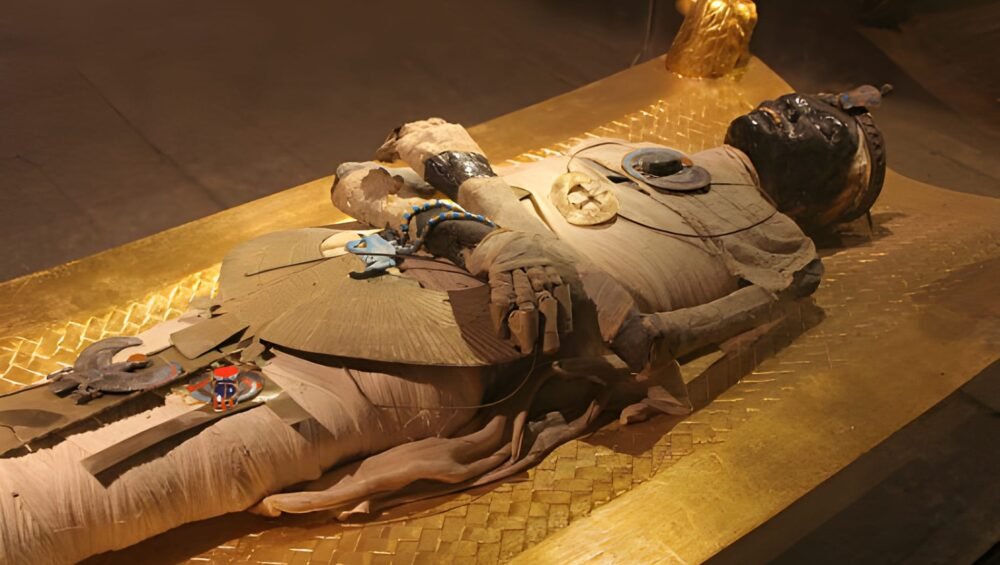
Arguably the most recognized stage of mummification, wrapping was both artistic and deeply spiritual. Embalmers began by covering each finger and toe, continuing with layers upon layers of linen strips—typically hundreds of meters long. Each layer was anointed with resin, bonding the wrappings to form a resilient cocoon. During this phase, priests recited prayers and placed protective amulets, such as the Eye of Horus, between the layers, ensuring protection against evil forces in the afterlife.
Every fold symbolized divine rebirth. The wrapping process could take up to two weeks, as embalmers performed meticulous rituals for different body parts. The head and heart were wrapped separately, secured with symbolic knots thought to seal spiritual energy. Decorative masks, sometimes gold-covered, replaced natural features, representing transformation into the divine form of Osiris. The most iconic mask belongs to King Tutankhamun, a breathtaking piece that remains one of humanity’s most enduring artifacts.
Step 6: Placing in the Coffin and Sarcophagus
Once fully wrapped, the mummy was placed within one or more nested coffins, each lavishly decorated with hieroglyphs, spells, and images of deities. The inner coffin hugged the mummy’s form, crafted often from wood gilded with gold, while the outer sarcophagus symbolized the earth’s protective embrace. These layers of defense safeguarded the physical and spiritual forms from intrusion, ensuring an eternal resting place for the ka and ba—the soul’s dual aspects.
Such elaborate craftsmanship can still be admired at sites like the Luxor Museum, where historians have identified patterns in coffin iconography revealing personal stories of the deceased. Each depiction carried specific magical purpose, underlining Egypt’s intertwined belief in art and spirituality. The mummy’s placement inside the sarcophagus marked completion of spiritual preparation, ready for the grand procession to its tomb.
Step 7: Burial Ceremony and Afterlife Rituals
The final stage—the burial—was a moment of grandeur. The mummy, enclosed in its coffin, was escorted by priests, relatives, and mourners to the tomb. This journey mirrored the sun’s nightly descent into the underworld. Priests performed the ‘Opening of the Mouth’ ceremony, symbolically restoring the deceased’s ability to breathe and eat in the next life. Offerings of food, drink, jewels, and scriptures filled the burial chamber, transforming it into a sacred microcosm of paradise.
As hieroglyphs on tomb walls recorded the deceased’s virtues and prayers, ancestral spirits gathered to welcome the new soul into eternity. Today, when travelers visit the Temple of Seti or explore ancient burial sites across Luxor City, they can almost sense the echoes of ancient chants that once accompanied these sacred rituals. Every burial was both an ending and a beginning—a momentous farewell and a triumphant rebirth into the everlasting fields of reeds described in Egyptian mythology.
FAQs About The 7 Steps of Mummification
1. Why did the ancient Egyptians mummify their dead?
Ancient Egyptians practiced mummification to preserve the body for the afterlife. They believed the physical form had to remain intact for the soul to recognize and reunite with it. Mummification served both spiritual and practical purposes, ensuring immortality and maintaining the deceased’s identity throughout eternity.
2. How long did the mummification process take?
The complete process typically took about seventy days. Forty days were designated for drying with natron, while the remaining thirty days involved anointing, wrapping, and performing final rituals. Each stage was executed with meticulous precision guided by religious tradition and astrological timing.
3. What materials were used during mummification?
Mummification required materials like natron salt, linen strips, resin, frankincense, myrrh, palm wine, and sacred oils. These elements were believed to purify and sanctify the body. Some oils also held medicinal properties, contributing to the remarkable preservation seen in mummies thousands of years later.
4. Who performed the mummification rituals?
Specialized priests known as embalmers or mortuary priests conducted the rituals. They often wore masks shaped like Anubis, the jackal-headed god of embalming, symbolizing protection and divine authority. Each step they performed was accompanied by hymns and incantations to ward off evil spirits.
5. Where can one see mummies today?
Travelers can view authentic mummies at the Grand Egyptian Museum, the National Museum of Egyptian Civilization, and various tombs across Luxor and Aswan. Some luxury Nile cruises also offer guided tours to rediscover these awe-inspiring relics of ancient Egyptian civilization.