
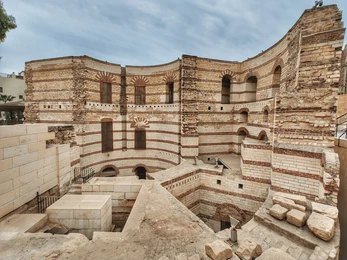
Babylon Fortress Cairo: The Ancient Gateway to Egypt’s Christian Heritage
Majestically rising on the eastern bank of the Nile, the Babylon Fortress in Cairo stands as one of Egypt’s oldest and most remarkable monuments. This towering stronghold, nestled within the heart of Old Cairo, has witnessed more than two millennia of Egyptian, Roman, Byzantine, and Islamic history. Known locally as Qasr el-Sham, the fortress forms the beating heart of Coptic Cairo, an area rich in sacred Christian landmarks, cobblestoned streets, and ancient charm. Its mighty walls once guarded the strategic waterway into Egypt and still guard the stories of empires that came and went. Visitors today enter a realm where the echo of Roman legions collides with the hymns from early Christian churches, offering an unforgettable trip into the soul of Cairo’s spiritual past.
Babylon Fortress isn’t just another historical site—it’s a living testament to Egypt’s layered identity. For travelers unraveling the hidden treasures of Old Cairo, the fortress provides an unmatched glimpse into the evolution of Egypt from pharaonic to Roman rule, from Christianity to Islam. Walking its grounds feels like stepping into an open-air timeline, where every stone speaks of centuries of resilience. This remarkable monument, alongside landmarks like the Hanging Church and the Ben Ezra Synagogue, transforms the area into a living museum of faith and civilization. Tourists, pilgrims, and history buffs alike find themselves enthralled by the walls that once defined an empire’s edge.
Historical Origins of Babylon Fortress Cairo
The origins of the Babylon Fortress Cairo trace back to the reign of the ancient Persian Empire, long before Alexander’s conquests reshaped Egypt. However, the version we see today was primarily reconstructed under Emperor Trajan around 98 AD. The Romans recognized Cairo’s location as the perfect choke point along the Nile—essential for controlling trade, taxation, and military operations. It’s said that Roman engineers, keen on reinforcing their rule, built the fortress with massive limestone blocks repurposed from older Pharaonic temples. The fortress later became the nucleus of Roman and Coptic settlements, developing into the cradle of Egyptian Christianity.
Strategically, Babylon Fortress linked Upper and Lower Egypt by river and road. The bastions flanking the Nile once controlled a bridge spanning the river, charging tolls from boats traveling under Roman rule. These same towers, reconstructed several times during the Byzantine and early Islamic periods, have survived fire, invasion, and the test of time. They form one of the oldest standing military structures in Africa. For visitors eager to explore fortified monuments beyond the pharaohs, this fortress easily rivals the grandeur of the Citadel of Salah El-Din in historical might and architectural mastery.
The Role of Babylon Fortress in Roman and Christian Egypt
The fortress became far more than a Roman base—it evolved into a sanctuary for Egypt’s burgeoning Christian community. During the third and fourth centuries, as Christianity spread across the Nile valley, the fortress became a haven for persecuted believers. Within its thick limestone walls, the first churches of Cairo were secretly built. These sacred sites, including the Church of St. George and the Abu Serga Church, were later constructed directly above surviving Roman bastions. For Christian pilgrims, this intersection of Roman military history and religious devotion embodies the fortitude of faith against imperial oppression. Babylon Fortress stands as a timeless symbol of survival and spiritual awakening.
Architecture and Engineering Marvels of Babylon Fortress
Babylon Fortress Cairo is a masterpiece of ancient engineering. Measuring over 150 meters in length and fortified by thick double walls, it served both military and administrative functions. The perimeter towers—particularly the North and South Bastions—reflect a distinct Roman style with circular structures built for defense against sieges. The brick and limestone used give the fortress its characteristic reddish hue, which led locals to call it the “Red Fortress.” Beneath the fortress, archaeological layers reveal traces of earlier Nile harbors and roads connected to Memphis and Upper Egypt.
It’s astounding how well-preserved parts of the fortress remain. The massive towers visible today stand adjacent to some of Coptic Cairo’s holiest churches, such as the Coptic Museum, which now sits within the fortress grounds. The museum houses some of Egypt’s oldest icons, manuscripts, and relics, narrating the evolution of Christian art and history. This union of faith and fortification creates a visitor experience that’s both historic and spiritual. Each corridor, archway, and carved stone tells stories of wars, sieges, and prayers whispered in secret long before modern Cairo rose around it.
The Hidden Layers Below the Fortress
Underneath Babylon Fortress lies a labyrinth of chambers, tunnels, and foundations that archaeologists believe extend into the Roman port. Excavations have revealed pottery, coins, and stone anchors proving the site’s function as a major trade hub. During the Byzantine period, these underground galleries served as shelters for Christians escaping persecution, and later as storage for grain and goods. This subterranean world connects directly to the Coptic Museum and several old churches, symbolizing the continuity of life within the fortress across centuries.
Babylon Fortress and Coptic Cairo: The Spiritual Core
Babylon Fortress acts as the gateway to Old Cairo’s Coptic quarter, one of the world’s oldest Christian enclaves still in use today. Within its protective walls lie churches that date back to the early centuries of Christianity, such as the Church of St. Barbara, St. Sergius, and the Church of the Virgin Mary, known famously as the Hanging Church. It’s said these sacred buildings were constructed directly over the ancient Roman towers, transforming the symbols of imperial rule into sites of divine prayer and sanctuary. This area also hosts the Coptic Museum, a cultural treasure trove preserving texts and relics from the first Christian centuries.
Stepping into the narrow alleys of Coptic Cairo, travelers feel as though they’ve traveled back in time. Traditional lamps hang over cobbled streets while incense drifts from ancient churches carved deep into the fortress walls. The experience perfectly complements nearby heritage sites like the Mosque of Ibn Tulun and Al Azhar Mosque, making this district an exceptional blend of Egypt’s religious harmony and historic splendor.
Preservation and Archaeological Discoveries
Over the centuries, Babylon Fortress Cairo has undergone careful preservation efforts led by Egyptian archaeologists. The fortress has yielded layers of historical insights with each excavation, from Roman pottery and Byzantine mosaics to early Islamic artifacts. Restoration teams have worked meticulously to stabilize the fortress and its associated churches while maintaining their authenticity. Current projects aim to make the subterranean rooms accessible to visitors, highlighting the fortress’s integral role in the development of Cairo day tours that emphasize Egypt’s multi-faith heritage.
Visiting Babylon Fortress: A Journey Through Time
Visitors to Babylon Fortress often remark that it feels like a hidden world within Cairo. Its thick fortifications block out the city’s chaos, allowing travelers to immerse themselves in a serene and contemplative atmosphere. The main entrance near the Coptic Museum opens into pathways lined with heritage buildings and stone arches—some still bearing ancient Latin inscriptions. Knowledgeable local guides provide context that brings the fortress’s layered history vividly to life, from Roman engineers to Christian monks and Ottoman merchants.
Travelers exploring Cairo can combine their fortress visit with other surrounding treasures such as the Islamic Cairo district or arrange specialized packages like Egypt private tours that include the old churches, museums, and fortifications within the area. For those seeking a deeper connection to Egypt’s historical faith journey, pairing Babylon with nearby tours like the Coptic and Islamic Cairo Tour offers an unforgettable perspective on the city’s soul.
How to Reach Babylon Fortress Cairo
Located in Old Cairo, approximately 2 km south of downtown, the fortress is easily accessible by metro at the Mar Girgis station. Local taxis and rideshare options can drop visitors at the main gates, from where they can explore at leisure. The best visiting times are early mornings or late afternoons, avoiding peak crowds and enjoying the soft play of sunlight across the stone walls. Many travelers combine this landmark with guided city experiences such as the Cairo City Tour and the Camel Ride Trip at the Pyramids to savor history from both ends of Egypt’s timeline.
Key Tips for Travelers
Wear comfortable shoes, as the ground is uneven and many sites are best explored on foot. Photography is allowed but flash restrictions apply inside churches. While the site has undergone modern restoration, respecting the sanctity of the religious spaces remains essential. Local artisans sell Coptic crosses and hand-carved icons near the entrance, making excellent souvenirs. Don’t rush—each corner hides centuries of untold tales waiting to be discovered.
Connecting Babylon Fortress to Broader Egyptian Heritage
Babylon Fortress isn’t an isolated monument—it’s part of Egypt’s vast narrative of cultural resilience. Visiting it provides insight into the country’s spiritual and historical mosaic that extends from the Luxor Temple to the towers of The Alabaster Mosque. As Egypt continues to embrace the preservation of its diverse historical timeline, the Babylon Fortress stands tall as a symbol of faith, endurance, and unity. Whether you’re tracing pharaonic wonders on a Nile River cruise or venturing through Cairo’s ancient quarters, this fortress captures the essence of Egypt—a civilization that never stops whispering to the world.
FAQs About Babylon Fortress Cairo
What is the history behind Babylon Fortress Cairo?
Babylon Fortress was initially built by the Persians and later reconstructed by the Romans under Emperor Trajan in the first century AD. It became a key military and administrative center and later evolved into the cradle of early Christianity in Egypt. Today, it remains the heart of Old Cairo’s Coptic quarter, showcasing both Roman and Christian heritage.
What are the main attractions inside and around Babylon Fortress?
The most notable attractions include the Coptic Museum, the Church of St. George, the Hanging Church, and the Church of St. Sergius (Abu Serga). Visitors can explore ancient Roman towers, early Christian foundations, and walk through the preserved streets of Coptic Cairo. Nearby, other landmarks like the Mosque of Ibn Tulun further enrich the historical experience.
How can tourists visit Babylon Fortress Cairo?
The fortress is located near Mar Girgis metro station in Old Cairo and is easily accessible by taxi or guided tours. Many travel agencies offer comprehensive tours such as the Cairo Day Tours that include the fortress alongside other ancient and religious sites.
What makes Babylon Fortress unique compared to other sites in Cairo?
Unlike the Pyramids or Islamic monuments, Babylon Fortress stands out for its blend of Roman engineering and Christian spirituality. It’s one of the oldest continuously inhabited parts of the city and contains some of the earliest churches still in use today. Its walls encapsulate over 2,000 years of Egyptian civilization in one compact location.
When is the best time to visit Babylon Fortress Cairo?
The best times are between October and April, when Cairo’s weather is cool and pleasant. Visiting early in the morning allows travelers to explore peacefully before the crowds. Many combine the fortress tour with visits to Old Cairo’s markets and nearby Islamic monuments for a deeper exploration of Egypt’s heritage.