The Nubian Village
The Nubian Village in Aswan: Where Culture, Colors, and Heritage Embrace the Nile
Set along the west bank of the Nile near Aswan, the Nubian Village radiates charm through its colorful houses, warm-hearted locals, and deeply rooted traditions that date back thousands of years. This enchanting settlement, known for preserving Nubian culture and language, captivates visitors seeking authenticity in Egypt. The Nubian Village isn’t just a place; it’s a living museum of African heritage and Egyptian hospitality that gracefully merges ancient roots with modern life. Visitors find themselves immersed in a world where every color tells a story and every smile echoes centuries of warmth. The tranquil rhythm of the Nile complements the melodic beats of Nubian drums, offering a sensory feast that resonates with every traveler.
Nubian villages such as Gharb Soheil, located a short boat ride from Aswan, are among the most visited, welcoming travelers on picturesque trips to the Nubian Villages by boat. The moment one steps ashore, vibrant murals, handmade crafts, and the scent of freshly brewed hibiscus tea envelop the senses. Unlike bustling Egyptian cities, these villages exude serenity, providing a glimpse into Nubians’ close-knit community and respect for nature. Visiting the Nubian Village is not merely sightseeing; it’s a heartfelt connection to one of Egypt’s oldest, most resilient cultures. With a legacy intertwined with the Nile and tales of pharaohs and gods, the Nubian Village offers a soul-stirring encounter for those yearning for real Egypt beyond the monuments. It’s no wonder travelers combine a village visit with idyllic Aswan Day Tours or a serene Nile cruise experience.
The Geography and Heritage of the Nubian Village
The Nubian Village rests serenely on the banks of the Nile southwest of Aswan City, basking in golden sunlight reflected from the river’s surface. The Nubians, native to this region stretching from southern Egypt to northern Sudan, possess one of Africa’s oldest civilizations. Once the center of powerful kingdoms such as Kush and Ta-Seti, Nubia was renowned for its trade, craftsmanship, and cultural sophistication. Despite numerous relocations due to the creation of the Aswan High Dam and the formation of Lake Nasser, Nubians preserved their identity through oral history, language, and art.
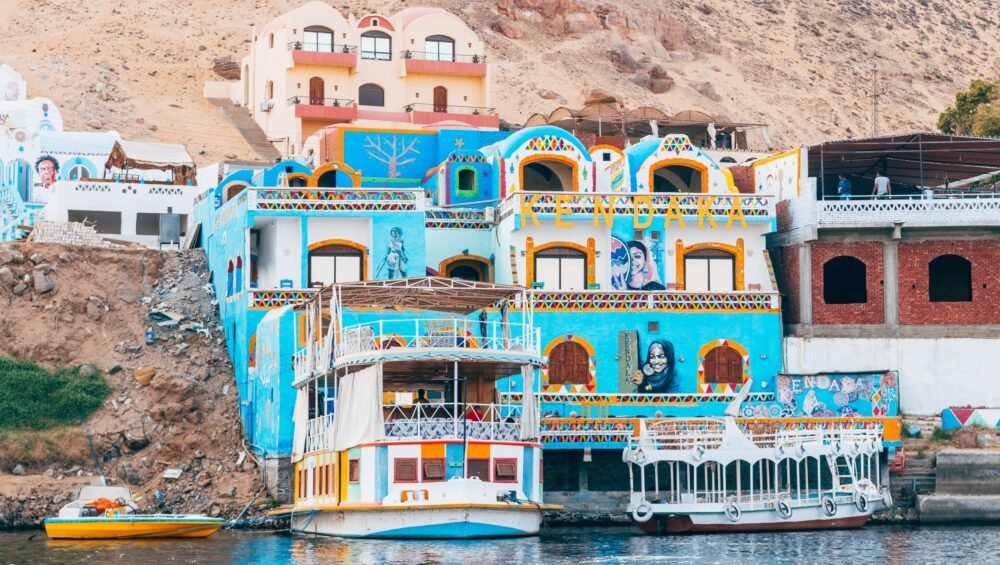
The architecture of the Nubian Village reflects this perseverance. Houses built with sun-dried mud bricks maintain cool interiors amidst the desert heat. Arched doorways, intricate geometric patterns, and vibrant facades express joy, faith, and pride in heritage. This artistry has turned Nubian homes into visual icons representing Egypt’s living traditions. Exploring these narrow alleys, one encounters women crafting colorful bead jewelry, children playing by the Nile, and elders narrating ancient tales about crocodiles and gods. Cultural immersion here transcends time, offering visitors the thrill of discovery within simplicity.
Experiencing Authentic Nubian Hospitality
Nubian hospitality is legendary. The moment guests enter the village, they’re greeted with warmth unmatched elsewhere in Egypt. Villagers invite travelers to sit, drink karkadeh (hibiscus tea), taste traditional dishes, and admire handcrafted items. This generosity isn’t a performance; it’s a cultural code embedded in Nubian life. Every gesture, from sharing a smile to painting tourist hands with henna, reinforces that sense of belonging. The Nubian language, distinct yet melodious, still thrives despite external influences. Travelers often feel they’ve been transported to a different world where community reigns supreme and joy comes naturally.
Many tourists enhance their cultural understanding by pairing the visit with insights from the Nubian Museum in Aswan, which houses relics, sculptures, and exhibits detailing centuries of Nubian civilization. For those fascinated by Egypt’s layered cultures, a day combining the museum and village provides a holistic perspective. This local connection also harmonizes beautifully with excursions to nearby landmarks like Philae Temple and the Unfinished Obelisk, weaving Nubian stories into the broader Egyptian tapestry.
Cultural Immersion: Music, Art, and Everyday Life
Music flows through the Nubian Village like the Nile itself. Traditional songs accompanied by drums, tambourines, and handclaps echo ancient rhythms that once celebrated harvests and weddings. Dancers dressed in bright robes move joyfully to these beats, inviting visitors to join in. Art equally plays a vital role. Hand-painted murals depict crocodiles (symbols of protection), palm trees, and the Nile’s life-giving force. These motifs carry deep symbolism, fusing spirituality with daily life. Artists express gratitude through color, believing that beauty wards off misfortune.
Visitors strolling across the village may find small shops overflowing with kaleidoscopic souvenirs—leather goods, woven baskets, painted pottery, and natural spices. Supporting these local artisans sustains Nubian livelihoods and ensures these traditional crafts remain vital. After all, Nubians have mastered the art of turning everyday life into an artistic masterpiece, transforming simplicity into cultural opulence. Travelers capturing these magical scenes understand why a Nile River journey feels incomplete without experiencing Nubian warmth firsthand.
Traditional Nubian Cuisine and Daily Flavors
The Nubian Village delights food lovers with recipes passed down through generations. Their meals fuse simple ingredients with bold flavors, highlighting local produce and the bounty of the Nile. Grilled fish, lentil soups, and freshly baked bread served with spiced dips form the foundation of Nubian gastronomy. Nubians prefer natural, organic foods grown in small home gardens. One mustn’t miss tasting ‘Fatta,’ a festive dish prepared during celebrations, or sipping hibiscus juice while watching the sun dip below the horizon. Here, dining transcends nourishment—it’s a communal celebration of life.
Pairing Nubian meals with other Egyptian culinary experiences, like those explored in resources about traditional dishes in Egypt, broadens culinary horizons. Each region interprets hospitality through flavor, and Nubians proudly stand as Egypt’s ambassadors of kindness through cuisine. Visitors constantly remark how every bite seems seasoned with generosity and memory, not just spice.
Architectural Beauty and Symbolism in the Nubian Village
Each Nubian home is an architectural poem brimming with life and meaning. Painted in bright hues—turquoise, orange, pink, and blue—these houses convey well-being and energy. Doors often bear inscriptions and symbolic motifs that invite blessings. Mudbrick domes crown roofs, ensuring insulation and ventilation in one elegant design. The concept of beauty in Nubian architecture stems from harmony: harmony with nature, with each other, and with the river. Unlike Western luxury, Nubian aesthetics prize authenticity over opulence.
Walking through Gharb Soheil, tourists feel as though they’ve entered an open-air art gallery. Every corner tempts a photograph, every wall tells a different version of the same story—humans living gracefully beside the Nile. Adventurers on felucca rides on the Nile often glimpse this stunning panorama, colorful houses mirroring in the calm waters while children wave cheerfully. It’s no surprise that many Egypt itineraries, such as the 9 Days Egypt and Nubia Tour, include stops here to engrave the Nubian charm in travelers’ hearts.
The Spiritual Connection Between Nubians and the Nile
For Nubians, the Nile isn’t merely a river—it’s the lifeblood of existence. Their ancestors revered it as a divine gift, a sustainer of life and a source of identity. Fishing, ferrying, and farming along its banks form the essence of daily routines. Even Nubian myths revolve around the Nile’s magic, where crocodiles and spirits guard its flow. This spiritual reverence translates into respect for nature; every villager instinctively lives in balance with the environment.
Their sustainable lifestyle offers valuable lessons for modern eco-conscious travelers. Minimal waste, handmade crafts, and reliance on renewable materials make the Nubian Village a model of green living. It exemplifies how heritage and sustainability intertwine, shaping a peaceful coexistence between humans and their surroundings. Visitors drawn to ethical adventures often expand their journey through eco tours in Egypt to embrace experiences emphasizing preservation and authenticity.
Best Time to Visit the Nubian Village
Although Aswan enjoys year-round sunshine, the most comfortable months to explore the Nubian Village are from October to April, when temperatures are milder. During this period, daylight wraps the landscape in golden tones perfect for photography and river trips. Early mornings and sunsets are particularly magical, with golden rays reflecting off painted walls, creating postcard-worthy moments. Visitors who plan ahead often combine village sightseeing with cultural experiences such as the Sound and Light Show at Philae Temple to enrich their evenings after a day on the Nile.
Visiting Tips for Travelers
To enjoy a seamless visit, bring sunscreen, comfortable walking shoes, and small cash for local purchases. Respecting Nubian customs—such as asking permission before photographing people—is essential. Hiring local guides enhances the experience, as they interpret traditions visitors might otherwise miss. Many Nile cruise packages, including the 4 Day 3 Night Nile Cruise from Aswan to Luxor, arrange authentic village tours led by Nubians themselves. Engaging directly with residents fosters genuine connections, transforming a simple excursion into an unforgettable cultural dialogue.
Why the Nubian Village Is an Unmissable Egyptian Experience
Among Egypt’s countless wonders, the Nubian Village shines for offering something intangible yet profound—emotion. In an era obsessed with digital experiences, standing amid the laughter of children and the hum of the Nile reconnects travelers to simplicity. The Nubians teach harmony, patience, and gratitude through their way of life. Every moment spent here feels personal, bridging ancient and modern human stories.
Whether it’s through luxury Nile cruises, scenic felucca rides, or day excursions, witnessing Nubian culture complements Egypt’s monumental legacy. Together, they complete the tapestry—pharaohs carved history in temples, while Nubians preserved the soul of the Nile in their songs and smiles. The Nubian Village, with its radiant colors and rich heart, remains an oasis of joy where culture whispers gently yet powerfully to anyone willing to listen.
Frequently Asked Questions About the Nubian Village
1. Where is the Nubian Village located?
The Nubian Village is situated on the west bank of the Nile, near Aswan in southern Egypt. It’s usually accessed by boat rides across the river, often included in guided Aswan Day Tours. The most popular among these settlements is Gharb Soheil, renowned for its colorful architecture and welcoming community.
2. What makes the Nubian Village unique?
Its uniqueness rests in its vibrant aesthetic, preserved Nubian language, eco-friendly lifestyle, and unmatched hospitality. Unlike tourist-driven attractions, the Nubian Village offers an authentic experience of cultural continuity—merging African heritage with Egyptian spirit.
3. How can visitors reach the Nubian Village?
The easiest way to reach the Nubian Village is by taking a traditional felucca or motorboat from Aswan. Many tourists include it as part of multi-day itineraries like the 7 Days Cairo and Nile Cruise Package, which arranges local boat transfers and guided interactions with Nubian families.
4. Are there accommodations near the Nubian Village?
Yes, Aswan hosts an array of charming guesthouses and resorts along the Nile, some run by Nubian families themselves. Staying overnight lets travelers experience the serenity of Nile sunsets and morning chants echoing across palm groves.
Edfu Temple
Edfu Temple: The Timeless Marvel of Ancient Egyptian Civilization
Standing on the west bank of the Nile between Luxor and Aswan, the Edfu Temple—also known as the Temple of Horus—remains one of the most breathtaking and best-preserved monuments from ancient Egypt. This majestic structure invites both travelers and historians into the golden age of the Ptolemaic period, blending spiritual depth with architectural brilliance. More than just an archaeological wonder, Edfu Temple encapsulates the story of Egypt’s divine kingship, religious rituals, and cosmic mythology that shaped the ancient world. Visitors who step through its monumental gateways are immediately transported to a time when gods walked among men. The scale of this temple, matched only by that of Luxor Temple and Kom Ombo Temple, mirrors the Egyptians’ unwavering devotion to the god Horus—the falcon-headed protector of kings. Whether you arrive by a scenic luxury Nile cruise or as part of an itinerary like the 4-day Luxor, Edfu, Kom Ombo, Aswan, and Abu Simbel tour, the first glimpse of Edfu’s towering pylons leaves an indelible impression. Its intricate carvings, depicting heroic tales of Horus defeating Set, resonate with anyone enchanted by Egyptian spirituality, history, and art. As one of the highlights of Egypt vacation packages, the Edfu Temple stands as a living testament to humanity’s enduring quest for divine connection.
The Fascinating History of Edfu Temple
The Edfu Temple, dedicated to the falcon god Horus, began construction in 237 BCE during the reign of Ptolemy III Euergetes I and was completed nearly two centuries later under Ptolemy XII. Despite its Ptolemaic origins, it followed the traditional Egyptian temple layout, firmly rooted in New Kingdom architecture. The structure’s massive sandstone walls have remarkably survived centuries of floods, invasions, and sandstorms, making it a rare gem frozen in time. The temple rose on a site believed to be the location of the mythical battle between Horus and his uncle Set. Hieroglyphic inscriptions detail the struggle between good and evil, blending mythology and historical symbolism in one grand design. Temples like this, along with nearby marvels such as the Temple of Philae and Abu Simbel Temples, reflect Egypt’s immense spiritual heritage and admiration for cosmic order known as Ma’at.
Architectural Significance of Edfu Temple
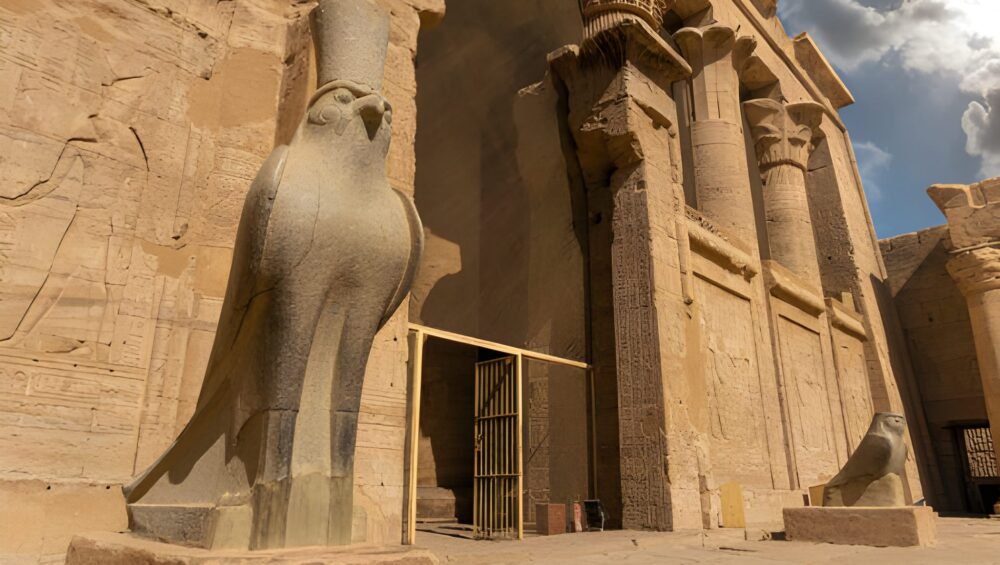
The Edfu Temple’s architecture is nothing short of extraordinary. Measuring 137 meters in length and crowned with a pylon nearly 36 meters tall, it exudes both power and perfection. Meso-scale symmetry, colossal pylons, and intricately carved reliefs dominate the temple’s facade. Entering the Hypostyle Hall, visitors can observe columns crowned with lotus and papyrus capitals symbolizing Upper and Lower Egypt’s unity. The sacred sanctum, located at the rear, once held the statue of Horus, where daily rituals were performed by priests to maintain harmony between gods and humans. Structures like this one echo the spiritual ingenuity that made Egypt’s temples timeless. Visitors on Aswan day tours or Nile cruise excursions can easily witness the ancient symmetry and mystique that define the site.
Symbolism and Religious Importance
Every wall, pillar, and chamber within Edfu Temple brims with symbolic meaning. The inscriptions recount the divine birth of Horus, his fierce battle with Set, and his eventual triumph, restoring peace to the land. Ritual scenes feature offerings to Horus and Hathor, celebrating fertility, protection, and cosmic rebirth. The annual ‘Feast of the Beautiful Meeting’ reenacted Hathor’s journey from the Dendera Temple Complex to Edfu—an ancient spectacle celebrating divine union. Much like the legends embedded in the Temple of Hathor in Dendera, these festivals reaffirmed Egypt’s devotion to cosmic balance and renewal.
The Layout and Inner Chambers
The floor plan of Edfu Temple mirrors Egyptian cosmological ideals—moving from chaos to purity. Starting from the open courtyard, visitors progress inward through halls illuminated by diminishing light until they reach the inner sanctuary cloaked in sacred darkness. This transition symbolizes a soul’s journey from earth to divine enlightenment. The temple’s main axis aligned directly with the Nile, reinforcing its role in religious geography. Intriguing features such as the chapel of the divine boat, storerooms, and Nilometer add to its sanctified atmosphere. Tours such as the Day Tour to Edfu and Kom Ombo from Luxor provide travelers a firsthand glimpse of these internal wonders that embody ancient Egyptian cosmology.
Preservation and Rediscovery
After the fall of the Egyptian civilization and the rise of Christianity, many pagan temples were abandoned or hidden under layers of desert sand. Edfu Temple met a similar fate and remained buried until its rediscovery in the 19th century by Auguste Mariette, one of Egypt’s pioneering archaeologists. What he uncovered astounded historians—a temple astonishingly intact despite centuries of neglect. Its preservation became crucial for understanding Ptolemaic architecture and the evolution of Egyptian religious thought. Visiting the site today often forms part of Egypt private tours or luxury Egypt tours, inviting travelers to connect deeply with history in its purest form.
The Mythology Behind the Temple of Horus
The temple offers more than aesthetic grandeur—it narrates powerful myths central to Egyptian belief. Horus, the mighty falcon-headed god, represented kingship and celestial might. His epic battle against Set, god of chaos, symbolized the eternal struggle between order and disorder. Inscriptions and reliefs detailing their combat line Edfu’s walls, functioning both as sacred scripture and artistic triumph. Visitors can almost feel the pulse of these myths, making Edfu one of the most spiritually charged destinations in Egypt day tours. The temple’s emphasis on renewal mirrors Egypt’s own enduring power to rise, just as Horus continually defeats Set to restore harmony.
Modern Tourism and Cultural Impact
Today, Edfu Temple remains a pillar of Egypt’s cultural heritage and tourism industry. Thousands of travelers, particularly those on seven-day Cairo and Nile cruise packages or exclusive Dahabiya Nile cruise journeys, pause to marvel at its grandeur. The temple’s deep historical narrative captivates photographers, historians, and spiritual seekers alike. Edfu’s significance extends far beyond architecture—it’s a tale of identity, devotion, and rebirth. Its presence reassures Egypt’s position as the cradle of civilization, blending past splendor with modern allure. Travelers often combine Edfu visits with famous cities like Aswan City or Luxor City to experience ancient Egypt from multiple dimensions.
Best Time to Visit and Travel Tips
The best time to visit Edfu Temple is between October and April, when temperatures remain mild and sightseeing is comfortable. Morning hours offer the most stunning light for photography and a tranquil atmosphere before larger tours arrive. For those embarking on private day tours from Aswan or excursions from Marsa Alam, combining Edfu with Kom Ombo offers a comprehensive glimpse into Egypt’s Ptolemaic artistry. Since the temple sits along the Nile, most travelers prefer reaching it via cruise, adding scenic value to their spiritual journey.
Experience Edfu Temple via Nile Cruises
Embarking on a Nile cruise is the most rewarding way to visit Edfu Temple. Routes from Aswan to Luxor or Luxor to Aswan commonly stop at Edfu, allowing travelers to explore it comfortably. Floating between mighty temples and timeless landscapes, cruises like the Steigenberger Minerva Nile Cruise and Nour El Nil Dahabeya redefine luxury and cultural immersion. Aboard these vessels, guests enjoy breathtaking views of palm-fringed villages while anticipating the approach to Edfu’s colossal pylon gates.
Why Edfu Temple Matters Today
Edfu Temple continues to fascinate scholars, architects, and spiritual travelers. Beyond its aesthetic charm, it reflects Egypt’s continuity—the fusion of history, faith, and craftsmanship. Its timeless artistry demonstrates how devotion can shape civilization’s identity. Even in the digital age, the temple’s hieroglyphs and symbolism remind humanity of its shared heritage. Visitors describe standing before Horus’s statue as an almost mystical encounter, sensing echoes of prayers uttered centuries ago. Through preservation and tourism, Edfu Temple remains not just an artifact of antiquity but a living symbol of Egypt’s collective memory. It epitomizes what makes Cindrella Egypt Travel experiences truly enriching—combining luxury with authenticity, ensuring every traveler departs profoundly inspired.
FAQs about Edfu Temple
Where is Edfu Temple located?
Edfu Temple lies on the west bank of the Nile between the cities of Luxor and Aswan in southern Egypt. It’s a frequent stop for travelers journeying on Nile cruises and part of popular itineraries like 7-day Egypt trips and Nile cruise holidays.
Who built the Edfu Temple and when?
The temple was built by the Ptolemaic rulers between 237 BCE and 57 BCE. Ptolemy III initiated construction, and later generations completed it. Despite Greek influence, the temple’s design stayed loyal to Egypt’s ancient architectural style.
Which god was Edfu Temple dedicated to?
It was dedicated to the falcon god Horus, the divine symbol of kingship and protection. Its reliefs depict Horus’s victory over Set, representing the triumph of order over chaos—a cornerstone belief in Egyptian mythology.
How can travelers visit Edfu Temple?
Most visitors reach the temple via Nile cruise or guided day tours. Options vary from classic packages like 4-day Cairo and Luxor tours to elegant voyages such as the Luxury Dahabiya Nile Cruise. Itineraries often pair
Kom Ombo Temple
Kom Ombo Temple: The Dual Sanctuary of the Nile Gods
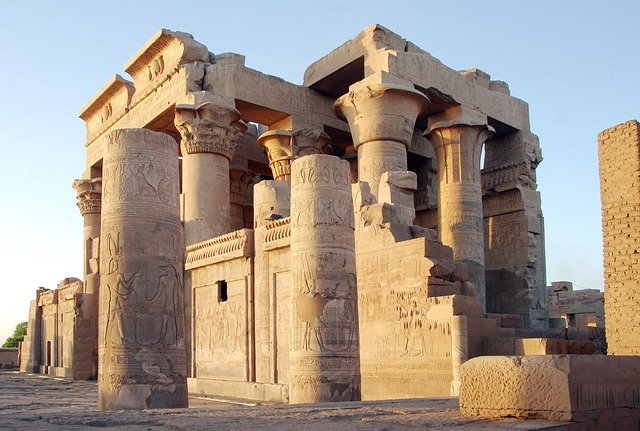
Perched on a graceful bend of the Nile River between Aswan and Luxor, the Kom Ombo Temple is an astonishing testament to Egypt’s divine duality and architectural precision. With its unique twin design—dedicated equally to Sobek, the crocodile god of fertility and creation, and Horus the Elder, the falcon-headed god of divine kingship—the site radiates spiritual balance and intrigue. Its imposing sandstone walls, adorned with intricate hieroglyphics, echo tales of power, faith, and mythology from the Ptolemaic period.
Kom Ombo isn’t just another ancient site—it’s where religion, medicine, and artistry pierced time’s veil to tell humanity’s oldest stories. The temple’s symmetry symbolizes equilibrium between chaos and order, sun and shadow, Nile and desert. Built during Egypt’s Greco-Roman era, it whispers of a time when pharaohs embraced both tradition and foreign influence, blending Greek architectural flair with time-honored Egyptian symbolism. Every relief, hallway, and hidden chamber was crafted with divine intent, designed to honor deities while showcasing royal devotion and scientific advancement.
Standing here, surrounded by the golden desert glow and the serene Nile breeze, visitors sense an almost supernatural energy. The Kom Ombo Temple isn’t merely a ruin—it’s a living museum that reveals the heart of ancient Egypt’s spiritual complexity. With perfectly preserved carvings depicting surgical instruments and astronomical symbols, the temple was both a spiritual sanctuary and a research hub of its era. Travelers arriving via Nile River Cruises or Aswan day tours are enchanted by this architectural jewel and the contrast of civilizations united within its dual sanctum. Let’s dive deeper into the story, mystery, and magnificence of the Kom Ombo Temple.
The Dual Design: Temple of Sobek and Horus the Elder
What makes the Kom Ombo Temple so extraordinary is its rare symmetrical design. Unlike most temples in ancient Egypt, which are devoted to a single deity, Kom Ombo splits its purpose down the middle. On one side, Sobek—the mighty crocodile god linked to water, fertility, and the raw force of the Nile—was worshiped. On the opposite side, Horus the Elder, protector of kings and embodiment of the sun, was honored with equal reverence. Two sanctuaries, two sets of corridors, and two identical shrines mirror one another, symbolizing cosmic balance.
This ingenious structure reflects a spiritual duality that Egyptians saw in life: fertility versus strength, light versus darkness. Each half of the temple offers identical architectural details, down to the columns and hieroglyphs, amplifying its precision and symmetry. Explorers strolling through both sections often marvel at how artisans created perfect harmony without modern tools, achieving mathematical finesse that remains impressive even today.
Historical Timeline of Kom Ombo Temple
The Kom Ombo Temple was built during the reign of Ptolemy VI Philometor in the 2nd century BCE. Subsequent rulers like Ptolemy XIII and Roman emperors added features over time, ensuring the site remained vibrant and active for centuries. The Greco-Roman period shaped its artistic tone, incorporating classical flourishes while preserving Egyptian religious essence.
Kom Ombo thrived not only as a place of worship but also as an economic hub along the Nile. Merchants trading between Upper and Lower Egypt would stop to honor Sobek for safe journeys. After floods, ceremonies were held to thank him for the life-giving waters. Archaeologists have also found evidence of a medical school within or near the complex—fitting, given the temple’s detailed carvings of ancient surgical instruments. This extraordinary evidence positions Kom Ombo as a cornerstone of both spiritual devotion and intellectual pursuit. Those journeying through similar marvels in the region, such as the Temple of Philae, recognize comparable patterns of mystical symbolism.
Architectural Brilliance and Artistic Symbolism
Kom Ombo’s architecture reflects an astonishing level of craftsmanship. Massive sandstone blocks form grand colonnades, while ceiling hieroglyphs depict celestial deities guiding humanity. The entrances align perfectly with the setting sun during specific times of the year, a phenomenon believed to represent divine communication between deities and mortals.
Each column in the hypostyle-hall narrates sacred stories—scribes carved prayers asking for protection from illness and floods. Reliefs depict pharaohs presenting offerings to Sobek and Horus, while adjacent walls show scenes of fertility rituals and healing ceremonies. Interestingly, one prominent panel displays ancient surgical instruments—scalpels, forceps, and probes—confirming Egypt’s advanced knowledge of medicine. Visitors fascinated by traditional and religious architecture may also enjoy the Sultan Hassan Mosque for its grandeur and symmetry, reminiscent of the sacred balance reflected here.
The Crocodile Museum: Guardians of the Nile
Adjacent to the temple lies the Crocodile Museum, a fascinating complement to the Kom Ombo experience. It houses mummified crocodiles once revered as living manifestations of Sobek. These creatures, embalmed with care, were discovered in nearby tombs—proof of the god’s enduring presence and the locals’ devotion.
The museum’s exhibits showcase artifacts retrieved from temple ruins, such as amulets, votive objects, and funerary items. Each tells a story of the residents who lived in constant respect—and sometimes fear—of the Nile’s mighty reptiles. The conservation team’s effort in preserving these relics helps modern visitors grasp Egypt’s depth of reverence for life’s natural and divine forces.
Kom Ombo’s Role in Nile Cruises and Tourism
Kom Ombo’s strategic Nile-side position turns it into an essential stop for travelers seeking spiritual and historical enrichment. Most Nile cruises from Aswan to Luxor dock briefly to allow visitors to wander through its timeless corridors. As the sun sets behind the sandstone pillars, the golden hues cast surreal reflections over the hieroglyphs, producing a celestial ambiance unmatched elsewhere.
Many tourists combine their visit with the Private Tour to Kom Ombo and Edfu Temples from Aswan, optimizing their route across Upper Egypt’s architectural masterpieces. After exploring Kom Ombo, travelers often sail to Edfu, home to the impeccably preserved Temple of Horus. Those planning immersive experiences can explore customized Egypt vacation packages that weave together the legacy of pharaohs, gods, and artistic brilliance along the historic Nile.
Spiritual Symbolism and Mythological Depth
Kom Ombo operates on duality, mirroring the balance Egyptians sought in all things. Sobek represented creation and aggressive power, protecting the people from Nile crocodiles and ensuring agricultural prosperity. Horus symbolized intellect, righteousness, and order. Together, they embodied both chaos and harmony.
The Ptolemies leveraged this symbolism politically, using the temple to unify different religious factions. Offerings and ceremonies conducted simultaneously in both halves of the temple demonstrated the ruling dynasty’s inclusiveness and maintained social order. This divine dualism reflected not only faith but governance—a wise balance between Egyptian tradition and Greek innovation. Similar mythological depth can be experienced by visiting the Temple of Hatshepsut, where divine symbolism manifests through architecture and reliefs.
Scientific Insights: Medicine and Astronomy in Kom Ombo
Few ancient temples reveal as much about medicine as Kom Ombo does. Reliefs etched on its rear walls portray forceps, scalpels, levers, and bandages, all arranged in systematic order—evidence of medicinal practices long before modern healthcare. Priests of Sobek were not mere spiritual leaders but also healers trained in anatomy and herbal treatments.
In addition, astronomical elements abound. Carvings reference lunar cycles used to determine ritual dates and agricultural timelines. The interplay between astronomy and religion illustrated the Egyptians’ deep understanding of cosmic connections. For a deeper dive into Egypt’s astronomical heritage, one could visit the High Dam of Egypt nearby, symbolizing how the Nile has always governed life and time.
Kom Ombo at Sunset: An Ethereal Encounter
As dusk sets, Kom Ombo undergoes a breathtaking transformation. The fading light paints the sandstone golden, while shadows from its colossal columns stretch across the courtyard. The combination of ancient reliefs and the soft hum of the Nile creates an ethereal calm few places can rival.
Visitors often describe a mystical sensation here—the feeling of history breathing through stone. This twilight spectacle attracts photographers and spiritual seekers alike, particularly those traveling on a Luxury Nile Cruise, where sunset tours at Kom Ombo become unforgettable highlights.
Practical Travel Tips for Visiting Kom Ombo
Kom Ombo Temple lies roughly 45 kilometers north of Aswan, and it’s easily accessible by road or river. Many choose to include it in itineraries like the 4-Day Luxor, Edfu, Kom Ombo, Aswan and Abu Simbel Tour. Visiting early morning or late afternoon avoids the heat while offering magical light for photography.
Comfortable walking shoes, water, and sun protection are essential. To immerse fully, hire a local Egyptologist guide who can decode intricate carvings. For smooth logistics, consider arranging transportation with Aswan Transfers services or joining an expert-led Egypt Private Tour. Those planning to sail onward can enjoy tailored options such as the Steigenberger Minerva Nile Cruise or Adonis Nile Cruise for an unforgettable journey between legendary temples.
FAQs about Kom Ombo Temple
What makes Kom Ombo Temple unique among Egyptian temples?
Kom Ombo stands out for its twin dedication to two deities, Sobek and Horus the Elder. This symmetrical design symbolizes cosmic harmony and reflects the religious and philosophical sophistication of ancient Egyptian civilization.
When was Kom Ombo Temple built?
Construction began during the reign of Ptolemy VI in the second century BCE. Subsequent additions were made by Roman emperors, blending Greek and Egyptian artistry into a single magnificent structure.
Where is Kom Ombo Temple located?
The Kom Ombo Temple perches on the east bank of the Nile River, about 45 km north of Aswan. It’s easily accessible through Aswan Day Tours or scenic Nile cruise itineraries connecting Luxor and Aswan.
What artifacts can be found in the Crocodile Museum?
The Crocodile Museum adjacent to the temple displays mummified crocodiles, votive offerings, statues of Sobek, and relics found nearby, giving visitors insight into ancient Egypt’s rituals and reverence for the Nile’s creatures.
How can travelers include Kom Ombo in a Nile cruise itinerary?
Many luxury and dahabiya cruise programs, like the Luxury Dahabiya Nile Cruise or the 4 Nights Nile Cruise Luxor to Aswan, feature Kom Ombo as a stop between Edfu and Aswan. Travelers enjoy guided tours during late afternoon sail visits when the temple glows under sunset light.
Abu Simbel Temples
Abu Simbel Temples: The Eternal Wonders of Ancient Egypt
Standing tall on the sun-soaked shores of Lake Nasser, the Abu Simbel Temples are extraordinary examples of ancient Egyptian architecture and devotion. These two magnificent rock-cut temples, dedicated to Pharaoh Ramses II and his beloved Queen Nefertari, represent not only the grandeur of their era but also the astonishing craftsmanship of human ingenuity. Every traveler who ventures into southern Egypt feels the magnetic pull of these monumental shrines, a place where history, art, and mystery merge under the ever-blazing Nubian sun. To this day, the temples of Abu Simbel stand as a testimony to Egypt’s enduring cultural legacy and the timeless allure of its pharaonic past.
When visitors face the colossal statues guarding the Great Temple, awe replaces speech. Each of the four towering images of Ramses II, carved directly into the mountain, gazes eastward, awaiting the sunrise that illuminates the gods within twice a year—on the pharaoh’s birthday and coronation day. Such celestial alignment wasn’t mere coincidence but a reflection of divine kingship and ancient Egyptian cosmic philosophy. The smaller temple, dedicated to Hathor and Queen Nefertari, complements this majesty with grace and elegance, portraying Egypt’s queen in equal stature beside the pharaoh—a rarity in ancient art. Abu Simbel isn’t just a monument; it’s a message from eternity, echoing power, love, and religious symbolism that has fascinated archaeologists, photographers, and adventurers. A visit feels like stepping straight into history, an experience every lover of ancient civilizations must have in their lifetime.
The Enchanting Location of Abu Simbel Temples
Located in the far south of Egypt, Abu Simbel sits within the Nubian desert near the border with Sudan. The journey is an adventure through Egypt’s serene landscapes, often included in guided adventures such as Day Trip to Abu Simbel from Aswan by coach. Originally carved into a sandstone cliff overlooking the Nile around 1264 BC, the temples symbolized Egypt’s dominance over Nubia. Today, they’re positioned along the banks of Lake Nasser, relocated during the 1960s to escape flooding caused by the construction of the Aswan High Dam, a feat of modern engineering that saved the monuments from submersion.
Travelers exploring southern Egypt frequently combine Abu Simbel with visits to Aswan City and the Temple of Philae, both just a few hours north. The region brims with legends, the air thick with the soul of ancient Nubia. As you cruise across the Nile on routes like the 4 Day 3 Night Nile Cruise from Aswan to Luxor, anticipation builds with every bend of the river. In this setting, the grandeur of Ramses II’s empire feels closer than ever, and the atmosphere whispers stories of conquest, devotion, and timeless artistry.
The Historical Significance of Ramses II’s Vision
Ramses II, one of ancient Egypt’s most powerful pharaohs, ruled for nearly 66 years during the 19th Dynasty—an era often considered the pinnacle of Egypt’s imperial power. The Abu Simbel Temples were his way of immortalizing his reign and affirming his divine connection to the gods Amun-Ra, Ra-Horakhty, and Ptah. The Great Temple was dedicated to these deities, blending political propaganda with religious devotion. Inside, hieroglyphics and reliefs show Ramses in battle, particularly the famous scenes from Kadesh, one of the earliest recorded peace treaties in history. These artistic depictions were not just decorative; they were strategic assertions of his might to all who entered Nubian lands and beyond.
Meanwhile, the Small Temple next door commemorated Queen Nefertari, personified as the goddess Hathor. It was one of the very few times in Egyptian art that a queen appeared in equal scale with a king. Such representation reflected deep affection and political partnership. Insight into their lives makes the Abu Simbel Temples more than ruins; they’re love letters etched in stone, crafted by hands and hearts that sought divine eternity. If you’re intrigued by ancient royal artistry, the Statue of Ramses II offers another magnificent look into his iconography and symbolism.
Architectural Splendor and Symbolic Design
The precision involved in constructing Abu Simbel leaves modern architects marveling. The Great Temple stretches nearly 33 meters deep into the cliff, featuring a series of halls leading to the sanctuary—a space that only the pharaoh and priests could access. Twice each year, on February 22 and October 22, the sun’s rays penetrate the inner chambers, illuminating the statues of Amun-Ra, Ra-Horakhty, and Ramses, while leaving Ptah, god of darkness, in shadow. This level of astronomical accuracy exemplifies ancient Egypt’s command of cosmic design.
The smaller temple, about 30 meters north, mirrors this spiritual balance. Dedicated to Hathor, goddess of music, love, and motherhood, it radiates harmony and feminine power. Both temples exhibit enormous seated statues flanking their entrances, elegant facades, and intimate interiors adorned with intricate carvings. Each wall tells stories— from victories on foreign soils to scenes of divine worship. This artistry inspired countless future monuments, like those in Luxor Temple and the Ramesseum Temple.
The Great Relocation: Saving Abu Simbel from the Waters
When the Aswan High Dam threatened to submerge Abu Simbel beneath Lake Nasser’s rising waters, UNESCO launched a daring international rescue in the 1960s. Engineers literally disassembled the temples into massive blocks—some weighing up to 30 tons—and meticulously reconstructed them on higher ground. This monumental operation remains one of the most ambitious archaeological rescue missions in history, preserving a world treasure for future generations. Visitors today walk through the same colossal doors Ramses II once commanded, awed by both ancient genius and modern human collaboration.
For travelers yearning to witness this marvel, experiences like the 4 Day Luxor, Edfu, Kom Ombo, Aswan and Abu Simbel Tour seamlessly connect these historic landmarks, creating an unforgettable journey through Egypt’s southern wonders. It’s a once-in-a-lifetime adventure for those who crave to uncover the secrets of this ancient land.
Symbolism and Artistic Legacy
Symbolically, the Abu Simbel Temples represented divine protection over Egypt’s southern borders. The colossal figures of Ramses II were not merely self-glorification; they were guardians watching over Nubia. The orientation of the temple facing east connects life, rebirth, and the power of the sun. Each relief inside reflects artistic mastery, with delicate portrayals of gods, queens, and victorious campaigns. Visitors and historians find connections between Abu Simbel’s aesthetics and later temples such as Kom Ombo Temple and Edfu Temple, both along the Nile’s fertile banks.
Experiencing Abu Simbel Today
Modern-day expeditions to Abu Simbel often begin with scenic Aswan Day Tours. Whether you choose a guided overnight stay or witness the spectacular sunrise aligning with the statues, every moment feels transcendent. The journey through the Nubian desert and along Lake Nasser’s shoreline unveils breathtaking desert serenity, creating profound tranquility long after you leave. Visiting the site grants not only a sense of wonder but an intimate connection with the spirit of Ramses II himself—a timeless encounter blending history, mythology, and awe-inspiring craftsmanship.
After exploring Abu Simbel, travelers often extend their adventure aboard a Luxury Nile Cruise or detour toward the beautiful Nubian villages nearby, where ancient and modern cultures coexist. Combined itineraries like the 7 Days Cairo, Luxor, Abu Simbel & Sahara Trip offer seamless ways to explore Egypt’s greatest wonders in depth.
Travel Tips and Visitor Experiences at Abu Simbel Temples
Abu Simbel’s remote location makes early planning vital. Many travelers depart Aswan before sunrise to catch the first rays striking the temple façade—an experience often described as spiritual. Temperatures can be intense, especially from May through September, so lightweight clothing, sun protection, and sufficient water are essential. For those seeking the most immersive experiences, attending the biannual Sun Festival is a must, where thousands gather to witness sunlight illuminating Ramses’s face at dawn.
Adventure seekers continue northward to Aswan or enjoy scenic detours like the Day Trip to Philae and Kalabsha Temples and Nubian Museum. Accommodation options are limited near the site, but this adds to its untouched allure. Visiting at sunrise or sunset envelops the temple complex in warm golden hues, casting long shadows and perfect light for photography enthusiasts chasing that quintessential Egyptian moment.
The Cultural Resonance and Global Fame
Beyond architecture, Abu Simbel signifies an eternal connection between human creativity and divine inspiration. Artists, historians, and writers have drawn upon these temples for centuries, praising their mythical resonance. The temples inspired numerous documentaries, cultural exhibitions, and academic research worldwide. Moments spent there echo the profound silence of antiquity—a feeling few destinations can replicate.
Visitors frequently extend their exploration toward other sites along Lake Nasser, which harbor relocated monuments like Temple of Kalabsha and smaller Nubian sanctuaries. These historical journeys perfectly complement Lake Nasser In Africa, known for its tranquil waters and unspoiled natural scenery.
Preserving the Heritage for Future Generations
The story of Abu Simbel stands as a global symbol of cultural preservation. UNESCO’s rescue ignited awareness about safeguarding humanity’s shared heritage, inspiring countless international collaborations afterward. Today, the temples remain a highlight in Egypt Vacation Packages, ensuring travelers can witness their timeless glory while supporting sustainable tourism that maintains the region’s authenticity and local livelihoods.
Whether you’re on an epic heritage journey or a romantic escape, Abu Simbel offers travelers a connection to something eternal. Its magnetism goes beyond stone—it’s about witnessing humanity’s devotion to the divine and to legacy. Incredible itineraries such as the 16 Day Cairo, Alexandria, Nile Cruise and Abu Simbel provide unprecedented opportunities to dive deep into Egypt’s living history while embracing every nuance of this astonishing landmark.
Frequently Asked Questions About Abu Simbel Temples
When was Abu Simbel built?
The Abu Simbel Temples were constructed during the reign of Pharaoh Ramses II around 1264–1244 BC, during Egypt’s 19th Dynasty. They took about 20 years to complete and were meant to glorify Ramses’s reign and honor the gods Amun-Ra, Ra-Horakhty, Ptah, and Hathor.
Why were the Abu Simbel Temples relocated?
The temples were relocated between 1964 and 1968 to prevent flooding caused by the creation of Lake Nasser after the construction of the Aswan High Dam. UNESCO led the project, cutting the temples into sections and moving them 65 meters higher onto an artificial hill.
What makes the solar alignment of Abu Simbel special?
Twice each year—on February 22 and October 22—the sunlight penetrates the temple sanctuary, illuminating statues of Ramses II and sun deities, but not Ptah, god of darkness. This phenomenon demonstrates astonishing astronomical precision achieved over 3,000 years ago.
How can visitors reach Abu Simbel?
Most travelers reach Abu Simbel via early morning
Temple Of Philae
Temple of Philae: The Sacred Marvel of Ancient Egypt
Among the sacred sanctuaries that define Egypt’s timeless heritage, the Temple of Philae stands as a breathtaking tribute to devotion, artistry, and resilience. Nestled near Aswan, this temple complex, dedicated primarily to the goddess Isis, is one of Egypt’s most enchanting sites—a blend of myth, architecture, and historical transformation. Its limestone reliefs, majestic pylons, and tranquil island setting create an atmosphere that has inspired poets, scholars, and travelers alike for centuries. The Temple of Philae represents one of the last holds of ancient Egyptian religion, marking the intersection where myth met empire, and faith endured through shifting sands of history.
Today, visitors who set foot on Aswan Day Tours marvel at the temple’s enduring might and tranquil beauty. Originally built on Philae Island and later moved to nearby Agilkia Island during the UNESCO rescue mission after the construction of the Aswan High Dam, this monument encapsulates both ancient glory and modern preservation. A visit here isn’t just a step back in time—it’s a journey into the heart of Egyptian spirituality, where gods walked among men, and myths linger like whispers along the Nile breeze. With every carved inscription and colossal column, the Temple of Philae reminds us why Egypt’s treasures are eternal symbols of devotion, artistry, and survival.
The Captivating Origins of the Temple of Philae
The Temple of Philae was originally constructed during the Ptolemaic Dynasty, around the 3rd century BCE, though the island itself had religious significance long before. Dedicated to Isis, the Egyptian goddess of magic, fertility, and motherhood, this sacred place attracted worshippers from all over the ancient world. Over time, additional shrines and chapels were added by Roman emperors such as Augustus and Trajan, each leaving their mark on this extraordinary landscape. The temple wasn’t just an architectural marvel—it was also a spiritual hub that represented Egypt’s resilience during periods of foreign rule and cultural fusion. The island’s allure even captivated early travelers, who recorded its dazzling beauty and peaceful ambience long before tourism flourished on the Nile.
Historical records show that worship continued on Philae until the 6th century CE, long after Christianity had spread across Egypt. The blending of religious traditions is seen in the adaptation of the temple’s inner halls, where early Christians etched crosses into the stone. Such symbols represent Egypt’s transformation—pivotal moments when ancient spirits merged with new beliefs, echoing the coexistence of tradition and transition. Today, those who travel with a private Egypt tour can witness this layered history firsthand.
Architectural Brilliance and Design Symbolism
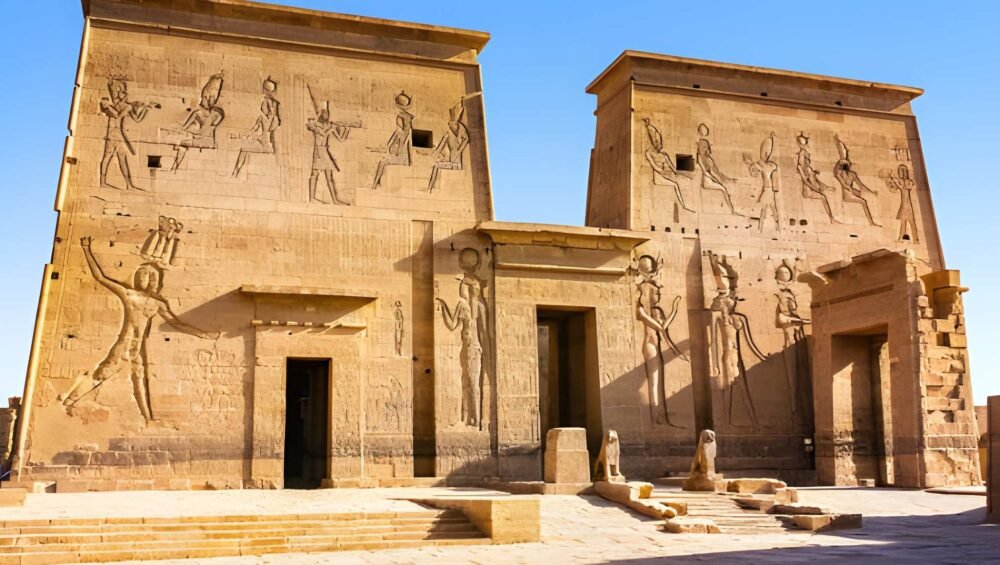
The architectural design of the Temple of Philae showcases a harmonious blend of Greek, Egyptian, and Roman influences. Dominated by two grand pylons adorned with scenes of Isis and Osiris, the temple’s structure narrates stories of divine resurrection and power. Intricately carved hieroglyphs illuminate the beliefs and rituals once performed on the island. The central sanctuary, known as the Holy of Holies, was believed to house the statue of Isis herself—a sacred relic tended to by high priests. Flanking chapels dedicated to Hathor and Horus illustrate the interconnectedness of Egypt’s mythological pantheon.
The temple complex also features the elegant Kiosk of Trajan, one of the most recognizable structures of Roman Egypt. This small yet majestic pavilion with 14 Corinthian columns appears almost like a floating shrine when seen from the Nile. Its graceful proportions earned it the nickname ‘Pharaoh’s Bed,’ and it remains one of the most photographed monuments in southern Egypt. Those enjoying an Egypt luxury Nile cruise often make this ethereal site a highlight of their journey.
The Great Relocation of Philae Temple
One of the most remarkable aspects of the Temple of Philae’s history is its physical relocation. With the construction of the Aswan High Dam in the 1960s, the original Philae Island was destined to be submerged under Lake Nasser. In an extraordinary international effort led by UNESCO, the temple complex was dismantled piece by piece—over 40,000 stone blocks—and reassembled on Agilkia Island, slightly higher and safer from the rising waters. This feat, completed between 1972 and 1980, is often hailed as one of the world’s greatest archaeological rescue missions.
The relocation preserved not just ancient architecture but also a sacred atmosphere that remains palpable today. When visitors approach the island by boat, they encounter a reflection of devotion—both ancient and modern. This preservation effort symbolizes Egypt’s dedication to protecting its cultural legacy for generations to come. Travelers who embark on a day trip to Philae and Kalabsha Temples and Nubian Museum can experience the impressive results of this global collaboration firsthand.
The Goddess Isis and Her Eternal Influence
At the heart of the Temple of Philae lies the worship of Isis, the beloved goddess whose myth transcended Egypt and influenced civilizations across the Mediterranean. Ancient Egyptians revered her as the mother of Horus and the bringer of life and magic. Legends describe her as the one who resurrected her husband, Osiris, symbolizing eternal love and rebirth. The temple’s reliefs portray her with regal elegance, nursing her divine son, or performing sacred rites. These scenes not only celebrated Isis’s divine powers but also embodied the enduring faith of her followers. Her cult persisted so strongly that worship continued at Philae even under Roman and Byzantine rule.
The spread of Isis’ worship beyond Egypt, particularly into Greece and Rome, underscores the temple’s historical and cultural significance. Her image became a symbol of feminine strength and devotion. Even today, visitors feel a sense of calm reverence when standing before her shrine, while scholars admire Philae as one of the last true strongholds of ancient Egyptian religion.
The Spiritual Journey: Visiting the Temple Today
Visiting the Temple of Philae is not merely a sightseeing excursion—it’s a spiritual pilgrimage through time. Travelers typically begin their journey in Aswan city, boarding small motorboats that glide across the shimmering waters toward Agilkia Island. As the temple comes into view, framed by palm trees and desert hills, its serenity leaves visitors awe-struck. Upon arrival, intricate reliefs, column-lined courtyards, and tranquil courtyards welcome them into a world once reserved for priests and pharaohs.
By night, the site transforms into a realm of magic during the Sound and Light Show at Philae Temple. The illuminated columns and narrated stories of Isis bring the monuments to life under a starlit sky. For those seeking cultural immersion, it’s a moment of pure enchantment—combining history, legend, and emotion in one unforgettable experience. Many travelers pair their visit with a serene felucca ride on the Nile in Aswan, enhancing the mystical atmosphere.
The Temple’s Role in Nubian and Egyptian Culture
The Temple of Philae bridges the cultural landscapes of both Egypt and Nubia. Historically located near the border of Nubia, it served as a gateway for trade, spirituality, and diplomacy. Nubian craftsmen and priests contributed to its maintenance, intertwining local belief systems with traditional Egyptian deities. Visitors exploring with a trip to the Nubian Villages by boat can trace this shared heritage in the art and architecture that still resonate throughout Aswan.
The artwork of Philae displays Nubian aesthetics alongside Egyptian symbolism, showcasing cultural exchange and artistic innovation. This synergy of faith and craftsmanship resulted in a spiritual wonder that embodies harmony among peoples, beliefs, and artistic traditions. Even after centuries, it continues to stand as a testament to the human spirit’s interconnectedness and creativity.
Modern Tourism and Preservation Efforts
Today, the Temple of Philae remains one of Egypt’s best-preserved ancient sites and a crown jewel of Egypt Day Tours. Each year, thousands of visitors from around the world come to admire its splendor. Guided tours, educational exhibits, and multi-lingual interpretation boards help visitors connect deeply with its context and significance. Egypt’s Ministry of Antiquities continues to oversee conservation projects to ensure that its carvings, structures, and inscriptions remain safe for future generations.
Those seeking immersive experiences can include it in well-curated itineraries like the four-day Nile cruise from Aswan to Luxor, or extend their adventure through an 11-day luxury Egypt tour package, which explores ancient temples, vibrant markets, and river life. Whether for spiritual reflection or academic curiosity, the Temple of Philae continues to inspire reverence among all who visit.
When to Visit the Temple of Philae
The best time to visit the Temple of Philae is during Egypt’s cooler months—October through April. The early morning light reveals the site’s intricate carvings, while sunset immerses it in golden hues reflecting off the Nile. For photographers and history enthusiasts, this synergy of light and legend offers moments that linger forever in memory. Convenient Aswan transfers and local guides ensure seamless access, allowing travelers to fully focus on the awe-inspiring beauty and serenity of the temple complex.
FAQs About the Temple of Philae
1. Where is the Temple of Philae located?
The Temple of Philae is located on Agilkia Island, near the city of Aswan in southern Egypt. It was relocated there after the original Philae Island was flooded following the construction of the Aswan High Dam.
2. Who built the Temple of Philae?
The Temple of Philae was primarily built during the Ptolemaic Dynasty, starting with Ptolemy II, and expanded by later Ptolemies and Roman rulers, including Augustus and Trajan.
3. What deity was worshipped at the Temple of Philae?
The main deity worshipped at the Temple of Philae was Isis, the goddess of magic, fertility, and motherhood. However, other Egyptian deities such as Hathor, Osiris, and Horus were also honored within the complex.
4. How was the Temple of Philae saved from flooding?
In the 1960s, the temple complex faced submersion due to the creation of Lake Nasser. UNESCO launched an international project to relocate the temple block by block to Agilkia Island, successfully preserving this invaluable monument.
5. Can visitors attend the Sound and Light Show at Philae?
Yes, visitors can attend the spectacular Sound and Light Show at Philae, held in the evening. The show narrates the myths of Isis and Osiris through captivating storytelling, music, and illuminated projections against the temple walls.
In every stone, relief, and sacred inscription, the Temple of Philae tells a story of devotion and endurance—a legacy shaped by gods, preserved by humanity, and celebrated by all who step into its eternal embrace. It remains not merely a monument but a living reminder of the spiritual pulse that continues to define Egypt’s heart along the timeless Nile.
Unfinished Obelisk
The Enigmatic Unfinished Obelisk: Egypt’s Most Astonishing Monument of Antiquity
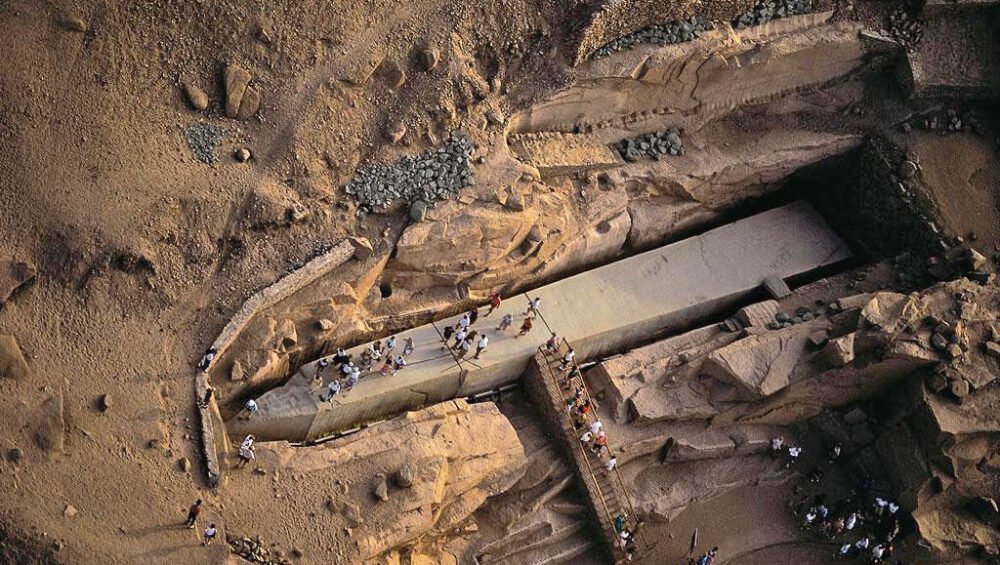
The Unfinished Obelisk in Aswan stands as one of Egypt’s most spellbinding archaeological marvels, frozen in time yet bursting with stories from the ancient world. This colossal monument — partially carved directly from Aswan’s rose granite quarries — offers a rare, candid glimpse into ancient Egyptian engineering, craftsmanship, and ambition. Measuring roughly 42 meters long and estimated to weigh over 1,200 tons, it would have been the single largest obelisk ever erected, dwarfing even those that grace the Luxor Temple and Karnak. Yet, the Unfinished Obelisk remains forever incomplete, abandoned when a fatal crack appeared midway through its carving process.
Located within the Northern Quarry of Aswan, where generations of ancient artisans chiseled massive stones destined for temples and pyramids, the Unfinished Obelisk offers a riveting narrative of ancient construction techniques. Long before cranes, hydraulic systems, or modern saws, workers harnessed copper tools, dolerite pounding stones, and ingenuity to carve these mammoth blocks. Their legacy lives on, etched into the grooves and tool marks that still line the obelisk’s surface.
For travelers diving into Egypt’s timeless treasure trove, this monument isn’t just a relic — it’s a window into the audacious vision of Pharaohs, notably Hatshepsut, who’s believed to have commissioned this masterpiece to honor the sun god Amun. Whether you’re exploring through one of the Aswan Day Tours or cruising the Nile with a Luxury Egypt Tour Package, witnessing the Unfinished Obelisk in person evokes awe, humility, and deep respect for a civilization that turned stone into enduring glory. With every chisel mark preserved through millennia, the site whispers the genius, labor, and heartbreak behind ancient Egypt’s monumental creations.
The Historical Significance of the Unfinished Obelisk
The Unfinished Obelisk holds unparalleled historic importance. Believed to date back to the 18th Dynasty under Queen Hatshepsut, its discovery revolutionized Egyptology. Not only does it shed light on ancient Egyptian quarrying and stone-working, but it also bridges the gap between grand monuments like the Temple of Philae and massive constructions along the High Dam of Egypt. The site became an outdoor laboratory where archaeologists could decode lost techniques — how Egyptians separated huge granite slabs from bedrock, shaped them, and prepared them for transportation along the Nile.
The obelisk was meant to accompany its twin, possibly erected at Karnak. Its monumental scale would have emphasized divine connection and political might. The decision to abandon it following the discovery of a structural crack isn’t just a tale of failure; it’s a testament to precision. The ancient builders understood the risks of flaws in granite that could compromise stability once erected. By examining this incomplete masterpiece, historians now grasp the immense technological intellect of Egypt’s engineers long before the Greek or Roman periods.
The Craftsmanship and Tools Behind Ancient Egyptian Engineering
Nothing about ancient Egyptian engineering was improvised. Every stroke of the dolerite hammerstone followed meticulous planning. Workers pounded at the granite surface endlessly, forming trenches around the obelisk to separate it from the bedrock. Stone pounding created a trench wide enough to insert wood or rope soaked in water, which upon expansion, slowly lifted the monolith from the ground. Standing in front of this 42-meter monument today, one feels the rhythm of that ancient labor echoing across millennia.
These methods became blueprints for countless structures to follow — temples, colossal statues, and even monuments such as the Abu Simbel Temples. The Unfinished Obelisk remains one of the few places on Earth where the quarrying process is still visible in situ. For travelers joining an Egypt Day Tour, visiting Aswan’s quarry connects myth, science, and artistry in one epic encounter.
Queen Hatshepsut’s Vision and the Symbolism of Obelisks
Obelisks symbolized the sun’s rays — massive granite beams pointing toward the heavens, representing divine connection between gods and humans. Queen Hatshepsut, one of Egypt’s most influential female Pharaohs, envisioned obelisks as both sacred and political declarations of glory. She commissioned multiple obelisks to mark her reign, proving supremacy through architectural mastery. This unfinished one was intended as her magnum opus, dedicated to Amun-Ra, the god of creation and light.
According to inscriptions and quarry evidence, the workers carved directly into the Aswan granite surface, demonstrating an unprecedented level of precision and coordination. Although it was never completed, its colossal size still embodies Hatshepsut’s unyielding ambition — a vision paralleled only by her mortuary temple at Deir el-Bahari.
Why the Obelisk Was Never Finished
While laborers were chiseling, a fatal crack appeared in the granite core, rendering the entire project useless. The discovery forced them to stop. The crack serves today as an archaeological archive, showing how even Egypt’s most skilled engineers faced nature’s limitations. The incomplete monument lay untouched, conserving technical mysteries for centuries. It offers clear proof of how large-scale failures shaped the evolution of architectural innovation throughout Egyptian history.
Today, walking along its length allows visitors to see the human-to-stone relationship — the pain, the perseverance, and the moment innovation met natural imperfection. It’s these haunting traces that make it a highlight for visitors exploring Aswan through Luxury Nile Cruises or Best Nile River Cruises.
The Unfinished Obelisk as a Living Museum in Aswan
Unlike many artifacts enclosed behind museum glass, the Unfinished Obelisk remains embedded within the very quarry from which it was born. Standing amidst Aswan’s pink-granite cliffs, visitors can trace thousands of chisel marks created by workers who likely lived in nearby camps. This open-air museum allows unparalleled contact with history. It’s not hard to imagine the clinking of hammerstones echoing, dust rising under a relentless sun, while overseers shouted instructions to synchronized teams of workers.
Today, Aswan’s tourism circuit integrates the quarry alongside attractions like Kalabsha Temple and The Nubian Museum. For modern travelers seeking authenticity, this site provides a raw, unfiltered encounter with ancient creativity — a real-life backstage pass to Pharaonic engineering brilliance.
Touring the Unfinished Obelisk: An Insider’s Guide
The best time to explore the Unfinished Obelisk is early morning, when Aswan’s golden light caresses the granite and shadows accentuate the chiseling lines. The site is easily accessible from downtown, often included in Aswan city tours. Many Nile cruises, such as the Steigenberger Minerva Nile Cruise or the Nile Premium Cruise, feature stops here as part of their excursions.
Visitors can meander through the quarry, examine ancient tool marks, and envision crew operations. Informational plaques explain how these obelisks were carved, polished, transported, and often stood as pairs in temple entrances — symbolizing harmony and balance. The site’s guides illuminate secrets of stonecutting and convey the awe ancient Egyptians must have felt as they labored at the dawn of human engineering.
Pairing Your Visit With Other Aswan Attractions
A visit to the Unfinished Obelisk blends seamlessly with exploring Aswan’s other archaeological landmarks. Don’t miss a boat trip to the sacred island housing the Temple of Philae, dedicate a day to the scenic Nubian Village, or take a serene Felucca Ride on the Nile. Each experience adds context to the Unfinished Obelisk’s story, illuminating how religion, craftsmanship, and the natural world intertwined in lower Nubia.
Aswan also serves as a launchpad to visit majestic southern masterpieces like the Abu Simbel Temples. The juxtaposition between the massive completed monuments and the uncompleted obelisk reveals fascinating duality — ambition versus constraint, triumph versus flaw — defining Egypt’s eternal narrative.
Modern Preservation and Archaeological Efforts
Egypt’s Ministry of Antiquities continues to safeguard the Unfinished Obelisk as a national treasure. Restoration teams monitor weathering, employ laser scanning for digital preservation, and promote the site’s sustainable tourism. Today’s researchers leverage the obelisk’s unfinished nature to reconstruct ancient methods of fracture detection and vibration analysis. The monument thus serves modern science while nurturing Egypt’s tourism economy.
Inclusion of this site in curated programs like the Egypt Vacation Packages or 8 Days Best Egypt Tour with Nile Cruise ensures both its global visibility and protective oversight.
FAQs About the Unfinished Obelisk
Where is the Unfinished Obelisk located?
The Unfinished Obelisk lies within Aswan’s Northern Quarry, near the modern city center. Aswan is southern Egypt’s granite capital, supplying stone for temples and pyramids throughout Egyptian history. The site can be easily reached by car or taxi from any central hotel or part of Aswan Transfers itineraries.
Who commissioned the Unfinished Obelisk?
Most scholars credit Queen Hatshepsut, the 18th Dynasty’s celebrated Pharaoh, for commissioning the Unfinished Obelisk. It was likely intended to complement another obelisk erected at the Temple of Karnak, representing her divine partnership with Amun-Ra and reflecting Egypt’s architectural peak.
Why did the ancient Egyptians abandon it?
While carving, a structural crack developed in the granite, compromising the entire monument’s integrity. Quarry engineers realized it couldn’t stand safely. Rather than risk construction failure, they abandoned it, leaving behind a living testimony of Egypt’s trial and error in monumental artistry.
What makes the Unfinished Obelisk unique among ancient monuments?
Unlike completed obelisks that showcase finished polish and inscriptions, this monument displays every step of its creation — rough grooves, tool imprints, and cutting channels. Its incompleteness offers a transparent insight into ancient Egyptian engineering, rarely found elsewhere in archaeological history.
Can tourists visit the Unfinished Obelisk today?
Yes. The site welcomes visitors daily, with guided tours that explain its history, purpose, and techniques. Most Egypt Private Tours include it within Aswan itineraries, often paired with excursions to Philae Temple, the High Dam, and the Nubian Museum for a comprehensive cultural immersion.
The Unfinished Obelisk stands unmatched as both a marvel and a mystery — a silent reminder of humanity’s reach toward perfection and the natural limits that define it. Even in its cracked slumber, it continues to inspire, teaching generations that glory often lies not only in completion, but in the effort itself.
The High Dam Of Egypt
The High Dam of Egypt: A Monument of Power, Vision, and Transformation
The High Dam of Egypt, known globally as the Aswan High Dam, stands as one of the most ambitious and influential engineering feats of the twentieth century. Rising proudly across the Nile River in Aswan, this colossal dam represents the heart of Egypt’s modernization and the backbone of its agricultural and economic stability. Constructed to harness the Nile’s immense power, the High Dam not only reshaped Egypt’s environmental landscape but also altered its social and industrial destiny forever. Since its completion in 1970, the structure has remained a symbol of national pride, engineering excellence, and the Egyptian people’s relentless drive for progress.
With its enormous concrete embankment towering nearly 111 meters high and stretching over 3,830 meters long, the Aswan High Dam transformed the natural flow of the Nile, creating the vast reservoir known as Lake Nasser—one of the world’s largest man-made lakes. The project stands as an emblem of unity and vision, capturing the dynamic collaboration between Egypt and international partners. Beyond its physical dimensions, the High Dam represents the lifeline of Egypt, ensuring water storage for millions, generating hydroelectric power, and providing protection against devastating floods and severe droughts. Indeed, the story of the High Dam is not just about engineering—it’s about dreaming big and safeguarding a nation’s most vital resource: the Nile.
Historical Background: The Need for the High Dam of Egypt
For millennia, Egypt’s civilization thrived and suffered at the mercy of the Nile River. Annual floods provided fertile soil and agricultural prosperity, but unpredictable inundations often destroyed villages or caused famine during dry years. By the early 20th century, efforts to control the Nile had already begun with smaller projects, such as the old Aswan Dam built in 1902. However, the growing population, demand for irrigation, and energy needs far exceeded what earlier dams could provide. Egypt’s visionary leadership realized that only a grand-scale infrastructure could ensure long-term flood control and sustainable agriculture.
During the 1950s, under President Gamal Abdel Nasser, Egypt embarked on a bold mission—to build a massive dam that would redefine the Nile’s role in Egypt’s destiny. The High Dam promised to regulate river flow, expand arable land, and push Egypt toward industrial self-reliance. This monumental project symbolized not just hydrological mastery but also a newfound independence from colonial-era influence. The dam became an icon of Egyptian resilience, much like historical wonders such as the Abu Simbel Temples, reflecting both the ingenuity of ancient builders and the collective ambition of modern Egypt.
Planning and International Collaboration
The planning phase of the High Dam marked a pivotal moment in international engineering collaboration. Designed by Egyptian engineers in partnership with Soviet experts, the project combined advanced concrete technology, hydrological modeling, and large-scale excavation techniques. Financial and technical assistance from the Soviet Union allowed Egypt to move forward after Western powers initially withdrew support—a strategic decision that reshaped Cold War alliances in the region.
Massive construction began in 1960, employing over 30,000 workers who toiled day and night in the scorching Aswan sun. The world watched in awe as mountains of rock and concrete rose to tame the Nile. Today, modern travelers passing through Aswan City still marvel at the vision that turned a desert region into a powerhouse of energy and innovation.
Engineering Marvel of the Aswan High Dam
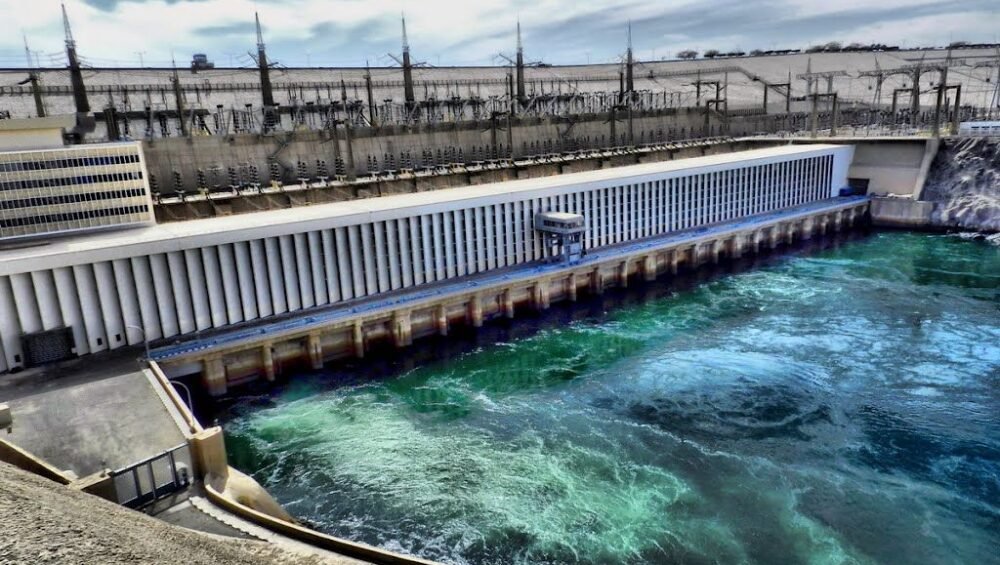
Constructed primarily of rockfill with a clay core, the High Dam’s design ensures both stability and durability. Its creation required over 43 million cubic meters of material—enough to build multiple pyramids. The dam’s hydroelectric power station, equipped with twelve turbines, provides nearly two billion kilowatt-hours of electricity annually, supplying power to homes, industries, and cities across Egypt.
The reservoir created by the dam, known as Lake Nasser, stretches over 500 kilometers in length, extending deep into northern Sudan. It serves as a crucial water reserve, supporting agriculture during dry seasons and ensuring year-round irrigation throughout the Nile Delta. Many visitors exploring Aswan as part of Aswan Day Tours are captivated by the panoramic beauty of this immense body of water shimmering beneath Egypt’s endless blue sky.
Power Generation and Economic Growth
The High Dam of Egypt revolutionized the nation’s energy infrastructure by introducing vast hydroelectric capacity that fueled post-1960s industrial expansion. The steady electricity supply powered factories, irrigation systems, and household needs. As a result, rural electrification improved living standards and connected previously isolated communities. With its clean, renewable energy source, the dam also reduced dependence on fossil fuels, promoting environmental sustainability before the concept was widely recognized.
For those sailing between Aswan and Luxor on elegant cruises such as the Steigenberger Minerva Nile Cruise or the Best Dahabiya Nile Cruise, the High Dam stands as a modern contrast to ancient temples along the Nile banks. It demonstrates how ancient reverence for the river evolved into a technological symbiosis that sustains Egypt’s future.
Construction Challenges and Innovations
Building such a massive structure amid harsh desert conditions demanded ingenuity and endurance. Workers faced scorching temperatures and logistical hurdles in transporting materials and machinery from remote locations. To combat technical challenges, engineers introduced groundbreaking approaches including clay core sealing to prevent seepage, advanced spillway systems, and state-of-the-art monitoring technology. Each innovation added a layer of resilience that continues to safeguard the dam decades later.
Environmental and Social Impacts
While the High Dam brought undeniable progress, it also transformed Egypt’s environment and communities in profound ways. The controlled flow of the Nile ended traditional flood cycles, stabilizing agriculture but reducing natural sediment deposition. This necessitated the increased use of fertilizers to maintain soil fertility. Additionally, the creation of Lake Nasser submerged numerous Nubian villages, leading to large-scale resettlement programs supported by the government.
The Nubian people, known for their unique heritage and artistry, found new homes north of Aswan and around relocation sites near The Nubian Village. Although resettlement was challenging, efforts were made to preserve cultural traditions, including architecture and crafts. Today, visitors can experience this living culture while exploring Aswan Transfers and local community tours that reveal stories of resilience and adaptation.
Lake Nasser’s Ecosystem and Wildlife
Lake Nasser created a new aquatic ecosystem supporting fish species, migratory birds, and wildlife that thrive along its shores. It also fostered a growing fishing industry that supplies markets across Egypt. However, the altered water regime affected downstream delta regions, influencing salinity and estuarine dynamics. Modern environmental monitoring ensures sustainable management of these changes, striking a balance between ecological preservation and human benefit.
Tourism and Visitor Experience at the High Dam
Today, the High Dam of Egypt ranks among the top attractions in southern Egypt, drawing both engineering enthusiasts and leisure travelers alike. Located just 13 kilometers south of Aswan, the dam offers a breathtaking view of both the Nile and Lake Nasser. Tourists can visit observation platforms to witness the power of modern engineering juxtaposed against timeless desert vistas. Many combine dam visits with cultural experiences such as the Day Tour of Aswan, Philae Temple, High Dam and Obelisk, exploring Aswan’s most famous landmarks in one immersive journey.
Whether you’re joining Felucca rides on the Nile in Aswan or embarking on an Egypt Vacation Package, the High Dam remains an integral part of the story. It defines Aswan’s identity and stands as a reminder that humanity’s grandest ambitions can coexist with nature’s enduring rhythms.
Cultural Significance: Symbol of Progress and Identity
The High Dam transcends its utilitarian role. In Egyptian consciousness, it symbolizes resilience, sovereignty, and unity. Its construction under President Nasser represented not merely infrastructure but a statement of independence and empowerment. The dam’s very existence embodied Egypt’s transition into modernity—an emblem of national pride equatable to ancient marvels like Luxor Temple or the Sphinx Statue.
In Popular Culture and International Recognition
The Aswan High Dam frequently appears in documentaries, travel blogs, and heritage discussions concerning global water management and engineering innovation. It stands shoulder to shoulder with other monumental projects like the Hoover Dam or the Three Gorges Dam, adding Egypt’s name to the pantheon of human achievement. Many visitors inspired by this extraordinary engineering site also venture toward nearby wonders along the Nile corridor such as the Temple of Philae and the Unfinished Obelisk, deepening their appreciation for Aswan’s unique blend of ancient and modern mastery.
Frequently Asked Questions about the High Dam of Egypt
1. When was the High Dam of Egypt built?
Construction of the High Dam began in 1960 and was completed in 1970. Its completion marked a decade of determined labor and technical brilliance, symbolizing the dawn of Egypt’s modern hydraulic era.
2. What is the main purpose of the Aswan High Dam?
The dam regulates the Nile’s flow to prevent devastating floods and droughts, supplies irrigation water for agriculture, and generates hydroelectric power that supports Egypt’s development and infrastructure.
3. How large is Lake Nasser?
Lake Nasser, created by the dam’s construction, spans around 500 kilometers in length and covers roughly 5,250 square kilometers, making it one of the world’s largest artificial reservoirs.
4. Can tourists visit the High Dam?
Yes, visitors can easily access the High Dam via guided tours or private transfers. Excursions often include panoramic viewing points, historical insights, and nearby attractions like the Day Trip to Abu Simbel from Aswan by coach.
5. What impact did the High Dam have on Egypt’s economy?
The High Dam played a pivotal role in modernizing Egypt’s economy by boosting agricultural productivity, ensuring energy independence, and promoting industrialization. It remains one of the most economically transformative projects in the nation’s history.
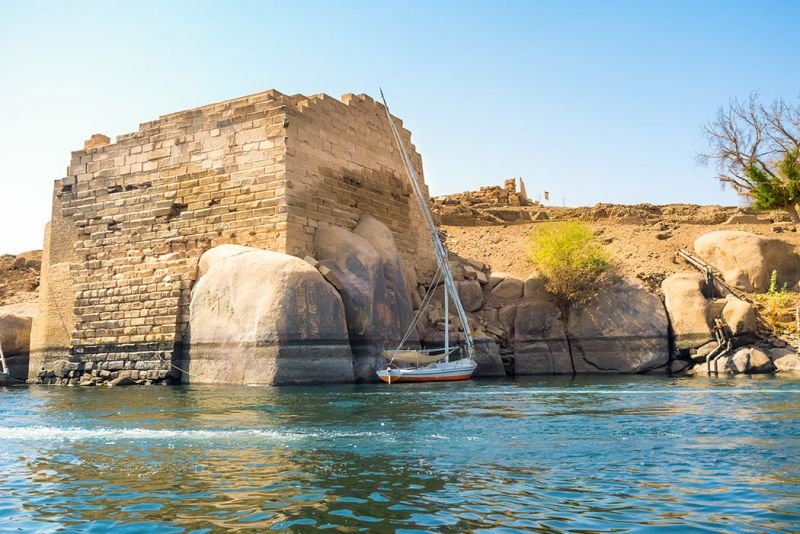
Elephantine Island
Elephantine Island: The Ancient Heart of Aswan and Gateway to Nubian Heritage
Rising gracefully from the glimmering waters of the Nile, Elephantine Island sits like a timeless sentinel guarding southern Egypt’s secrets. Located opposite modern-day Aswan, this captivating island is steeped in history that stretches back to the very dawn of Egyptian civilization. Often hailed as one of the oldest inhabited sites in Egypt, Elephantine Island once formed the critical frontier between ancient Egypt and Nubia, embodying centuries of cultural exchange, trade, and myth. Its strategic position, breathtaking scenery, and deep-rooted mythology make it a must-see for travelers seeking to experience Egypt beyond the pyramids.
Long before pharaohs built grand temples or established mighty capitals, Elephantine stood as a bustling trading post and religious center dedicated to Khnum, the ram-headed god who was believed to control the flow of the Nile. The island’s granite rocks, resembling elephants bathing in the water, gave rise to its name and immortalized it in countless historical records. Walk its paths today, and you can almost feel the pulse of ancient life echoing through the ruins, temples, and traditional Nubian houses that continue to thrive.
Visitors arriving on Aswan Day Tours often find that Elephantine Island offers something unique — an intimate glimpse into a world where myth meets history. With a mix of archaeological wonders, living Nubian culture, and serene river landscapes, the island provides a profound contrast to Egypt’s desert-bound monuments. It’s where modern exploration meets authentic experiences, where time seems to halt, allowing every traveler to breathe in the essence of an ancient civilization still alive in spirit.
The Origins and Mythology of Elephantine Island
Elephantine Island’s story begins thousands of years ago, long before the rise of the great kingdoms. Ancient Egyptians believed it was the very source of the Nile, a mystical place where the god Khnum guarded the river’s waters. This spiritual symbolism made the island sacred ground, attracting priests, travelers, and rulers alike. Archaeological evidence found here includes pre-dynastic pottery, tools, and artifacts indicating that it served as a major settlement even before Egypt’s unification.
In the heart of the island, the ruins of the Temple of Khnum evoke an era when worship of this deity was central to life in Aswan. The island’s granite, used for constructing colossal monuments across Egypt, earned it vital economic importance. Some historians even refer to Elephantine as Egypt’s original “gate to the South,” the first line of defense against Nubian invasions and a control point for trade and taxation.
Strategic Importance in Ancient Times
Elephantine’s location at the First Cataract made it an essential military and administrative outpost. It marked the southern boundary of Pharaonic Egypt and served as the entryway for gold, ivory, incense, and exotic goods from Nubia and beyond. The governors stationed here were tasked with overseeing southern trade, maintaining defenses, and securing Egypt’s resources. Their tombs, carved in nearby cliffs, stand as testaments to Elephantine’s once grand political stature.
Modern travelers retracing these ancient footsteps can include Elephantine on itineraries that blend culture and discovery, such as the 4 Day 3 Night Nile Cruise from Aswan to Luxor, which unveils the mysteries along this stretch of the Nile.
The Temples and Archaeological Treasures of Elephantine Island
Elephantine Island boasts an array of archaeological marvels that continue to captivate both scholars and explorers. The site’s archaeological park is home to temples dedicated to Khnum, Satet, and Anuket—the triad of deities symbolizing the Nile’s fertility. These temples, constructed over successive dynasties, reveal how the island evolved from a local religious hub into a center of state significance. Walls covered with inscriptions and carvings bear witness to offerings, rituals, and royal decrees that defined everyday life.
The famous Nilometer, a stone structure once used to measure the Nile’s flooding, remains one of the best-preserved examples in all of Egypt. This instrument allowed priests to predict flood levels that would determine agricultural cycles and taxation policies. Its steps, etched with centuries of use, whisper tales of observation, patience, and reverence for the life-giving river.
For travelers fascinated by ancient architecture, exploring Elephantine Island complements visits to other monumental sites such as the Temple of Philae and the Unfinished Obelisk, both located just a short distance away. Together, they showcase Aswan’s pivotal role in shaping Egypt’s spiritual and cultural identity.
The Living Nubian Culture on Elephantine Island
What makes Elephantine Island so special today isn’t just its ruins—it’s also the living community that calls it home. Modern Nubian families, direct descendants of ancient inhabitants, continue to preserve their traditions through colorful houses, music, and storytelling. Visitors often remark that stepping into the Nubian villages feels like walking into a painting filled with vibrant blues, yellows, and reds, each color symbolizing a facet of life or faith.
Those exploring cultural dimensions can connect this experience with the Nubian Village nearby or embark on a Trip to the Nubian Villages by boat. Locals welcome visitors with traditional tea, folklore performances, and insights into their heritage, creating moments that linger far beyond the journey itself.
Scenes of Modern Serenity and Artistic Life
Beyond its ruins and myth-laden stones, Elephantine Island thrives as a sanctuary of peace. The island’s serene palm groves and gentle breeze present a striking contrast to bustling Aswan city. Artists and scholars are drawn here to capture its timeless beauty, making it a hub for creativity and quiet reflection. It’s easy to lose track of time while strolling through its village lanes, where every smile and gesture speaks of hospitality and resilience dating back millennia.
Visitor Experience and Travel Guide to Elephantine Island
Elephantine is remarkably easy to access. Small ferries shuttle visitors from Aswan’s main wharf in just minutes. Once on the island, travelers can explore at their own pace or hire a local guide who weaves stories around the ruins. The Aswan Museum, located on-site, exhibits a stunning collection of artifacts including pottery, tools, and statues unearthed from Elephantine, providing deeper context for what visitors see among the ruins.
For those seeking deeper immersion, packages such as Egypt Vacation Packages or Luxury Egypt Tours can include exclusive guided walks of Elephantine led by expert Egyptologists. Combining Elephantine with nearby heritage sites like the Aswan City and Abu Simbel Temples enriches the cultural tapestry of any southern Egypt journey.
Many Nile itineraries, including the elegant Steigenberger Minerva Nile Cruise, make Elephantine Island a highlight stop, allowing travelers to admire it from the water—an unforgettable sight, especially during sunset when the Nile’s reflections paint the island in soft amber light.
Best Time to Visit and Travel Tips
The ideal time to visit Elephantine Island is between October and April, when temperatures remain comfortable for walking and exploring. Early mornings bring golden light perfect for photography, while late afternoons offer tranquil views and cooler breezes. Travelers are encouraged to wear comfortable shoes, bring sun protection, and carry cash for local crafts and small refreshments. Photography enthusiasts will find the island particularly photogenic during Nile cruises from Aswan to Luxor, especially aboard boutique vessels like the Luxury Dahabiya Nile Cruise.
The Timeless Legacy of Elephantine Island
Elephantine Island stands as a bridge — between ancient and modern, myth and reality, Egypt and Nubia. Its stones have watched the rise and fall of empires, yet its essence remains unchanged: a sanctuary where the Nile whispers of eternity. Exploring Elephantine offers more than sightseeing; it’s an encounter with Egypt’s soul, distilled in one breathtaking location. Whether through archaeological curiosity, spiritual reflection, or cultural immersion, every traveler leaves this island carrying a piece of its magic home.
Frequently Asked Questions About Elephantine Island
What is Elephantine Island famous for?
Elephantine Island is renowned for being one of Egypt’s oldest inhabited areas, its temples dedicated to the god Khnum, and its role as a frontier post between ancient Egypt and Nubia. It’s also known for its well-preserved Nilometer, charming Nubian villages, and breathtaking views across the Nile.
Where is Elephantine Island located?
Elephantine Island lies in the Nile River, just opposite modern Aswan in southern Egypt. It forms part of Upper Egypt’s Aswan Governorate and is surrounded by smaller islands that add to its scenic charm.
How can visitors reach Elephantine Island?
Visitors can reach Elephantine Island by taking a short ferry ride from Aswan’s Corniche. The boat trip takes only a few minutes and offers stunning river views. Some Nile cruises and private Egypt Private Tours also include stops at the island.
What are the main attractions on Elephantine Island?
Main attractions include the temples of Khnum, Satet, and Anuket, the Aswan Museum, the Nilometer, and the vibrant Nubian villages. Each site reveals a unique layer of history, spirituality, and modern Nubian culture that together define the island’s distinctive character.
Is Elephantine Island worth visiting?
Absolutely! Elephantine Island offers an intimate and peaceful escape filled with history, culture, and natural beauty. Whether you’re fascinated by ancient temples, intrigued by living Nubian traditions, or simply seeking scenic relaxation, it’s one of the most rewarding experiences to include in a journey through Best Nile River Cruises or Egypt Day Tours.
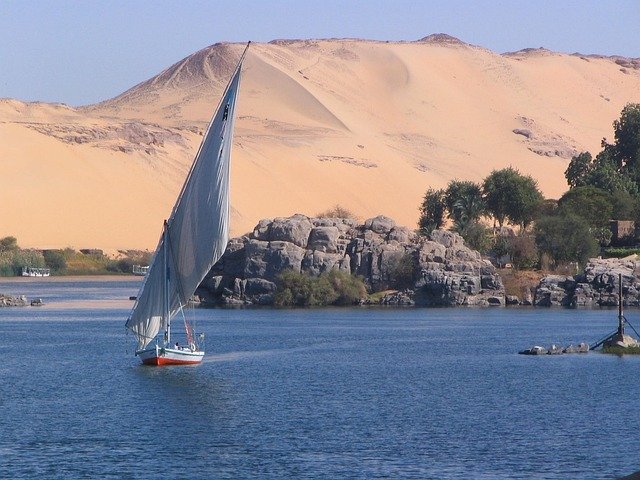
Aswan City
Aswan City – The Jewel of the Nile and the Gateway to Ancient Nubia
Nestled in the heart of southern Egypt, Aswan City stands like a sun-soaked masterpiece where history, culture, and the tranquil flow of the Nile converge. Its timeless charm blends together the serenity of Nubian traditions, breathtaking natural beauty, and marvels of ancient civilization. Known historically as ‘Swenett,’ Aswan was once Egypt’s strategic frontier and the source of the finest granite used to build some of the country’s most iconic monuments, including obelisks and temples. Today, the city still captivates travelers seeking a blend of relaxation and exploration along the world’s longest river. Flowing gently through clusters of islands and framed by golden dunes, the Nile at Aswan reveals Egypt at its most poetic.
The city’s captivating landscapes and inviting warmth create a perfect balance between adventure and tranquility. Visitors can embark on scenic felucca rides, explore majestic temples such as Philae, and bask in the vibrant Nubian culture that pulses through brightly painted villages. On top of that, Aswan is the departure point for some of Egypt’s most remarkable excursions, including the awe-inspiring Abu Simbel Temples. Whether one wanders through colorful markets or drifts along the Nile during sunset, every corner of Aswan feels like a passage through time—a living tapestry woven with legends, smiles, and the golden glow of southern Egypt’s sun.
Aswan’s Historical Significance and Ancient Heritage
Aswan City’s roots stretch deep into antiquity, serving as a critical outpost and trade hub for ancient Egypt. As the southernmost city before entering Nubia, it was a bustling market where Egyptian and African merchants exchanged gold, ivory, and spices. Its granite quarries gave birth to the exquisite works of pharaohs — from massive obelisks to intricate statues. Visitors today can still admire the Unfinished Obelisk, a striking testament to ancient engineering brilliance. This colossal monument, left incomplete due to a crack, reveals the sophisticated techniques and ambition of Egyptian builders.
Meanwhile, the nearby Temple of Philae tells an enchanting story of devotion to the goddess Isis. Relocated to Agilkia Island after the construction of the High Dam, it preserves the spirit of ancient faith and artistry. Each carved relief and hieroglyph speaks volumes about Egypt’s religious history. Walking through its columned halls feels like stepping into another era, where mythology and craftsmanship were seamlessly intertwined. Aswan’s position on the Nile also made it strategically important, serving as both a defensive stronghold and a spiritual gateway between Egypt and Africa.
The Modern High Dam and Lake Nasser’s Grandeur
Aswan’s destiny transformed in the 20th century with the creation of the High Dam of Egypt, a monumental feat of modern engineering. This mighty dam not only controlled the Nile’s floodwaters but also gave rise to Lake Nasser, one of the largest man-made lakes on Earth. The dam ushered in economic growth by providing hydroelectric power and ensuring agricultural stability across Egypt. Yet, it also submerged ancient temples—a loss mitigated by global efforts to relocate these treasures, notably Philae and Abu Simbel temples.
Lake Nasser’s sweeping expanse offers a surreal contrast to the arid sands surrounding it. Cruising on this tranquil lake reveals architectural gems such as the Temple of Kalabsha and the Nubian Museum, both preserving the region’s rich cultural tapestry. Exploring this area deepens one’s appreciation for the balance between preservation and progress—between ancient wonders and modern ambitions that define Aswan today.
The Enchanting Nubian Culture and Villages
At the heart of Aswan lies its vibrant Nubian heritage, a colorful fusion of art, music, and tradition. Nubian villages, painted in vivid blues, yellows, and terracottas, line the banks of the Nile, each telling stories of resilience and warmth. The Nubian Village invites travelers to experience this unique culture firsthand. From aromatic Nubian cuisine to handmade crafts and rhythmic drumming, these communities embody the soul of Upper Egypt.
Visitors often enjoy a serene boat trip to these villages, sometimes included in guided excursions such as the Trip to the Nubian Villages by Boat. There, one can sip hibiscus tea with locals, learn about Nubian myths, or even hold a baby crocodile—a symbolic animal in their folklore. This authentic cultural immersion deepens the emotional bond travelers form with Aswan, making the experience more meaningful than any postcard view.
Nile Cruises and the Timeless Beauty of River Voyages
Aswan serves as the departure point for some of Egypt’s most cherished river journeys. Embarking on a traditional or luxury cruise from Aswan to Luxor reveals the lush green landscapes, ancient temples, and sleepy villages that frame the Nile’s banks. Popular sailings such as the 4 Day 3 Night Nile Cruise from Aswan to Luxor or a Dahabiya Nile Cruise offer a floating journey through history.
Gliding past landmarks like Kom Ombo and Edfu Temples, travelers witness the evolution of Egyptian architecture and mythology. The gentle rhythm of the river provides a soothing escape, while the sunsets in Aswan remain unmatched—bathing the sandstone hills in hues of gold and rose. Among the various cruise options, the Luxury Dahabiya Nile Cruise combines comfort and authenticity, creating an unforgettable voyage of elegance and discovery.
Top Attractions in Aswan City
Aswan brims with treasures both ancient and modern, waiting to be explored. The Day Tour of Aswan, Philae Temple, High Dam and Obelisk provides an immersive introduction to its glory. Another highlight is the Elephantine Island, believed by ancient Egyptians to mark the source of the Nile’s annual flood. This island hosts archaeological wonders like the Temple of Khnum and the ancient Nilometer. The tranquil Felucca Ride on the Nile in Aswan is another must-do activity offering intimate encounters with local life, especially as the orange sunset melts into the water’s reflection.
Beyond its monuments, Aswan’s bustling souq seduces sightseers with spicy aromas, handmade jewelry, and vivid textiles. It’s the perfect place to pick up souvenirs steeped in Nubian artistry. Whether you explore the Aswan Day Tours or take the Aswan City Tour in Horse Carriage, you’ll uncover hidden gems layered with history and hospitality.
When to Visit Aswan and How to Enjoy It
The best time to visit Aswan City is between October and April, when pleasant temperatures make outdoor exploration delightful. During this period, the mild winter sun casts a soft, golden hue over the landscape, ideal for photography and sightseeing. Visitors often pair their trip with nearby Luxor Day Tours or even extended Egypt Vacation Packages that combine Aswan’s serenity with Cairo’s grandeur.
For travelers seeking seamless logistics, opting for services like Aswan Transfers ensures smooth travel to and from major landmarks. Those craving a complete southern Egypt experience can also join the 2 Days Aswan and Abu Simbel Tour from Luxor. From sunrise temple visits to romantic evening cruises, every moment in Aswan invites serenity and wonder.
FAQs about Aswan City
What makes Aswan City unique compared to other Egyptian destinations?
Aswan’s allure lies in its calm charm, striking Nile views, and deeply rooted Nubian culture. Unlike Cairo’s chaos or Luxor’s grandeur, Aswan offers harmony and authenticity. Its blend of heritage, vibrant colors, and relaxed pace gives it a character all its own.
Can I visit Abu Simbel from Aswan?
Absolutely. Many travelers take a Day Trip to Abu Simbel from Aswan by coach, while others choose overnight cruises or flights. It’s one of the most awe-inspiring temple complexes in Egypt, dedicated to Ramses II and Queen Nefertari.
What are the must-see attractions in Aswan?
Don’t miss the Philae Temple, the High Dam, Unfinished Obelisk, and Elephantine Island. Top cultural destinations include the Nubian Museum and picturesque Nubian villages. Each embodies a piece of Aswan’s rich story.
Is a Nile cruise from Aswan worth it?
Definitely! Cruising from Aswan offers a front-row view of Egypt’s timeless landscapes, connecting the temples of Kom Ombo, Edfu, and Luxor. The Luxury Nile Cruise options provide modern comfort with historical immersion.
How can I best experience local Nubian culture?
To experience authentic Nubian hospitality, visit a local village, enjoy traditional meals, and listen to folk music. Cruises and guided day trips often include a Trip to the Nubian Villages by Boat, creating intimate cultural encounters.
Aswan City remains Egypt’s southern soul — where every sunset tells a story, every smile welcomes you home, and every ancient stone whispers the secrets of the Nile. For travelers seeking enchantment, history, and peace, Aswan is more than a destination — it’s an experience of a lifetime.
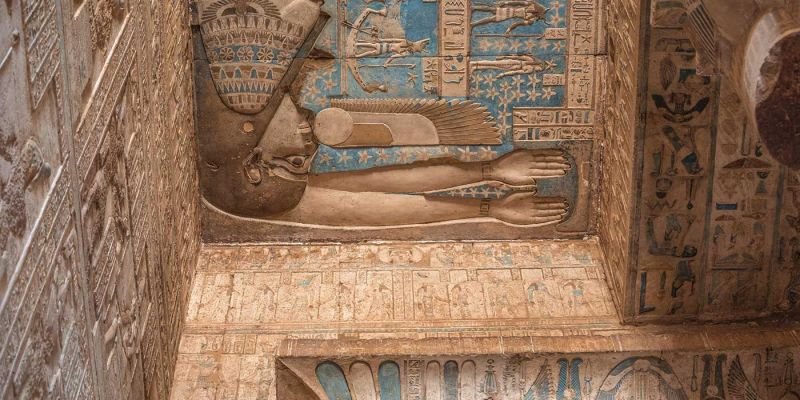
Temple of Hathor (Dendera complex)
Temple of Hathor at Dendera – A Timeless Gem of Ancient Egyptian Spirituality
Standing proudly on the western bank of the Nile in Qena Governorate, the Temple of Hathor at Dendera is one of Egypt’s most mesmerizing archaeological treasures. Dedicated to Hathor, the goddess of love, music, beauty, and motherhood, this temple reflects the profound artistry and spiritual symbolism of ancient Egyptian civilization. The Dendera complex, part of the larger Dendera Temple Complex, offers visitors an enchanting experience rich with mythological narratives, intricate carvings, and awe-inspiring astronomical significance. Whether you’re a history buff, culture enthusiast, or traveler captivated by Egypt’s charm, this ancient sanctuary delivers a spectacle like no other.
Unlike many temples that suffered from natural decay or human interference, the Temple of Hathor stands remarkably well-preserved. Its colossal columns, intricately painted ceilings, and sacred crypts reveal the depth of devotion ancient Egyptians felt for their goddess. Every wall here seems alive, echoing melodies played thousands of years ago in honor of Hathor, often seen as the protector of joy and harmony. This sacred site is not just another monument—it’s a poetic masterpiece where myth and mystery converge in architectural perfection.
Today, traveling to Dendera is easier than ever. Many Luxor Day Tours and Nile Cruise itineraries include this extraordinary temple. Whether you embark on a 4 Day 3 Night Nile Cruise from Aswan to Luxor or choose a Private Tour to Dendera and Abydos from Luxor, stepping into the Temple of Hathor feels like entering a living time capsule where divine energy still hums beneath the sandstone walls.
The History and Construction of the Temple of Hathor at Dendera
The Temple of Hathor showcases an evolution of Egyptian architecture spanning pharaonic, Ptolemaic, and Roman eras. Although its foundations trace back to Old Kingdom times, the present structure was primarily built during the reign of Ptolemy XII and completed by the Roman Emperor Tiberius. The temple pays homage not only to the goddess herself but also to the concept of universal balance—Hathor being the divine mother who bridges heaven and earth.
Architecturally, Dendera embodies symmetry and spirituality. The main temple, surrounded by mudbrick walls, houses inner sanctuaries, hypostyle halls, osirian chapels, and even underground crypts used for sacred relics. The hypostyle hall alone boasts 24 columns, each crowned with a stunning Hathor-headed capital, symbolizing her watchful presence throughout the complex. Colorful ceiling panels depict celestial deities and astronomical scenes, including the renowned Dendera Zodiac, a masterwork illustrating the ancient Egyptians’ understanding of the cosmos.
Visitors today can wander through passageways once reserved for the high priestess of Hathor, ascend stairways leading to the temple roof, and marvel at ritual rooms where sacred ceremonies were held under moonlit skies. The craftsmanship reveals exceptional precision, blending hieroglyphic narratives with divine symbolism that continues to captivate modern Egyptologists and travelers alike.
Mythological Importance of Hathor in Ancient Egypt
Hathor’s cult flourished for millennia due to her wide-ranging influence in daily life and spirituality. She was known as the ‘Mistress of the West,’ greeting souls into the afterlife, and the celestial ‘Lady of the Stars,’ connecting earthly beauty with the eternal heavens. Myths link her closely with Ra, the sun god, and Horus, son of Isis and Osiris. In essence, Hathor represented the feminine divine—nurturing yet powerful, sensual yet sacred.
In this temple’s reliefs, Hathor is depicted nursing Horus, dancing among sistrums, or blessing pharaohs with eternal love. Such images transcend mere decoration; they mirror society’s belief in divine reciprocity and joy through devotion. The Dendera complex, therefore, stood not only as a sanctuary but also as a cosmic stage where divine drama and human life intertwined seamlessly.
The Dendera Zodiac – Celestial Marvel of the Temple
One of Dendera’s most fascinating artifacts, the Dendera Zodiac, once adorned the ceiling of a chapel dedicated to Osiris on the temple’s roof. Its celestial map features an exquisite circular design depicting constellations such as Leo, Taurus, and Aries. It’s an astronomical treasure that reveals how ancient Egyptians aligned cosmic patterns with their gods and rituals. Although the original artifact now resides in the Louvre Museum, a perfect replica remains at Dendera, providing visitors insight into the civilization’s early understanding of astrological cycles.
Astrologers, historians, and even modern travelers find this zodiac compelling for its symbolic depth and artistic finesse. It encapsulates a worldview in which divinity and the universe operated in unity—an idea that echoes through Egyptian religion, philosophy, and architecture across centuries. Many travelers pair their exploration of this masterpiece with a Nile Cruise from Luxor to Aswan to explore other temples like Temple of Hatshepsut, Edfu Temple, and Kom Ombo Temple—each representing different aspects of divine philosophy.
Rituals and Festivals in the Temple of Hathor
Every year, ancient priests celebrated the Festival of the Beautiful Reunion, when the statue of Hathor from Dendera traveled by boat along the Nile to meet Horus in Edfu. This grand event symbolized divine marriage and cosmic harmony, filling the riverbanks with music, dance, and offerings. The temple’s halls once echoed with chants and the rhythmic rattle of sistrums dedicated to Hathor’s joy. Today, while the rituals have ceased, you can almost hear the echoes of devotion in the still air—proof of the goddess’s enduring influence on Egypt’s spiritual identity.
Exploring the Sacred Architecture and Underground Crypts
The Temple of Hathor isn’t just visually stunning—it’s steeped in mystery beneath its surface. The crypts beneath the temple floor contain hieroglyphic reliefs illustrating sacred symbols, such as the famous “Dendera Light” carvings, interpreted by some as representations of divine energy or the creation myth itself. Each figure and inscription in these chambers carried religious significance intended only for the eyes of priests.
Ascending to the temple’s rooftop reveals chapels dedicated to Osiris, with breathtaking celestial frescoes and offering tables used during ancient ceremonies. These spaces were designed for rituals celebrating the resurrection of Osiris, emphasizing life, death, and rebirth—themes central to both Hathorian and Osirian cults.
Visiting the Temple of Hathor Today
Whether you’re exploring Egypt Day Tours or embarking on extended Egypt Vacation Packages, visiting Dendera is a must-do. Located approximately 60 km north of Luxor, it’s accessible via scenic Nile journeys or organized excursions. Many visitors prefer combining Dendera with Abydos, another sacred site revered for its Temple of Seti I. These twin temple visits provide an in-depth look into Egypt’s ancient theology and architectural mastery.
Modern travelers often comment on the calm atmosphere compared to more crowded sites like Karnak or Luxor Temple. Here, you can wander leisurely, marvel at intricate ceiling paintings still vivid after two thousand years, and even photograph the Hathor-headed capitals glowing under golden sunlight. A stop in Dendera allows you to step beyond tourist circuits and experience the serene heart of ancient Egyptian religion. It’s no surprise that it’s a highlight on routes like the 7 Days Cairo and Nile Cruise Package or 11 Days Luxury Egypt Tour Package.
Best Time to Visit and Travel Tips
The ideal season for exploring the Dendera complex is from October to April when temperatures are mild, making archaeological tours more comfortable. Morning visits allow travelers to enjoy unobstructed sunlight streaming through columns, enhancing the vividness of reliefs and carvings. Guides with expertise in hieroglyph interpretation bring the walls to life with fascinating legends, while photographers capture the temple’s luminous artistry against the Nile backdrop.
Including Dendera in your itinerary, along with a stop at Abu Simbel Temples or Luxor Temple, enriches any cultural tour of Egypt. Combining sacred sites gives you a perspective on how religion shaped dynastic rule, art, and astronomy across centuries. For the ultimate experience, consider pairing your temple tour with a Luxury Dahabiya Nile Cruise to witness these wonders from the gentle waters of the Nile itself.
FAQs about the Temple of Hathor at Dendera
1. Where is the Temple of Hathor located?
The Temple of Hathor is located in Dendera, about 60 kilometers north of Luxor, on the west bank of the Nile River in Qena Governorate, Egypt. It’s part of the magnificent Dendera Temple Complex, which also includes smaller chapels and shrines dedicated to other deities.
2. Why was the Temple of Hathor built?
The temple was constructed to honor Hathor, goddess of love, joy, motherhood, and music. It served as a major center for her worship and hosted annual festivals such as the Beautiful Reunion, symbolizing her union with Horus from Edfu. The complex also housed rituals tied to fertility and cosmic balance.
3. What makes the Temple of Hathor unique among Egyptian temples?
Unlike other temples, Dendera’s structure features exceptional preservation and incredibly detailed ceiling art. The Dendera Zodiac, intricate crypt reliefs, and the richly colored astronomical scenes make it a standout example of spiritual architecture and cosmic symbolism.
4. Can visitors enter the underground crypts?
Yes, some crypts beneath the Temple of Hathor are open to visitors under supervision. They reveal sacred reliefs and symbolic carvings that portray religious rituals and cosmic themes. Access depends on preservation conditions and tour permissions.
5. How can travelers visit the Temple of Hathor from Luxor?
Most travelers take guided excursions from Luxor, often as part of Luxury Egypt Tours or Egypt Private Tours. You can also book a Day Tour from Luxor or an extended cruise itinerary that includes Dendera and Abydos. These organized journeys provide historical insights while ensuring comfort and convenience.