Karnak Temple: Exploring the Majestic Heart of Ancient Egypt
Set on the east bank of the Nile River in Luxor, Karnak Temple stands as one of the most awe-inspiring and historically significant monuments of ancient Egypt. Spanning over two millennia of continuous construction, expansion, and reverence, the temple complex is a testament to the religious, architectural, and cultural achievements of the pharaohs. For travelers seeking to immerse themselves in the grandeur of the ancient world, Karnak Temple offers an unforgettable journey through the corridors of history, mythology, and artistry.
A Brief History of Karnak Temple
The origins of Karnak Temple date back to the Middle Kingdom, around 2000 BCE, with significant expansions occurring throughout the New Kingdom and later periods. The complex was primarily dedicated to Amun-Ra, the king of the gods, but also honored his consort Mut and their son Khonsu, forming the Theban Triad. Over thirty pharaohs contributed to its construction, including the illustrious Hatshepsut, Seti I, and Ramses II. The result is a sprawling site filled with temples, chapels, pylons, and obelisks that chart the evolution of ancient Egyptian religion and power.
Architectural Marvels of the Great Hypostyle Hall
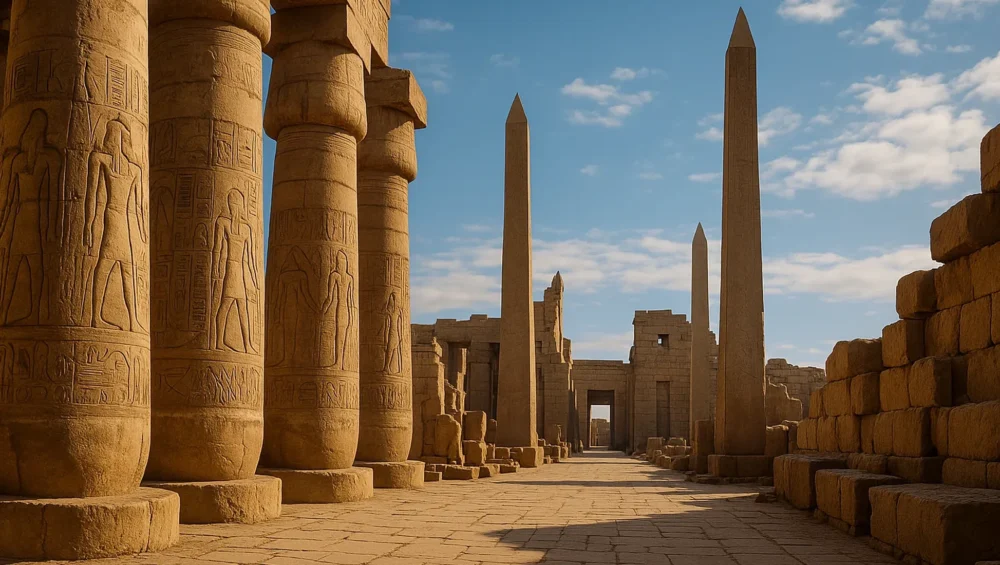
One of the most iconic features of Karnak Temple is the Great Hypostyle Hall, an immense forest of 134 massive columns arranged in 16 rows. This architectural wonder covers an area of 5,000 square meters and was constructed primarily during the reigns of Seti I and his son Ramses II. The central columns soar to a height of 21 meters, their capitals intricately carved with papyrus designs, symbolizing creation and rebirth. Walking through this hall, visitors are dwarfed by the scale and artistry, with sunlight filtering through the spaces between the columns and illuminating the vibrant reliefs that adorn their surfaces.
The Sacred Lake and Ritual Purification
Within the precincts of Karnak lies the Sacred Lake, a large rectangular pool used by priests for ritual purification before performing temple ceremonies. The lake, fed by the Nile, was believed to embody the primordial waters of creation. Today, the calm surface reflects the temple’s towering columns and obelisks, offering a tranquil space for visitors to contemplate the spiritual significance of the site. Nearby, the remains of a large granite scarab dedicated to the god Khepri are believed to bring good luck to those who circle it seven times, a tradition still followed by many visitors.
The Avenue of Sphinxes: Linking Karnak and Luxor
Stretching over two kilometers, the Avenue of Sphinxes once connected Karnak Temple with the Luxor Temple to the south. This processional way was lined with hundreds of sphinx statues, each with the body of a lion symbolizing strength and the head of a ram honoring Amun. The avenue was used during the annual Opet Festival, when statues of the gods were paraded between the two temples in a grand display of religious devotion. Recent restoration efforts have uncovered and restored much of this ancient road, allowing visitors to walk in the footsteps of pharaohs and priests.
Obelisks and Pylons: Symbols of Power and Divinity
Karnak Temple is renowned for its towering obelisks, particularly those erected by Hatshepsut and Thutmose I. These monolithic structures, carved from a single piece of pink granite, were inscribed with hieroglyphs praising the gods and the pharaohs’ achievements. Obelisks were believed to be petrified rays of the sun god Ra, connecting earth and sky. The temple’s massive pylons, or gateways, are another defining feature, each marking the entrance to a new sacred space and adorned with scenes of royal triumphs and offerings to the gods.
Exploring the Temple Precincts
The Karnak complex is divided into several precincts, the largest and most visited being the Precinct of Amun-Ra. Here, travelers can explore a labyrinth of chapels, sanctuaries, and shrines, including the Festival Hall of Thutmose III, the Temple of Ptah, and the Temple of Khonsu. Each precinct offers unique insights into the religious practices and architectural innovations of different dynasties. The less-visited Precinct of Mut and the Precinct of Montu provide quieter spaces for exploration and reflection, away from the crowds.
Visitor Experience: Tips for Touring Karnak Temple
To make the most of your visit to Karnak Temple, consider arriving early in the morning or late in the afternoon to avoid the midday heat and crowds. Guided tours are highly recommended, as knowledgeable guides can bring the temple’s art and history to life with stories of gods, pharaohs, and ancient rituals. Wear comfortable shoes, as the site is expansive and involves considerable walking over uneven terrain. Don’t forget to bring water, sun protection, and a camera to capture the breathtaking vistas, especially during the golden hour when the stone glows with a warm, ethereal light.
The Sound and Light Show: A Nighttime Spectacle
One of the most popular experiences at Karnak Temple is the Sound and Light Show, held nightly against the backdrop of the ancient ruins. Through dramatic lighting, narration, and music, the show recounts the history of Thebes, the rise of the pharaohs, and the construction of Karnak. The illuminated columns and statues cast long shadows, creating a mystical atmosphere that transports visitors back in time. It’s a unique way to experience the temple after dark and gain a deeper appreciation for its enduring legacy.
Nearby Attractions and Planning Your Visit
Karnak Temple is just one of many remarkable sites in Luxor, often referred to as the world’s greatest open-air museum. After exploring Karnak, travelers can visit the nearby Luxor Temple, the Valley of the Kings, the Temple of Hatshepsut, and the Luxor Museum. The city offers a range of accommodations, from luxury hotels with Nile views to charming guesthouses in the old town. Most visitors access Karnak via taxi, tour bus, or even horse-drawn carriage from central Luxor. The temple is open daily, with extended hours during peak tourist seasons.
Frequently Asked Questions
What is the best time of year to visit Karnak Temple?
The best time to visit Karnak Temple is from October to April, when temperatures are cooler and more comfortable for exploring the outdoor site. Early mornings and late afternoons also offer pleasant conditions and beautiful lighting for photography.
How much time should I allocate for a visit to Karnak Temple?
Most visitors spend between two and three hours exploring Karnak Temple, but history enthusiasts may wish to stay longer to fully appreciate the details and atmosphere. Guided tours typically last about two hours.
Is Karnak Temple accessible for people with mobility issues?
While some areas of Karnak Temple have uneven ground and steps, there are sections that are relatively accessible. However, visitors with mobility challenges should be prepared for limited access to certain parts of the complex.
Are there facilities such as restrooms and refreshments available at the site?
Yes, there are restrooms and small kiosks near the entrance where visitors can purchase water and snacks. It’s advisable to bring your own water, especially during the hotter months.
Can I take photographs inside Karnak Temple?
Photography is permitted throughout most of Karnak Temple, except in certain restricted areas. Tripods may require special permission. The early morning and late afternoon light is ideal for capturing the temple’s dramatic architecture.
Is a guide necessary for visiting Karnak Temple?
While it’s possible to explore Karnak independently, hiring a licensed guide is highly recommended. Guides provide valuable context, historical background, and help visitors understand the significance of the temple’s art and inscriptions.