The Majestic Habu Temple: A Testament to Ancient Egyptian Grandeur
On the west bank of Luxor stands the awe-inspiring Habu Temple, officially known as the Mortuary Temple of Ramesses III. This architectural marvel serves as both a symbol of divine power and a glimpse into the glory days of ancient Thebes. For centuries, its walls have whispered stories of conquests, religious rituals, and daily life under one of Egypt’s greatest pharaohs. Habu Temple isn’t just another archaeological site; it’s a monumental book written in stone—a chronicle carved in hieroglyphs celebrating the eternal might of Ramesses III. Every inch breathes history, from its towering pylons to its detailed reliefs that depict epic battles against foreign invaders. The sheer scale and artistry here make visitors stop mid-step in absolute awe.
Unlike many other ancient temples, Medinet Habu (as it’s known locally) preserves its structure remarkably well. Step through its colossal entrance, and you’re immediately surrounded by vibrant scenes of triumph, colorful frescoes, and sculpted columns that tell a thousand tales. The temple was not merely a mortuary shrine—it was an entire complex, complete with royal palaces, workshops, storehouses, and housing for priests. It became a hub of activity, a vital center for worshiping Amun and commemorating the king’s divine legacy. Today, travelers who choose immersive Luxor Day Tours often consider this hidden gem among their top stops, marveling at its preserved beauty and historical depth. Whether you’re a history buff, a photography enthusiast, or simply captivated by ancient culture, Habu Temple delivers a soul-stirring encounter with Egypt’s past unlike anywhere else.
Origins of Habu Temple and the Vision of Ramesses III
Built during the reign of Ramesses III of Egypt’s 20th Dynasty, the Habu Temple reflects not only Egypt’s devotion to the gods but also the pharaoh’s determination to immortalize his victories. Modeled partly after the mortuary temple of Ramesses II at the Ramesseum, this colossal monument became the pharaoh’s statement of divine right and resilience. Construction began around 1186 BCE and continued for years, evolving into a fortified temple-town designed to withstand both time and turmoil.
Ramesses III, remembered as one of the last great warrior kings, used Habu Temple to enshrine his achievements, particularly his legendary triumphs over the Sea Peoples and Libyan incursions. Walls bursting with vivid reliefs depict naval skirmishes, scenes of tribute, and processions honoring Amun, the god of creation. The pharaoh stands amidst gods, crowned and serene, asserting both mortal strength and divine favor. For anyone exploring the rich tapestry of Luxor City, understanding Habu’s origin deepens appreciation for Egypt’s astounding continuity of art, religion, and power.
Architectural Mastery: Design and Layout of Habu Temple
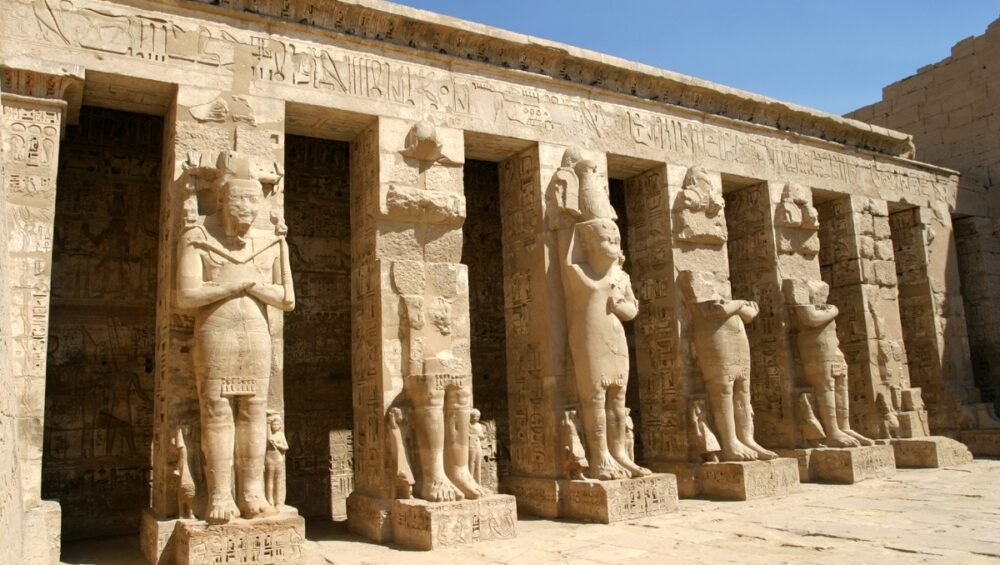
The temple complex at Medinet Habu sprawls across nearly 7,000 square meters, embodying Egyptian precision and grandeur. Its twin pylons rise defiantly against the desert sky, opening into vast courtyards and pillared halls. The first court is ringed by colossal Osiride statues—figures of Ramesses III depicted as Osiris, god of the afterlife. Beyond lies the second court, which once dazzled visitors with colorful murals portraying religious festivals, notably the ‘Festival of Min.’ Each wall radiates the artistic finesse typical of New Kingdom craftsmanship.
The temple’s defensive walls, complete with watchtowers and storerooms, also reveal its role beyond spirituality—it served as a sanctuary and fortress for Theban residents during invasions. While exploring the West Bank with guided experiences like the Day Tour to Ramesseum Temple, Habu Temple, and Nobles Valley, travelers can clearly see how this structure functioned as both a religious and practical masterpiece.
Symbolism and Religious Significance within Habu Temple
The Habu Temple primarily honored Amun, the supreme deity of Thebes, but it also celebrated Ramesses III’s divine connection. Every carving combines scripture, ritual, and homage, reinforcing the pharaoh’s power as god-king. Scenes of offerings to Amun, Mut, and Khonsu line the walls, emphasizing the eternal cycle of life, death, and rebirth. Moreover, unique texts within the temple record festivals where statues of gods were paraded through sacred routes connecting Habu to Luxor and Karnak. These cosmic journeys represented renewal and harmony between gods and kings.
Modern scholars often compare this temple’s religious imagery with that of Temple of Hatshepsut and Ramesseum Temple, underlining Habu’s unparalleled focus on afterlife symbolism. Its spiritual weight attracts not only historians but also travelers seeking deeper meaning beyond mere sightseeing.
Inscriptions, Reliefs, and the Battle Scenes at Habu
One of the temple’s most arresting features is its intricately chiseled battle reliefs—some of the finest in all of Egypt. These depict Ramesses III’s decisive victories against invading forces in dramatic, cinematic sequence. Each figure pulses with energy: chariots wheel forward, archers aim their bows, boats collide amid chaos. Such scenes didn’t merely record warfare—they communicated divine justice and order triumphing over chaos, a key tenet in Egyptian belief. The detailed papyrus boat scenes in the northern pylons remain a marvel for both visitors and archaeologists alike.
These vivid images play an essential role in understanding Egypt’s Late Bronze Age conflicts and the broader geopolitical shifts that followed. Exploring this artistry often encourages visitors to extend their itinerary through curated programs such as the 4 Day 3 Night Nile Cruise from Aswan to Luxor, which gracefully connects iconic temples along the Nile including Medinet Habu.
The Village Around Medinet Habu and Its Historical Continuity
Surrounding Habu Temple once stood a bustling community of priests, artisans, and scribes. In ancient times, the entire area functioned as an administrative hub, known as ‘Djemé.’ Long after the pharaonic period, Coptic Christians built churches amid the ruins, their faith layering new chapters upon old stones. The medieval town’s remnants still blend with Habu’s massive walls, reminding us how history stacks upon itself in living color. Today’s visitors can stroll through this historic precinct, observing how ancient and modern Egypt coexist in seamless harmony.
For those seeking immersive cultural insight, Habu’s setting provides an authentic perspective quite distinct from the grandeur of the Luxor Temple or the sacred serenity of the Valley of the Queens. Witnessing this enduring landscape highlights why Luxor is often called the world’s greatest open-air museum.
Preservation Efforts and the Modern Significance of Habu Temple
Conservation projects at Habu Temple have been ongoing for decades, aiming to protect delicate reliefs and restore original pigment traces. Due to Luxor’s arid climate, many carvings remain well-preserved, but environmental challenges—including tourism pressure and wind erosion—pose risks. Teams from international institutions collaborate with the Egyptian Ministry of Antiquities, employing state-of-the-art technology to preserve the temple’s legacy for future generations.
Visiting Medinet Habu provides not only an aesthetic delight but also a humbling reminder of Egypt’s continuous relationship with its past. Whether you’re taking part in a breathtaking Luxor Hot Air Balloon Ride at sunrise or embarking on a detailed Private tour to the West Bank, the panoramic view of Habu’s monumental design leaves visitors spellbound. The temple remains a cornerstone of Luxor’s cultural identity, an anchor point connecting modern Egypt with its eternal spirit.
Why Visit Habu Temple in Luxor
Many travelers overlook Habu Temple due to its slightly remote setting, yet those who make the journey discover one of Egypt’s best-preserved and least crowded temples. Its tranquil atmosphere contrasts beautifully with the bustling grandeur of Karnak. The low foot traffic allows visitors to linger, take in microscopic details of carving, and capture stunning photos without interruption. Habu Temple’s preservation makes it a must-visit destination for anyone venturing on a Egypt Vacation Package or customizing their Luxury Egypt Tour.
Moreover, its accessibility from central Luxor makes it ideal for blending with nearby excursions, including a relaxing Felucca Ride on the Nile or deeper explorations of Thebes’ royal necropolises. Each visit reveals something new—a faint hieroglyph rediscovered, a restored fresco bursting with ancient color, or simply a quiet courtyard echoing with the whispers of millennia.
Frequently Asked Questions about Habu Temple
1. Where is Habu Temple located?
Habu Temple stands on Luxor’s west bank, in the Theban Necropolis, near other notable landmarks like the Ramesseum and the Colossi of Memnon. It’s approximately seven kilometers from central Luxor, making it easily accessible by car or guided excursion.
2. Who built Habu Temple and why?
The temple was commissioned by Pharaoh Ramesses III of the 20th Dynasty. It served both as his mortuary temple—ensuring worship after death—and as a fortress symbolizing divine kingship and protection of Egypt from external enemies.
3. What makes Habu Temple unique compared to other temples in Luxor?
Unlike other sites, Medinet Habu retains much of its original color and structural integrity. Its vivid battle reliefs, detailed inscriptions, and fortified layout distinguish it as not only a religious site but a historical archive showcasing Egypt’s resilience and artistry.
4. Can visitors explore the interior of Habu Temple?
Yes, visitors can stroll through multiple courtyards, hypostyle halls, and sanctuaries. The paths are well-maintained, and many inscriptions are visible with natural light, offering extraordinary opportunities for photography and reflection. Many guided tours, such as the Private Tour to the East and West Bank of Luxor, include Habu Temple in their itinerary.
5. What’s the best time to visit Habu Temple?
Early morning or late afternoon provides the best lighting for viewing carvings and taking photos. Between October and April, the milder weather makes sightseeing more comfortable. Pairing the visit with a serene Luxor Overnight Tour offers the ideal way to absorb its tranquil beauty without rush.
Conclusion: A Living Legacy of Ancient Egypt
Habu Temple isn’t merely an ancient ruin—it’s a living testament to the genius and spirit of one of Egypt’s most fascinating epochs. Its craftsmanship, scale, and preservation surpass many other monuments from the New Kingdom. To stand within its shadow is to feel the pulse of history—the heartbeat of a civilization that defined eternity itself. Whether you’re traveling via a scenic Luxury Dahabiya Nile Cruise or meandering through Luxor’s timeless west bank, visiting Medinet Habu promises an unforgettable encounter with the sacred power, artistry, and grandeur of ancient Egypt.