
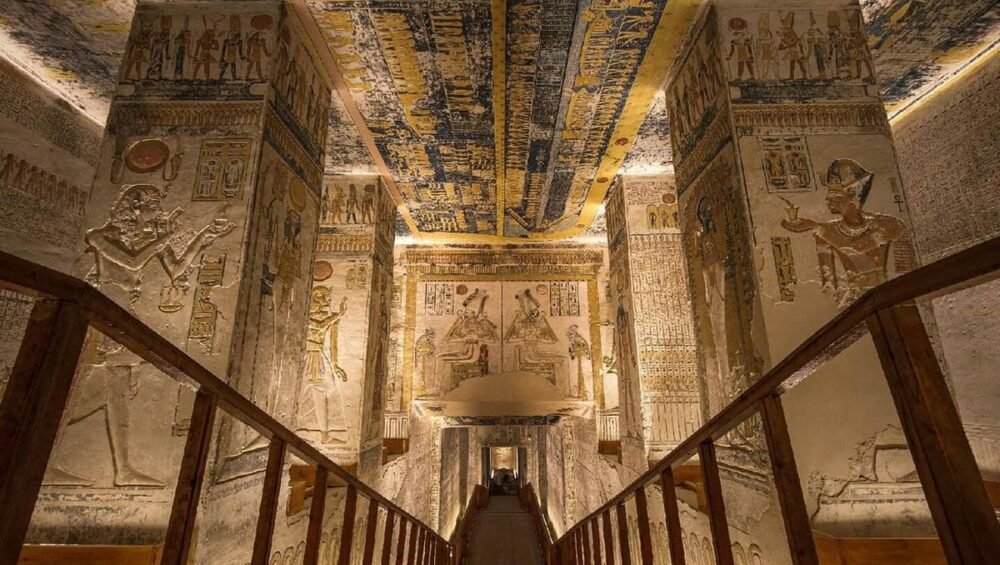
The Tomb of Ramses VI – A Magnificent Masterpiece of the Valley of the Kings
In the sunbaked cliffs of Luxor’s West Bank lies a marvel that epitomizes the grandeur of ancient Egyptian art and belief—the Tomb of Ramses VI. This burial chamber, officially designated as KV9, remains one of the most visited and well-preserved sites in the Valley of the Queens. Originally begun for Pharaoh Ramses V and later usurped and extended by his successor Ramses VI, this tomb offers a remarkable glimpse into the New Kingdom’s religious concepts, cosmology, and artistry. Every inch of its walls and ceilings is a vibrant canvas depicting celestial journeys, divine battles, and eternal rebirth. Visitors stand in awe before the incredible detail that still glows after more than three millennia—proof of ancient Egypt’s unmatched craftsmanship and devotion.
The Tomb of Ramses VI is much more than a monumental resting place; it’s a testament to a civilization’s deep obsession with life after death. Built during the Twentieth Dynasty, around 1145 BCE, this tomb stands out not only for its architectural layout but also for its symbolic messages inscribed in colorful hieroglyphs. Here, the pharaoh’s soul transcends mortality, guided by the sun god Ra and protected by gods like Osiris and Anubis. Its sheer scale, precision, and decorative programs make it one of the crown jewels among the royal tombs scattered throughout Luxor City. A journey inside is like stepping into an ancient storybook where every figure and symbol whispers secrets of eternity.
Origins and Historical Background of the Tomb of Ramses VI
The Tomb of Ramses VI was begun for Ramses V, a lesser-known successor of Ramses IV. However, after Ramses V’s untimely death, his uncle and successor Ramses VI appropriated the tomb, expanded its chambers, and embellished them with his own iconography. This practice wasn’t uncommon; later Pharaohs often reused pre-existing tombs to conserve resources and manpower. The Twentieth Dynasty marked the end of Egypt’s New Kingdom—an era characterized by political instability but also stunning architectural achievements.
Ramses VI’s reign lasted about eight years, a relatively brief but artistically productive period. His tomb was carved deep into the limestone cliffs to ensure preservation and spiritual protection. Positioned prominently in the valley, it even overshadowed the entrance to King Tutankhamun’s Tomb, which lay buried beneath centuries of rubble until its discovery in 1922. The grandeur of KV9’s design represents one of the last architectural triumphs before Egypt’s royal burials ceased in Thebes.
Architectural Layout and Design Symmetry
The layout of the Tomb of Ramses VI follows classic royal tomb architecture—a long descending corridor leading to multiple chambers that culminate in the burial hall. However, KV9’s design surpasses its predecessors in scale and complexity. Visitors first encounter the entrance, decorated with the vivid depiction of the pharaoh paying homage to Ra-Horakhty and Osiris, symbolizing his transition from mortal ruler to divine being. Successive corridors portray the ‘Book of Gates’ and ‘Book of Caverns,’ ancient Egyptian funerary texts illustrating the sun’s nightly journey through the underworld.
The ceilings glimmer with celestial themes. In the first corridor, the goddess Nut stretches across the arched surface, swallowing the sun in the west at dusk and birthing it anew each dawn—a metaphor for resurrection. The burial chamber itself, one of the most spectacular in Egypt, depicts the Book of the Day and the Book of the Night, encasing Ramses in cosmic eternity. Every niche, column, and angle was crafted with mathematical precision, leaving no doubt about the ancient architects’ skill and spiritual vision.
Artistic Mastery and Hieroglyphic Detail
What truly sets the Tomb of Ramses VI apart from others is its vibrant color palette and meticulous inscriptions. The artisans who carved and painted these walls employed mineral-based pigments that still retain their brilliance today. The hieroglyphs radiate intricate stories about the divine order of the universe and the pharaoh’s divine rebirth. Each figure—whether Anubis tending the mummy or Horus standing guard—is animated with expressive realism that defies the centuries.
The ceiling art inside the burial chamber depicts the entire sky goddess Nut, with astronomical symbols charting the pharaoh’s celestial voyage. These motifs reveal how ancient Egyptians perceived death not as an end, but as a transition into another realm of existence. The tomb’s walls illustrate the union of Ra and Osiris, emphasizing the cycle of life, death, and rebirth at the heart of Egyptian faith. This delicate balance between art and theology makes the Tomb of Ramses VI a true ‘Book of the Afterlife.’
Symbolism and Religious Significance
Every motif within KV9 serves a profound symbolic purpose. The presence of Osiris reflects resurrection, while Ra embodies the eternal light guiding Ramses VI’s soul. The intertwining of these deities reinforces the pharaoh’s dual transformation—both as the sun reborn each morning and as the eternal king reigning with the gods. The colors blue and gold dominate throughout, representing divinity and the heavens. The imagery of serpents encircling the walls stands for protection, safeguarding the royal spirit from chaos and evil.
Visiting this sacred site during any of the Luxor Day Tours provides travelers with unparalleled insight into ancient Egyptian cosmology. The harmony between religious art, mythology, and astronomy inside the Tomb of Ramses VI remains unmatched in the Valley of the Kings.
The Rediscovery and Modern Conservation of KV9
Though long known to locals, the Tomb of Ramses VI gained international prominence after European explorers meticulously documented its art in the 19th century. Modern conservation efforts have focused on stabilizing its walls, controlling humidity, and preserving the pigments from human-induced damage. Today, advanced lighting systems illuminate its delicate reliefs, allowing visitors to appreciate details that had been lost in the shadows for centuries.
The tomb continues to be a focal point for research teams studying ancient construction techniques and symbolic language. As part of broader preservation efforts in Luxor—home also to marvels like the Luxor Temple and Ramesseum Temple—KV9 stands as a living museum of Egypt’s golden age of art. Through careful restoration, researchers ensure its legacy endures for future generations eager to explore Egypt’s ancient mysteries.
Why the Tomb of Ramses VI Belongs on Every Traveler’s Bucket List
For anyone tracing the footsteps of pharaohs, the Tomb of Ramses VI offers an experience that captures Egypt’s soul. Unlike more deteriorated tombs, KV9’s artwork remains largely intact. Photographers, historians, and spiritual seekers alike find themselves mesmerized by its frescoes—a perfect symphony of color and geometry. Moreover, its accessibility within the Valley of the Kings makes it a must-see highlight on any Egypt Vacation Package.
Stepping inside, one feels connected to an era when architecture, art, and religion converged to express life’s greatest mystery—the afterlife. Whether part of an All Inclusive Egypt Vacation or a specialized Luxury Egypt Tour, witnessing KV9 firsthand leaves visitors humbled by humanity’s timeless quest for immortality. The sheer scale and symbolism of the tomb echo across millennia, reminding us that art doesn’t merely decorate history—it defines it.
Exploring the Tomb with Expert Guidance
Knowledgeable guides bring the tomb’s walls to life, translating hieroglyphs and pointing out depictions from ancient funerary texts like the ‘Book of the Dead’ and the ‘Book of the Earth.’ These narratives describe the perilous passage of the soul through the underworld. Travelers can complement the journey with visits to neighboring marvels on itineraries such as the 4 Day 3 Night Nile Cruise from Aswan to Luxor or the 7 Days Cairo and Nile Cruise Package, both of which explore Egypt’s most iconic archaeological sites.
Every stone and symbol inside KV9 immerses travelers in an emotional narrative of human hope, divine order, and spiritual transcendence. Whether you’re a scholar or a first-time visitor, the tomb evokes feelings that transcend mere tourism—it’s a pilgrimage to humanity’s spiritual roots.
Ramses VI – The Pharaoh Behind the Tomb
Ramses VI, born as Amenhirkhopshef, ascended to power amidst Egypt’s waning imperial days. Despite political challenges and the decline of centralized authority, he devoted great resources to temple construction, religious reform, and monumental tomb building. His decision to claim KV9 for himself symbolized continuity and legacy, ensuring his divine status alongside his predecessors. In every panel and inscription of his tomb, he is portrayed merging with the gods, his spirit intertwining with the cycles of the cosmos.
Although his reign marked the twilight of the New Kingdom, Ramses VI’s contributions preserved Egypt’s religious traditions during turbulent times. His final resting place remains one of ancient Egypt’s crowning achievements.
Frequently Asked Questions about the Tomb of Ramses VI
Where is the Tomb of Ramses VI located?
The Tomb of Ramses VI is nestled in the Valley of the Queens on Luxor’s West Bank, Egypt. It’s one of the most accessible tombs in the area and lies near other celebrated burial sites of the New Kingdom pharaohs.
Can visitors enter the Tomb of Ramses VI?
Yes, the tomb is open to visitors and often included in guided events like Egypt Day Tours. Photography is allowed with additional permits, but flash is restricted to protect the fragile pigments.
What makes the Tomb of Ramses VI unique?
Its incredible preservation, celestial ceiling art, and comprehensive depiction of the pharaoh’s passage through the afterlife distinguish it among Egypt’s royal tombs. The union of art and theology here reaches its zenith, symbolizing eternity itself.
Which deities appear in the Tomb of Ramses VI?
Key deities include Ra, Osiris, Nut, Anubis, and Horus. Their representations convey the pharaoh’s transformation into a divine being and his eternal journey across the heavens.
When was the Tomb of Ramses VI discovered?
The tomb had been known since antiquity but was fully documented by European explorers in the 18th and 19th centuries. Since then, modern archaeology and conservation have uncovered and preserved many of its original details, offering invaluable insights into ancient Egyptian spirituality and art.