Ancient Egyptian Papyrus Art: The Timeless Canvas of Civilization
Ancient Egyptian Papyrus Art stands as a mesmerizing witness to one of humanity’s most sophisticated civilizations. This delicate yet durable medium—crafted from the papyrus plant growing along the Nile River—became Egypt’s earliest form of paper. But beyond practicality, papyrus was the heart of storytelling, documentation, and visual devotion. It preserved religious texts, royal decrees, literature, and intricate paintings that vividly portrayed Egypt’s cultural grandeur. The magic of papyrus lies in its duality: both utilitarian and artistic, functional yet profoundly spiritual. The layers of painted reeds offered the ancient Egyptians not just a writing surface but a sacred canvas through which gods, pharaohs, and myths came to life. Today, museums, temples, and galleries display exquisite samples of papyrus art that evoke awe centuries after their creation.
The art of making and painting on papyrus connected Egyptian artisans with divine forces, blending craftsmanship with cosmic meaning. In the golden age of the pharaohs, every stroke told a story—be it scenes from the afterlife, depictions of the Nile’s bounty, or legends of gods like Osiris, Isis, and Ra. Modern artists still replicate these designs, keeping the tradition alive while inspiring generations of travelers and historians. To explore authentic pieces, visiting Egypt offers an unrivaled opportunity, particularly through curated Egypt Vacation Packages that immerse enthusiasts in the allure of ancient creativity.
The Origins of Papyrus and Its Cultural Importance
In ancient Egypt, the papyrus plant symbolized life itself—a perfect emblem for a civilization concentrated around the Nile. The triangular stem of the Cyperus papyrus was harvested, sliced into thin strips, soaked, pressed, and dried to form durable sheets ideal for writing and painting. Papyrus played an essential role not only in communication but in religious and academic life. It was integral to the preservation of texts such as the Book of the Dead, royal decrees, and administrative documents.
Artisans frequently illustrated these documents with colorful depictions of gods, queens, and symbols of eternity. Such works echo through temples like the Temple Of Philae and artistic treasures found in Luxor Museum. Devotees believed that papyrus art held magical power—each image functioning as a hieroglyphic bridge between mortals and deities. In this way, the artistry served both aesthetic and spiritual functions, anchoring Egypt’s legacy of visual storytelling.
Manufacturing Papyrus: A Testament to Ancient Craftsmanship
The process of producing papyrus required exceptional skill. Master artisans aligned the plant strips in perpendicular layers, moistened them, then compressed them using stones or wooden weights until the fibers bonded naturally. Once dried, the surface was polished smooth with shells or stones to create a writable and paintable texture. Egyptians of high rank commissioned professional scribes and artists to adorn these sheets with hieroglyphs and paintings representing daily life, ceremonial rituals, and astral deities.
Modern workshops in Egypt—especially in cities like Cairo and Luxor—continue the ancient technique, offering demonstrations to visitors. These experiences often feature in cultural excursions such as Cairo Day Tours or Luxor Day Tours, where travelers watch traditional papyrus making firsthand. This hands-on connection highlights how papyrus art not only records history but also continues to craft it.
Depictions in Papyrus Art: Themes of Life and the Afterlife
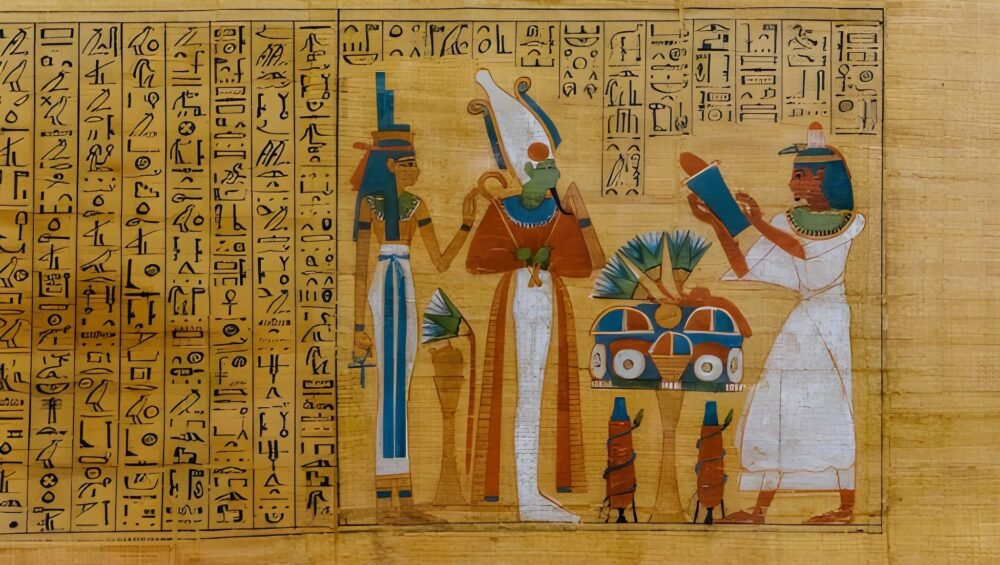
Ancient Egyptian Papyrus Art tells captivating tales of mortality, divinity, and cosmic order. Among the most prevalent subjects are the journeys through Duat—the underworld—where the soul’s heart is weighed against Ma’at’s feather of truth. The vibrant illustrations were more than decorative; they were deeply symbolic and spiritually instructive. The recurring depictions of Ra’s solar barque, the judgment scenes before Osiris, and the protective wings of Isis all reflect Egypt’s harmonious balance between the mortal world and eternity.
Visitors exploring ancient collections will find papyrus replicas inspired by original frescoes at temples like Temple Of Hatshepsut or Ramesseum Temple. Many of these themes remain timeless, resonating through Egyptian art forms spanning thousands of years—from stone reliefs to modern artwork sold in traditional bazaars along the Nile.
Symbolism and Sacred Meanings in Ancient Egyptian Papyrus Art
Every motif in Egyptian Papyrus Art served a symbolic purpose. The lotus flower symbolized rebirth and the sun’s renewal; the ankh represented life itself. Gods such as Anubis and Horus were painted in protective roles guiding souls to paradise. Artists carefully followed sacred proportions—each figure represented not by perspective but by importance. Pharaohs were drawn larger than commoners, gods even larger, establishing a visual hierarchy mirrored in Egypt’s social order.
The precision of such symbolism continues to inspire artists and travelers alike. Many luxury itineraries, such as the 11 Days Luxury Egypt Vacation, include custom visits to papyrus workshops and exhibitions. Through these connections, art enthusiasts gain deep appreciation for the continuity between ancient spirituality and modern Egyptian artistry.
Color Palette and Artistic Techniques in Papyrus Painting
Natural mineral pigments provided the rich palette that defines papyrus art: ochres for skin tones, azurite blues for sky and water, malachite greens for fertility, and carbon blacks for outlines. These pigments were mixed with gum arabic to ensure adherence to the papyrus surface. Artists used brushes made from rush stalks or fine reeds, achieving delicate linear details and vivid tonal contrasts. Over centuries, these artistic principles influenced subsequent Mediterranean art traditions and remain visible in Egypt’s modern visual culture.
Today’s Egyptian workshops preserve these methods while infusing new interpretations, creating a fascinating blend of heritage and innovation. For an in-depth experience, enthusiasts may explore itineraries like the Luxury Dahabiya Nile Cruise, which sails through cities where these artistic crafts originated, offering both historical insight and cultural immersion.
The Role of Papyrus Art in Religion, Governance, and Daily Life
Papyrus art was far more than decoration—it was documentation. It conveyed knowledge of rituals, medical practices, and astronomical calculations. In religion, illustrated papyri like the Book of Coming Forth by Day ensured safe passage into the afterlife. Government scribes recorded tax collection, trade, and political decrees, demonstrating papyrus’s function as the backbone of ancient Egyptian administration. This adaptability reflects a civilization where art and practicality were inseparably intertwined.
Scholars studying papyrus texts often visit sites tied to ancient governance like Memphis Egypt or the Sakkara Necropolis, where many original documents were recovered. The sophistication of these artworks provides insight into Egyptian intellect and storytelling—evidence that art functioned as both mirror and messenger of cultural identity.
Preservation and Modern Appreciation of Papyrus Art
Preserving papyrus requires controlled temperature, humidity, and careful restoration techniques. Museums worldwide exhibit originals under glass, but Egypt’s own institutions—like the Papyrus Museum—offer the most authentic displays. These centers keep Egypt’s artistic soul alive by integrating heritage preservation with modern tourism. Replicas sold in museum shops are exact reproductions, skillfully painted by local craftsmen continuing their ancestors’ legacy.
Many travelers combine educational experiences with leisurely exploration through premium options such as the Luxury Nile Cruise or Aswan Day Tours. These journeys allow art lovers to see where the inspiration once flowed—the same Nile that sustained papyrus fields for millennia.
Modern Revival: Papyrus Souvenirs and Contemporary Creativity
Contemporary papyrus art workshops produce vibrant pieces that blend traditional motifs with modern expression. Artisans paint famous pharaohs, hieroglyphic verses, and protective symbols like the Egyptian Eye of Horus, appealing to collectors and travelers eager for meaningful souvenirs. These creations offer perfect mementos for those seeking to bring home a tangible slice of Egyptian heritage.
For enthusiasts wishing to see papyrus being painted live, tours like the Day Tour to the Pyramids & the Nile or Private Tour to Pyramids, the Egyptian Museum and Khan Khalili often include visits to artisan studios. Such experiences inspire deeper appreciation for Egypt’s artistic sustainability and the timeless beauty of its hand-painted papyrus works.
Historical Examples of Ancient Egyptian Papyrus Art
Classic masterpieces like the Papyrus of Ani—housed in the British Museum—display unmatched artistry and spiritual depth. These scenes portray the “Weighing of the Heart” ceremony with extraordinary precision. Similarly, papyri discovered in Thebes depict the adventures of deities across the afterlife, capturing the essence of Egyptian cosmology. These surviving scrolls underscore Egypt’s brilliance in combining narrative, artistry, and faith within a single medium.
Destinations such as Abu Simbel Temples or Edfu Temple demonstrate parallel aesthetics found in wall carvings that mirror papyrus illustrations. The harmony between stone and paper displays an extraordinary continuity of style that defines Egyptian visual culture across centuries.
Conclusion: The Eternal Legacy of Egyptian Papyrus Art
Ancient Egyptian Papyrus Art transcends time, an eloquent reminder of humanity’s first attempts to immortalize thought and spirituality. It was the world’s earliest artistic documentation system—one that merged scientific skill, divine symbolism, and aesthetic innovation. Every papyrus painting tells a story of civilization’s quest to preserve truth, celebrate the divine, and honor the rhythm of nature. The sheer endurance of these creations positions Egypt as a timeless cradle of artistry, intellect, and beauty.
Embarking on an artistic journey through Egypt connects travelers to this living history. Whether admiring papyrus scrolls in Aswan City, visiting workshops in Luxor, or sailing the Nile on the 4 Day 3 Night Nile Cruise from Aswan to Luxor, explorers can still witness the artistry that once adorned the hands of ancient scribes. The papyrus—both a plant and a symbol—remains Egypt’s greatest gift to the world, an art that never wilts beneath the sands of time.
Frequently Asked Questions About Ancient Egyptian Papyrus Art
What materials were used to create ancient Egyptian papyrus art?
Ancient Egyptians used strips from the papyrus plant’s inner pith, layered and pressed to form sheets. Mineral pigments made from natural elements like ochre, malachite, and lapis lazuli provided color, while gum arabic ensured paint adhesion. Brushes were crafted from reeds and rushes, enabling delicate and enduring artwork.
Why was papyrus so important in ancient Egyptian culture?
Papyrus represented life, communication, and eternity. It served as the main writing medium for religious, political, and educational purposes. Beyond practicality, papyrus art carried spiritual meaning, linking humanity with divine realms through symbolic imagery and hieroglyphs that told stories of gods and kings.
Where can travelers see authentic papyrus art in Egypt today?
Travelers can admire genuine papyrus art at the Papyrus Museum in Cairo and various artisan workshops in Luxor and Aswan. Many curated travel bundles like