
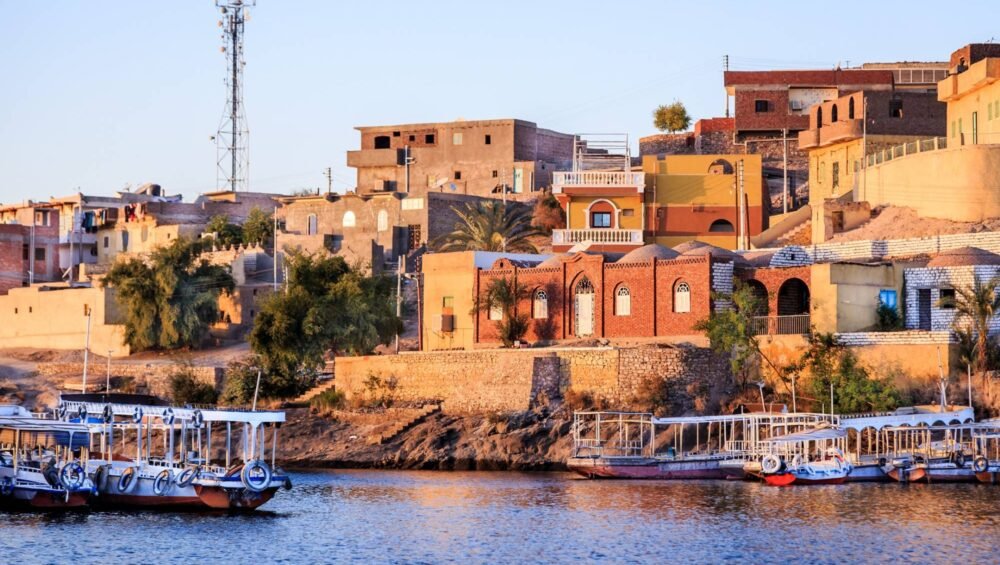
Asuán en Egipto
La ciudad de Asuán floreció como centro de comercio y puerta de entrada entre Egipto y el resto de África, ya que era una encrucijada económica natural, además de una frontera política. Las caravanas de elefantes y camellos procedentes del sur que transportaban objetos de valor se reunían aquí para cargar los barcos que se dirigían al norte de Egipto y más allá, ya que el río es navegable desde el norte de Asuán hasta el mar Mediterráneo.
Atracciones en Asuán: explore su belleza.
Incluso ahora, la ubicación de la catarata ha influido en la historia de Asuán. Durante la época colonial egipcia, Asuán sirvió de punto de escala para las fuerzas egipcias británicas que viajaban al sur para poner fin a la agitación en Sudán. La popularidad de Asuán como destino turístico aumentó a finales del siglo XIX, cuando los europeos buscaron escapar de sus gélidos países.
El sur de Egipto sigue siendo un lugar de visita obligada en Egipto por el hermoso valle del Nilo y la cultura nubia, muy presente allí. Alrededor de 100.000 nubios que vivían en las orillas del río fueron desalojados cuando se erigió en 1964 la Alta Presa, que fue objeto de polémica.
En la actualidad, un gran número de estas personas residen en Asuán y sus alrededores y se ganan la vida con el turismo, la fabricación y venta de productos tradicionales nubios o participando en otro tipo de espectáculos culturales.
Frente al ritmo frenético de El Cairo y el gran número de turistas que pululan por los numerosos monumentos faraónicos de Luxor, Asuán ofrece una experiencia mucho más sosegada. Tipifica el despreocupado estilo de vida nubio. El bello Templo de Filae, en la isla situada detrás de la antigua Presa Alta de Asuán, y el conocido Templo de Abu Simbel, unas horas más al sur, hacen de Asuán una visita obligada para cualquier persona interesada en la historia faraónica. la orilla del lago de Nasser.
Algunas de las canteras cercanas a Asuán, que aún hoy pueden visitarse, produjeron gran parte de los fragmentos de granito utilizados en proyectos de construcción históricos. Uno de sus puntos culminantes es el obelisco inacabado. A pesar de todo, lo más destacado de Asuán sigue siendo el esplendor del río y los nubios. El punto álgido del viaje fue, sin duda, la travesía por las agitadas y translúcidas aguas del Nilo hasta una de las comunidades insulares cercanas a la capital.